
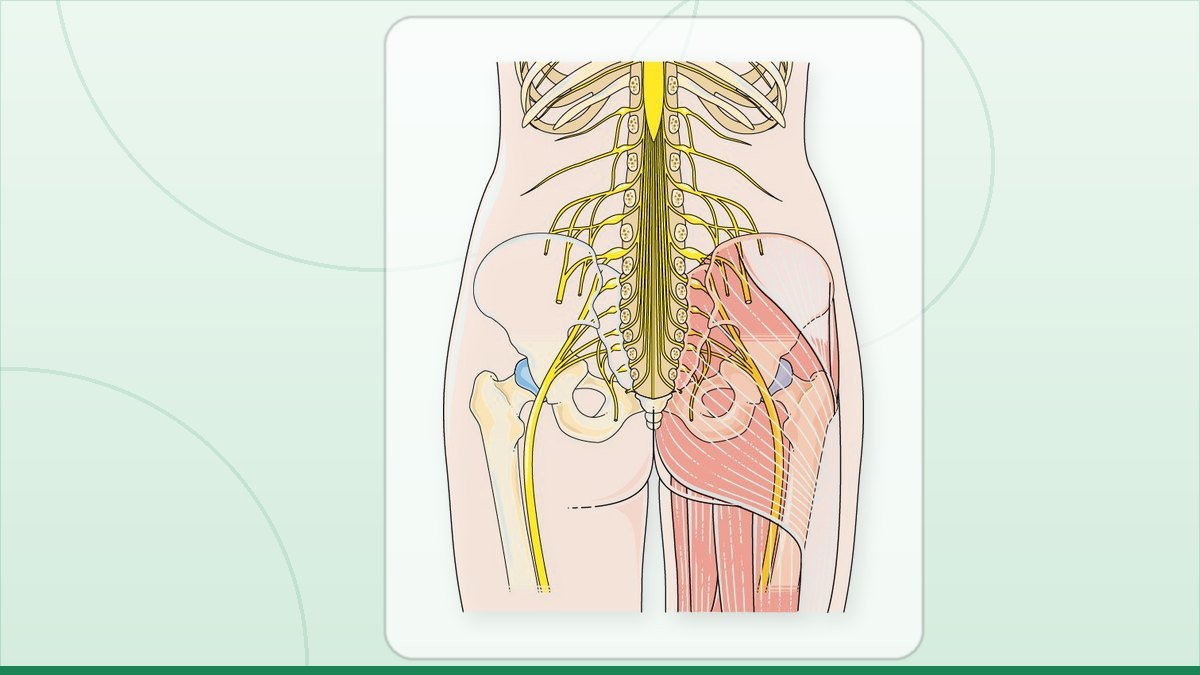
Sciatica hurts more in the leg because the problem sits at the nerve root in your spine, not in the leg itself. A disc bulge presses the root, and pain travels down the path that nerve supplies. Most cases settle within six to twelve weeks without surgery. Surgery is for the minority whose nerve stays trapped.
Why does my leg hurt more than my back?
Because the pain is being generated at the nerve root in your lower back, but your brain reads it as coming from wherever that nerve ends. The nerve root is the wire. The leg is the lamp. Press the wire near the wall and the flicker shows up at the far end.
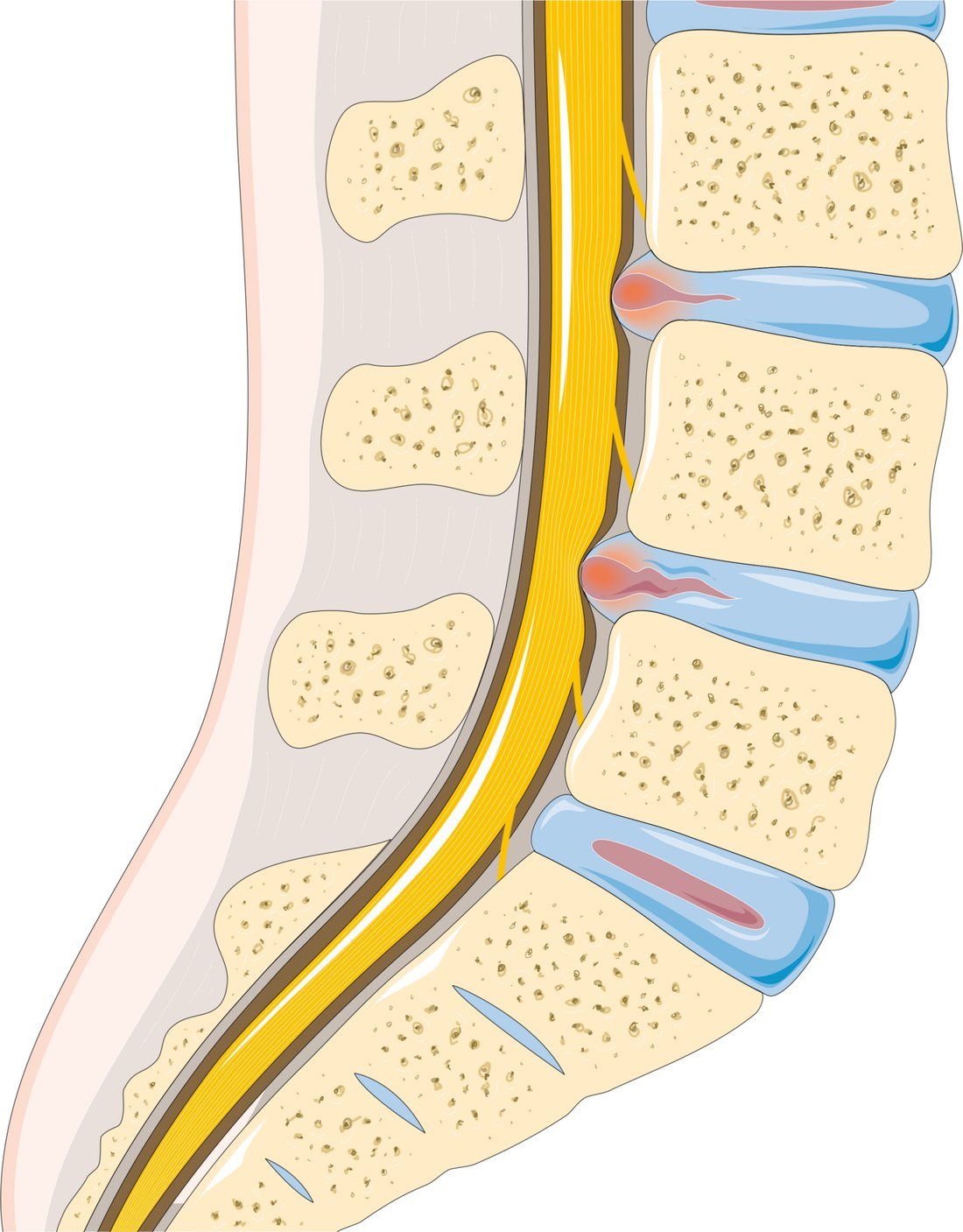
Each nerve root leaves the spine through a small bony window, then runs down into the buttock, thigh, calf and foot. When a disc bulges backwards, it narrows that window and squeezes the root. The root becomes inflamed and irritable, and it fires. What you feel is a line of pain, burning or electricity running down one leg, often past the knee. Doctors call it radicular pain. You may know it as taang mein dard from a slip disc.
This is why the back can feel almost normal while the leg is unbearable. It is also why rubbing the calf, applying hot balm to the thigh or getting the leg massaged rarely helps for long. You are treating the lamp. The problem is at the wire.
One useful clue: nerve pain usually follows a line, not a patch. Muscular kamar dard tends to sit as an ache across the lower back and upper buttock. Sciatica tends to shoot, in a stripe, in one leg, and often gets worse with coughing, sneezing or straining in the toilet, because all of those briefly raise pressure inside the spine.
Is sciatica dangerous? Will I be paralysed?
For the great majority of people, no. Ordinary sciatica from a disc, however severe the pain, does not lead to paralysis, and severe pain does not mean severe damage. Plenty of patients with terrible leg pain have a nerve that is inflamed rather than crushed, and they recover fully.
There is a small group who do need urgent attention, and you should know the signs so you can act rather than worry. Go to a hospital with a neurosurgeon the same day if you develop:
- Difficulty passing urine, dribbling, or not knowing when your bladder is full
- Losing control of urine or stool
- Numbness around the groin, private parts, buttocks or inner thighs, the area that would touch a saddle
- Weakness in both legs, or weakness that is clearly getting worse day by day
- A foot that suddenly slaps or drags when you walk
These point to heavy pressure on the bundle of nerves at the bottom of the spine. It is uncommon, but it is the one situation where waiting costs you function. Everything else on this page can wait for a normal clinic appointment.
Families in Punjab often ask the opposite question: will the operation paralyse him. Modern lumbar disc surgery is done for a nerve that is already in trouble, using magnification and, in endoscopic surgery, a camera placed right next to the nerve. Serious neurological injury is rare. The honest answer is that no surgery has zero risk, and that is exactly why we do not operate on people who do not need it.
Do I actually need surgery for sciatica?
Most people do not. If your leg pain is settling week by week, if your power is normal, and if you can manage your day with sensible treatment, time is on your side. The herniated material often shrinks and gets reabsorbed by the body over weeks to months, and the nerve calms down.
Surgery earns its place in a few clear situations:
- Real weakness. A foot that drops, a knee that gives way, difficulty standing on tiptoe on one side. Weakness is a stronger reason to operate than pain.
- Pain that will not settle. Six weeks or more of good non-surgical treatment and the leg pain is still controlling your life, still stopping sleep, still stopping work.
- Pain that keeps coming back in the same leg, every few months, with an MRI that matches.
- Emergency signs as listed above.
Notice what is not on that list. A scary looking MRI on its own is not a reason to operate. Back pain alone, without leg symptoms, is usually not helped by disc surgery. Age is not a reason to operate, and neither is a family member saying you should get it done before it gets worse.
Be careful of the opposite trap as well. Some patients spend a year going from hakeem to malish wala to cupping to a physiotherapist and back, while a weak foot quietly becomes a permanently weak foot. Weakness is time sensitive. Pain is not, in the same way.
What helps in the first six weeks?
The goal early on is simple: control the pain enough that you keep moving, and give the inflamed nerve time. Weeks of complete bed rest is not the answer and makes recovery slower.
What generally helps:
- Regular pain medication, taken properly. Anti-inflammatory tablets with something to protect the stomach, taken on a schedule for a short period rather than one tablet when the pain becomes unbearable. Take these under a doctor, especially if you have kidney disease, ulcers, diabetes or high blood pressure.
- Medicines aimed at nerve pain in some patients, prescribed and titrated slowly, not started at a full dose.
- Short walks, several times a day. Little and often beats one long walk.
- Positions that unload the nerve. Lying on your side with a pillow between the knees, or on your back with knees bent over pillows, suits most people.
- Physiotherapy with someone who understands nerve pain. Gentle at first. If an exercise sends pain further down the leg, that movement stops for now.
- A nerve root injection in selected patients, to break a bad cycle of pain and let rehabilitation start.
What tends not to help, and sometimes harms: aggressive spinal manipulation while the nerve is acutely inflamed, forceful massage of the lower back, being pulled or having someone stand on your back, and unlabelled injections or steroid courses from a non-specialist. Long steroid courses are a common cause of harm here, including hip damage and uncontrolled sugars, in people who never needed them.
Trying a hakeem or malish first is completely normal in our families, and for simple kamar dard it often does no harm. The rule to hold onto: if the leg is weak, if the numbness is spreading, or if six weeks have passed with no direction of travel, move to a proper spine assessment.
Which nerve is trapped? Reading the pain map
You can often tell which nerve root is involved from where the pain and numbness sit. This is what your surgeon is checking when they ask you to walk on your heels and toes and tap your knee and ankle. Bring this map with you and it will make the consultation faster.
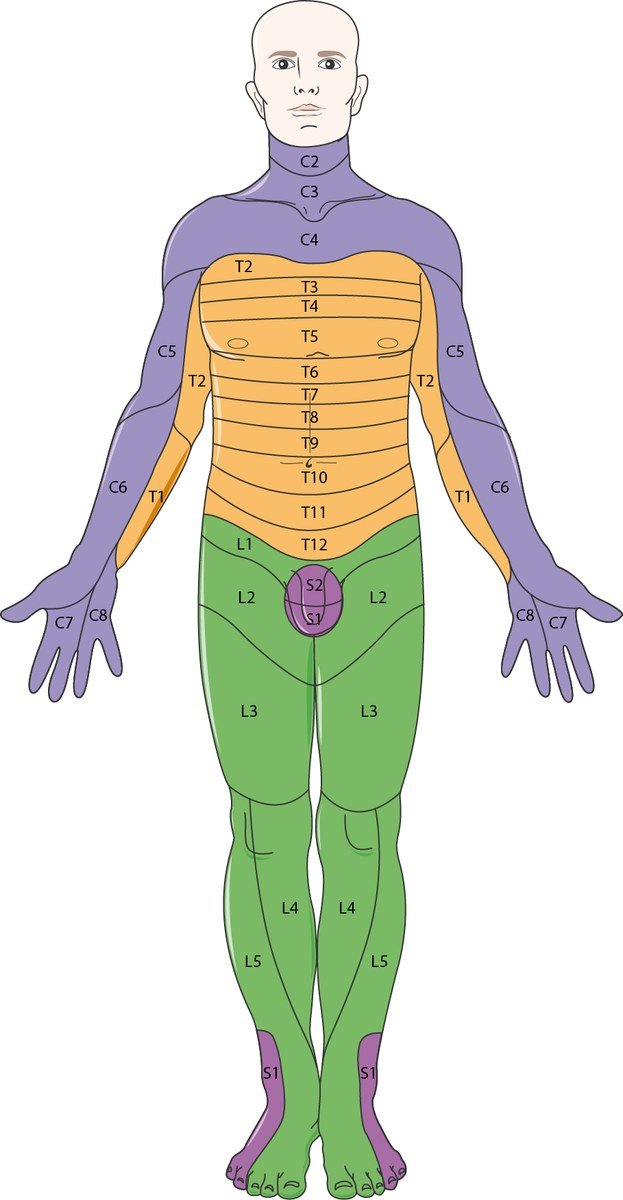
L5 root, usually from an L4 to L5 disc
Pain down the outer thigh and outer calf, into the top of the foot and the big toe. Weakness lifting the big toe or the whole foot upwards. This is the classic foot drop pattern, where the toes catch on a doorstep or the slipper keeps falling off.
S1 root, usually from an L5 to S1 disc
Pain down the back of the thigh and calf, into the heel and the outer edge of the foot and little toe. Weakness pushing the foot down, so standing on tiptoe on that leg feels weak. The ankle reflex is often reduced.
L4 root, usually from an L3 to L4 disc
Pain across the front of the thigh, over the knee and down the inner shin. Weakness straightening the knee, so the leg buckles going down stairs. The knee reflex is often reduced.
If your symptoms do not follow any of these lines, and especially if both legs are involved, if the pain is worse walking and relieved by sitting or leaning on a trolley, or if there is fever, weight loss or a cancer history, the cause may not be a simple disc. That changes the whole plan.
When does an MRI actually change anything?
An MRI is useful when the result will change what we do, and not before. In the first few weeks of typical sciatica with normal power, a scan usually does not change the treatment, and it can create fear that leads to unnecessary surgery.
Reasonable reasons to get a lumbar MRI:
- Leg weakness, or numbness that is spreading
- Six weeks or more of proper treatment with no useful improvement
- Any of the emergency signs, in which case the scan is urgent
- You have decided you are ready to consider surgery, and we need to plan it
- Features that suggest something other than a disc, such as fever, night pain, weight loss or a history of cancer
Get a plain MRI of the lumbar spine first. Contrast is usually only needed if you have already had spine surgery, or if infection or tumour is suspected. Carry the films and the CD, not just the radiologist report on WhatsApp, because the surgeon needs to look at the images themselves.
One thing worth understanding before you read your report: bulging discs, disc dehydration and mild degeneration are found in large numbers of people who have no pain at all. The scan describes your spine. It does not describe your suffering. The decision comes from matching the scan to your exact symptoms and examination. If the MRI shows a disc on the right and your pain is in the left leg, that disc is not your problem.
What are the treatment options if surgery is needed?
For a disc pressing a nerve root, the operation is essentially the same idea in every technique: remove the fragment that is squeezing the nerve and leave everything else alone. The difference is how the surgeon gets there.
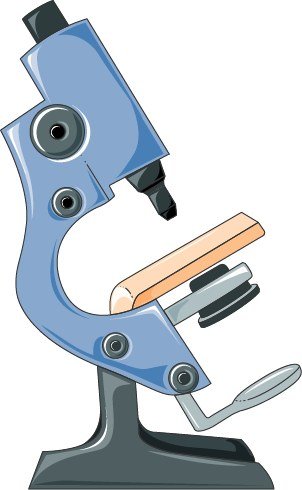
Endoscopic discectomy. A tube roughly the width of a pen is passed through a small opening in the skin, with a camera and light at the tip. The surgeon works while looking directly at the nerve on a screen, removes the offending fragment, and comes out. Muscle is spread rather than cut, blood loss is minimal, and most patients are walking the same day and home within a day. It suits most single level lumbar disc herniations and many foraminal discs.
Microdiscectomy. The established operation, done through a small incision using an operating microscope. It remains an excellent choice, particularly for large migrated fragments, revision cases, and situations where wider access to the nerve is safer. A good microdiscectomy beats a forced endoscopic case every time.
What about laser treatment for spine problems? Laser or radiofrequency decompression works by shrinking tissue inside the disc, hoping the bulge pulls back. It is not the same operation as removing the fragment, the evidence behind it is weaker, and it does very little for a fragment that has already escaped the disc, which is the situation causing most severe sciatica. If a centre offers you laser, ask exactly what will be removed and what the plan is if the pain returns.
Fusion is a bigger operation with screws, and it is not the standard treatment for a simple slipped disc. It is for instability, slippage of one vertebra on another, or deformity. If someone recommends screws for straightforward sciatica, get a second opinion before agreeing.
What does slip disc treatment cost in Pakistan?
This is answered in full on what spine surgery costs in Pakistan, so it is not repeated here.
Who should you see in Faisalabad, and what to ask
See a neurosurgeon or spine surgeon who examines your legs, not just your MRI. The examination is where the decision is really made. Take a family member with you, since most families here decide together, and let them hear the answers directly rather than through a summary at home.
Questions worth asking in the room:
- Which nerve root do you think is trapped, and does my scan match my symptoms?
- What happens if I wait another six weeks?
- Why this operation rather than the alternative?
- How many nights in hospital, and when can I sit on a motorcycle, drive, pray normally, and go back to work?
- What are the chances the pain comes back, and what would we do then?
- Can I have this quote in writing?
Be reassured by a surgeon who tells you that you do not need surgery yet. That answer costs them a case and gains you a year of your life. Be cautious of anyone who promises a permanent cure, guarantees a result, or pushes you to decide the same day.
Dr. M. Abdur Rehman is a consultant neurosurgeon at Mujahid Hospital, Faisalabad, and treats lumbar disc disease with endoscopic spine surgery and microdiscectomy. If you are searching for the best endoscopic spine surgeon in Faisalabad, judge on the examination you receive, the honesty of the advice and the clarity of the written quote, and bring your MRI films with you to the appointment.
Questions patients ask about this
How long does sciatica take to go away?
Most sciatica improves over six to twelve weeks. The pain often eases before the numbness does, and a patch of numb skin can linger for months even after a good recovery. If your leg pain is getting worse after six weeks of proper treatment, that is the point to arrange an MRI.
Can a slip disc heal without surgery?
Yes, often. The body reabsorbs part of the herniated disc material over weeks to months, and larger extruded fragments sometimes shrink the most. That is why we treat the pain properly and wait, unless there is weakness, bladder trouble, or pain that will not settle. Weeks of complete bed rest is not the answer.
Is laser treatment better than endoscopic surgery for a slipped disc?
They are not the same thing. Endoscopic discectomy removes the fragment pressing your nerve through a small tube, under direct vision. Laser decompression shrinks tissue inside the disc, has weaker evidence behind it, and does little for a fragment that has already escaped. Ask exactly which one is being offered.
Will physiotherapy or massage make my sciatica worse?
Good physiotherapy should not. Early on, gentle walking and nerve-friendly positions matter more than stretching hard. Pain that shoots further down the leg during an exercise is a signal to stop that movement, not to stop moving altogether. Forceful massage or manipulation of an acutely inflamed nerve root often makes things worse.
What warning signs mean I should go to hospital immediately?
Difficulty passing urine or losing control of it, numbness around the groin, buttocks or inner thighs, weakness in both legs, or a foot that suddenly drops. These suggest heavy pressure on the nerve bundle and need assessment the same day, not next week. Do not wait for a routine appointment.
If surgery is on the table
If the sciatica has not settled and a scan shows a disc pressing on the nerve, these cover the surgical options honestly.
Related articles
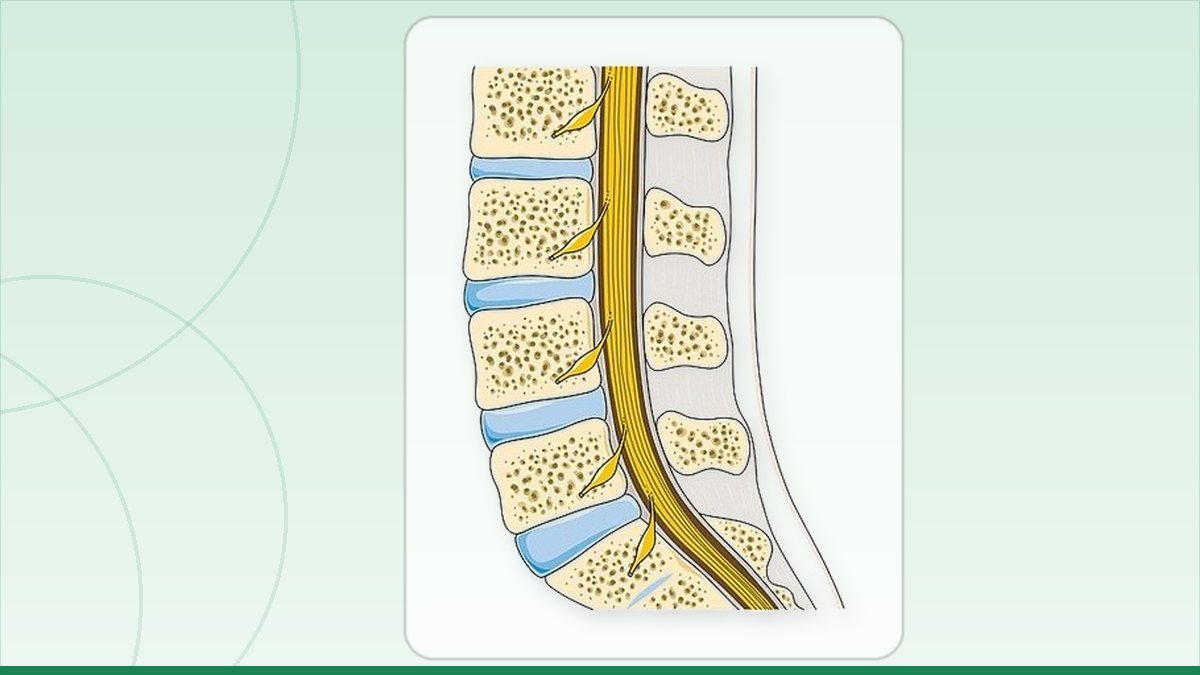
Spinal stenosis: the pain that eases when you sit
Spinal stenosis treatment explained for Pakistani patients: why sitting eases the pain, when surgery is…
Read this
Degenerative disc disease: is it really a disease?
Degenerative disc disease sounds frightening, but it is usually normal spinal ageing. What your MRI really…
Read this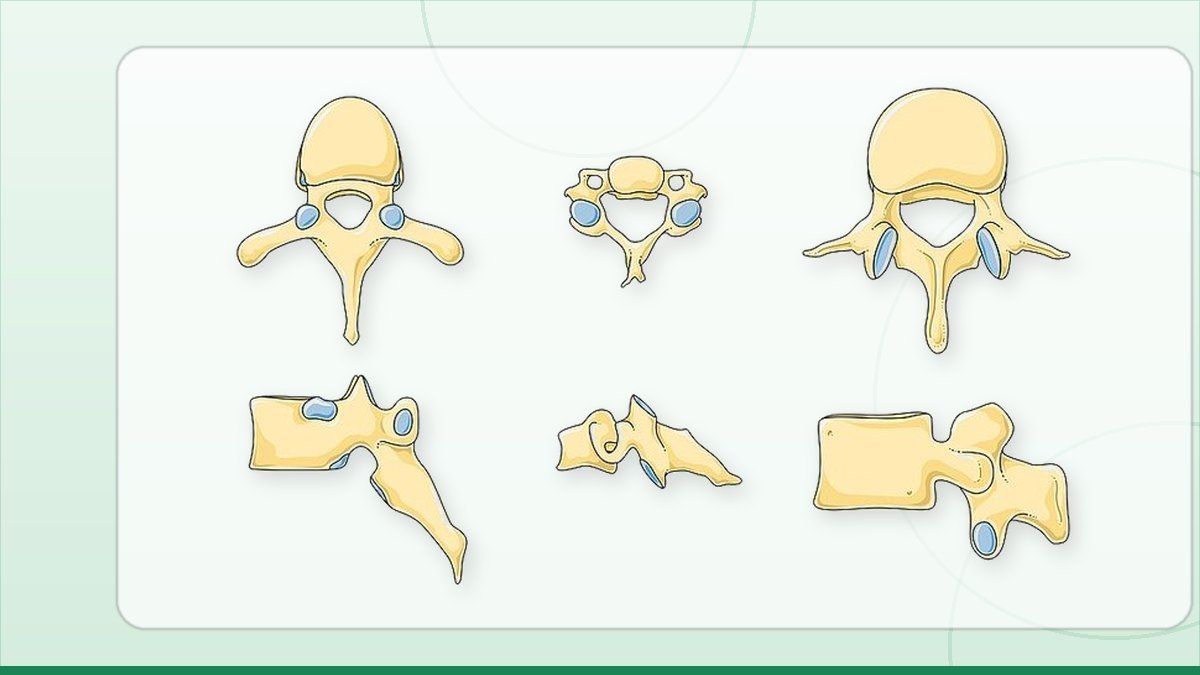
Spondylolisthesis: when one vertebra slips forward
Spondylolisthesis treatment explained simply: what the grades mean, when physiotherapy is enough, when fusion…
Read thisAll patient questions · Spine surgery in Faisalabad · Book an appointment
Ask about your own scan. Send your MRI or X-ray on WhatsApp and get a straight answer on whether surgery is needed at all, from a consultant neurosurgeon in Faisalabad.
Dr. M. Abdur Rehman is a consultant neurosurgeon in Faisalabad. Send your scan on WhatsApp and ask what it actually shows.
Published for the practice of Dr. M. Abdur Rehman, consultant neurosurgeon, Mujahid Hospital, Faisalabad. General information only, not a substitute for examination.