
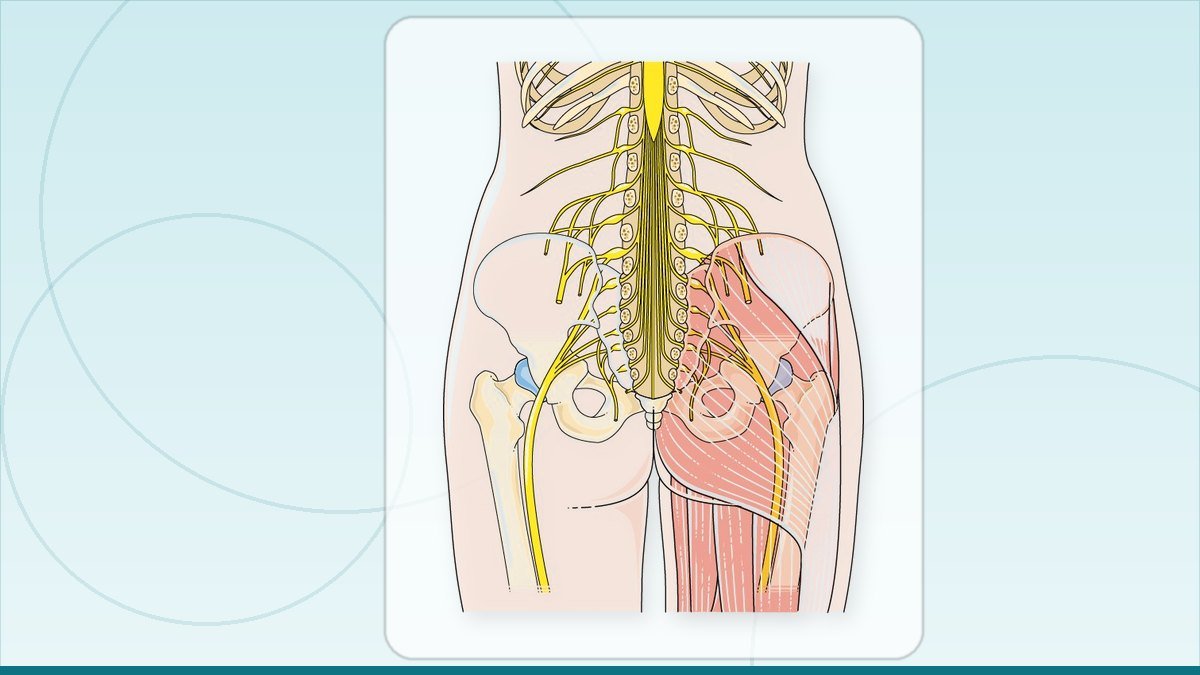
Most sciatica settles within six to twelve weeks with medicine and physiotherapy. Endoscopic spine surgery is considered when leg pain from a compressed nerve root persists beyond that despite proper treatment, or earlier if you have weakness, numbness in the saddle area, or bladder problems. It removes the disc fragment through a keyhole under local or general anaesthesia.
Why does my leg hurt more than my back?
Because the problem is at the nerve root, not in the muscle. When part of a lumbar disc pushes out, it presses on the nerve that runs down the buttock, thigh and calf into the foot. The back may ache mildly or not at all, while the taang mein dard is severe.
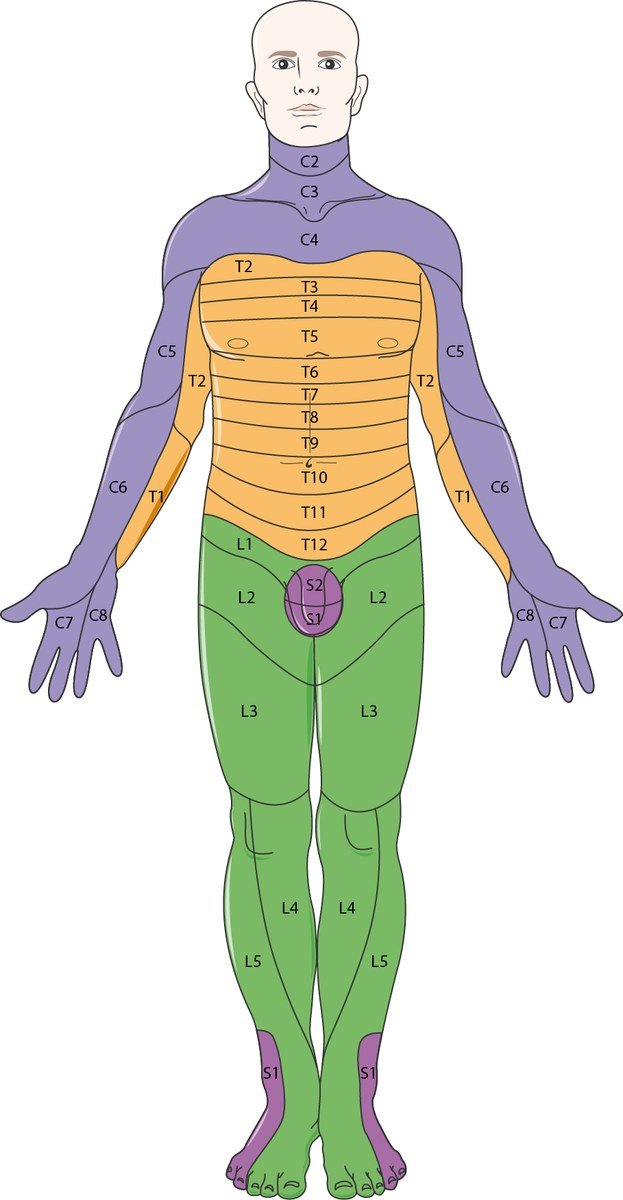
Patients describe it in the same few ways. A line of pain from the hip down the back of the leg. Burning or electric shocks. Pins and needles in the foot. Pain that gets worse on coughing, sneezing or straining in the bathroom, because all of those raise pressure inside the spine.
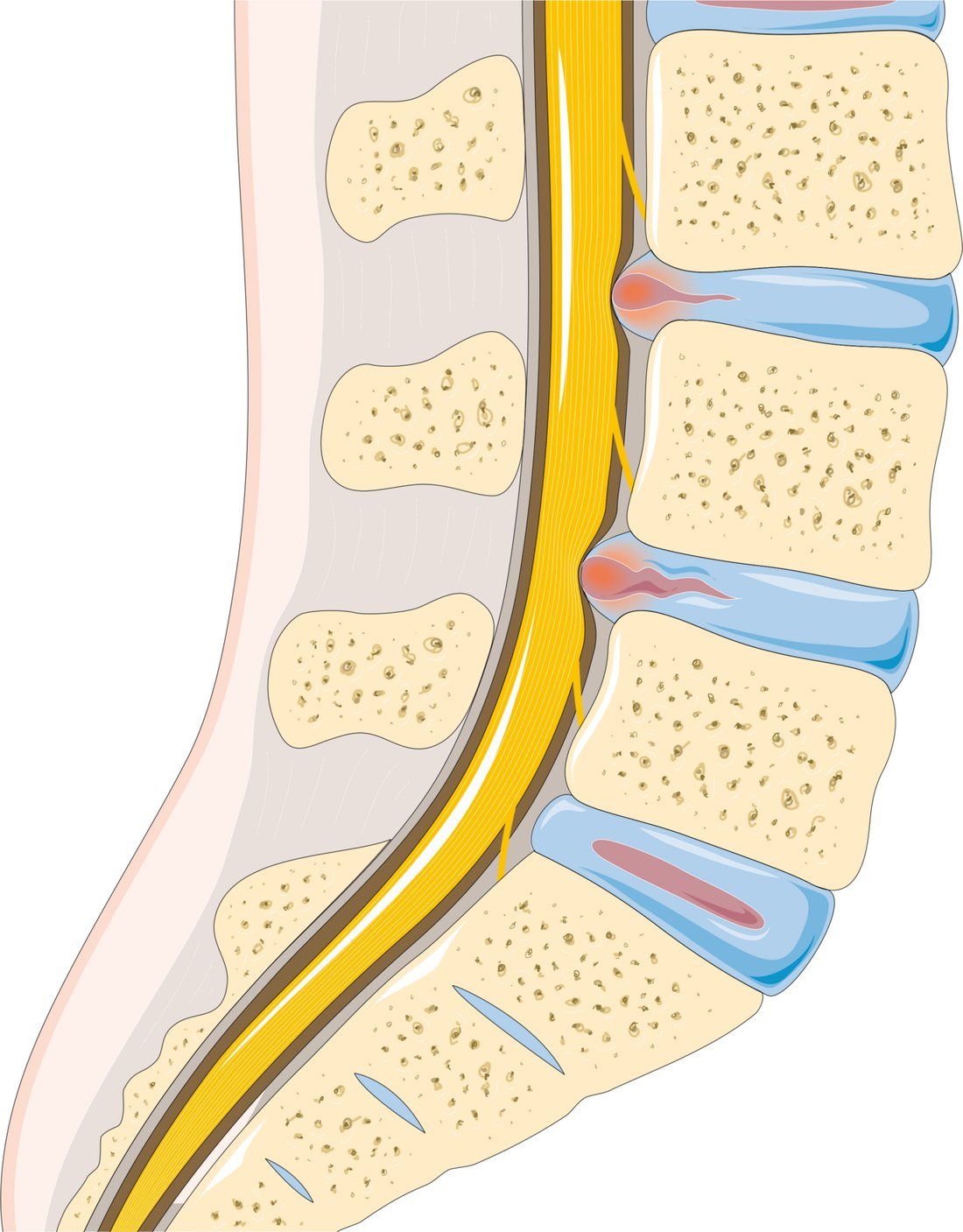
This is what people call slip disc. Nothing has actually slipped out of place. The soft centre of one disc has bulged or torn through its outer ring and is now touching a nerve. That distinction matters, because a nerve that is irritated can calm down. The idea that something must be pushed back in is not how the spine works.
How long should I wait before seeing a spine surgeon?
Give it a few weeks of proper treatment first, unless you have a warning sign. Most people with fresh sciatica improve steadily over six to twelve weeks, and a large share of them never need an operation.
Proper treatment does not mean bed rest for a month. Long bed rest makes the back stiffer and weaker. It means simple pain medicine as prescribed, staying gently active, short walks, and physiotherapy from someone trained in spine rehabilitation.
See a doctor without waiting if any of the following is true:
- Your foot drags or slaps when you walk, or you cannot lift your toes or stand on tiptoe on one side.
- The area between the legs that touches a saddle feels numb.
- You cannot pass urine normally, or you leak, or you cannot feel when the bladder is full.
- Both legs are involved at once.
- You have fever, unexplained weight loss, night pain that wakes you, or a past cancer.
The bladder and saddle numbness combination is called cauda equina syndrome. It is rare, but it is the one situation where hours matter. Go to a hospital emergency the same day, not to a clinic next week.
Do I definitely need surgery for sciatica?
Probably not. Most back pain and most sciatica is not surgical, and a responsible surgeon will tell you that before offering anything.
Surgery for a disc is offered for three reasons. Leg pain that has not settled after a fair trial of non-surgical treatment and is stopping you living normally. Muscle weakness that is getting worse. Or an emergency such as cauda equina syndrome. Pain alone, in the first few weeks, with no weakness, is usually a reason to wait, not to operate.
There is a second point that surprises people. An MRI showing a disc bulge does not by itself mean surgery. Disc changes are common in healthy adults with no pain at all. The film must match your symptoms and your examination. If the MRI shows a problem on the right and your pain is on the left, operating will not help you.
About hakeem, massage and manual treatment. Almost every patient in Faisalabad has tried something before reaching a clinic, and there is no shame in that. Gentle massage for muscular kamar dard is unlikely to harm you. What does cause trouble is forceful pulling or cracking of the back when a nerve is already compressed, and losing two months to a treatment while a weak foot quietly gets weaker. If your leg is getting weaker, stop and get an examination.
What actually happens in endoscopic spine surgery?
A small tube about the width of a pencil is passed to the disc through a cut under one centimetre, guided by X-ray. A camera on the end of that tube shows the nerve on a screen, and fine instruments remove only the fragment of disc pressing on it.
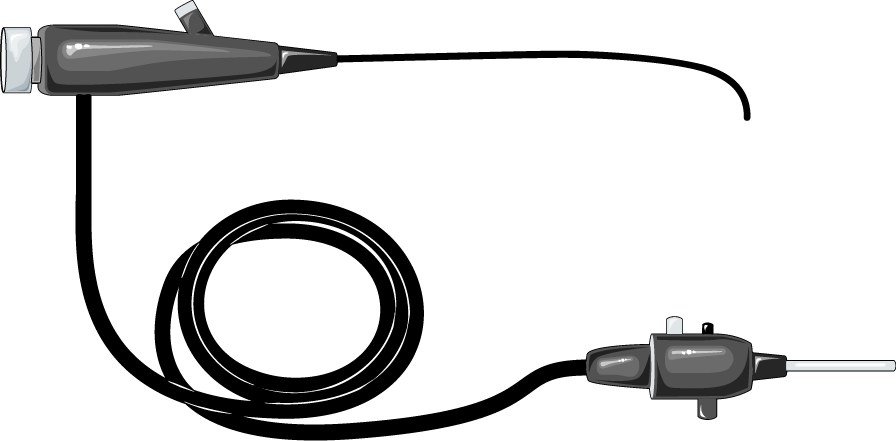
The nerve is not cut, moved much, or repaired. It is decompressed. Once the pressure is off, the nerve begins to settle, which is why many patients notice the leg pain is different straight after waking.
The practical differences from open surgery come from the size of the approach. Muscles are pushed aside rather than stripped off the bone. Blood loss is small. The wound usually needs one stitch. Many patients walk within a few hours and go home the same day or after one night, which matters if your family has travelled in from Jhang, Chiniot, Toba Tek Singh or Sargodha.
It is still surgery. There is still a recovery period, still restrictions on lifting, and still a small number of people whose pain does not fully disappear. Anyone promising a guaranteed result is selling, not consenting.
Is endoscopic spine surgery safe? Will I be paralysed?
Paralysis from lumbar disc surgery is very rare, and the anatomy is the main reason why. The spinal cord itself ends high in the back, around the first or second lumbar vertebra. Below that level, where nearly all disc herniations sit, there are separate nerve roots with fluid around them rather than one cord.
This fear is the single most common reason patients in Pakistan delay treatment, sometimes for years. It deserves a straight answer rather than reassurance. The risk is not zero, because no operation is risk free, but it is small enough that fear of paralysis is not a good reason to live with a leg you cannot use.
The complications that actually occur, and that should be written on your consent form, are these:
- The disc herniating again at the same level, most often in the first year.
- A small tear in the covering of the nerves, which is usually managed at the time.
- Temporary numbness or increased nerve pain for some weeks while the nerve recovers.
- Incomplete relief, particularly if the nerve has been compressed for a long time.
- Infection, which is uncommon with a wound this size.
One honest caution about expectations. Numbness and weakness recover more slowly than pain, and sometimes not completely, especially when surgery has been delayed many months. Pain relief is usually the most reliable gain.
Is laser spine surgery the same thing, and does it work?
No, they are not the same, and laser is the more heavily marketed of the two. A laser is a tool that can shrink or vaporise a small amount of disc tissue. Endoscopic surgery is an operation in which the surgeon sees the nerve on a camera and physically removes the fragment pressing on it.
The important difference is direct vision. In a laser-only procedure aimed at shrinking the disc from inside, the compressing fragment is not necessarily taken out and the nerve is not seen. Evidence for these procedures is weaker and less consistent than for removing the herniated fragment, whether by endoscope or by microdiscectomy.
Many clinics advertising laser spine surgery are in fact doing endoscopic procedures, sometimes using a laser as one instrument among several. That is reasonable. What is not reasonable is a clinic that cannot tell you plainly whether the fragment will be removed under vision. Ask that question directly and write down the answer.
Endoscopic surgery, microdiscectomy or fusion: which one do I need?
For a single herniated disc pressing on one nerve root, the choice is between endoscopic discectomy and microdiscectomy. Fusion is a different operation for a different problem and is not the standard treatment for a simple slip disc.
Endoscopic discectomy
Keyhole, camera guided, smallest wound, least muscle disturbance, usually day case or one night. Suits most contained and many extruded lumbar disc herniations. Not every anatomy is suitable, and the surgeon should tell you if yours is not.
Microdiscectomy
Done through a slightly larger opening with an operating microscope. It is the long established standard, with decades of published results, and it remains the right answer for certain large fragments, difficult levels and revision cases. Choosing it is not a step backwards.
Fusion, with screws and rods
This is for instability, significant slippage of one vertebra on another, deformity, or some cases of repeated surgery at the same level. It costs considerably more because of implants, takes longer to recover from, and is over-treatment for a straightforward disc. If fusion is proposed for a simple sciatica with a normal alignment, ask why, and consider a second opinion.
What does endoscopic spine surgery cost in Pakistan?
This is answered in full on what endoscopic spine surgery costs in Pakistan, so it is not repeated here.
What should I do next?
Start with the two things that decide everything: an MRI of the lumbar spine, and a proper clinical examination of your legs. An X-ray will not show a disc. A diagnosis made only from a report you read on your phone will not tell you whether an operation will help.
Bring the MRI films or CD, not just the printed report, and bring the family member who will be part of the decision. Most families here decide together, and it saves a second trip if the person asking about cost and time off work is in the room. Come with your questions written down. Which nerve is compressed. Does it match my symptoms. What happens if I wait three more months. Endoscopic or microdiscectomy for me, and why. What are the chances this comes back.
People type best endoscopic spine surgeon in Faisalabad into their phone at two in the morning when the leg will not let them sleep. A better search is for a consultant neurosurgeon who examines you properly, shows you your own MRI, tells you honestly when surgery is not needed, and gives you a written quote without pressure. If your answer at the end of that consultation is to wait and do physiotherapy, that is a good consultation.
Dr. M. Abdur Rehman is a consultant neurosurgeon and spine surgeon at Mujahid Hospital, Faisalabad. If your leg pain has not settled, or if you have been told you need fusion and want a second opinion, book a consultation and bring your films.
Endoscopic spine surgery in Faisalabad Read the full page on endoscopic spine surgery in faisalabad, including who it suits, what recovery looks like and how to arrange a review.
Questions patients ask about this
How soon can I walk after endoscopic spine surgery?
Most people stand and walk within a few hours of endoscopic discectomy, once the anaesthetic wears off and the physiotherapist checks you. Many go home the same day or after one night. Desk work often restarts in one to two weeks. Heavy lifting and long driving wait longer, usually four to six weeks.
Can sciatica come back after surgery?
Yes, in a small number of patients the same disc herniates again, usually within the first year. It is uncommon but it is not zero, and no surgeon can promise otherwise. Smoking, early heavy lifting and returning to hard labour too soon raise the risk. A repeat endoscopic procedure is often possible.
Is endoscopic spine surgery done under general anaesthesia?
It can be done under general anaesthesia, or under local anaesthesia with sedation, where you stay awake and can tell the surgeon what your leg is feeling. The choice depends on the level, your general health and your own comfort. Ask which is planned for you, and why, before signing the consent form.
My MRI shows a slip disc but the pain is bearable. Should I still operate?
Then usually no. Surgery treats the pain and the weakness, not the picture on the film. Many people walk around with disc bulges and feel nothing. If your pain is manageable, improving, and you have no weakness or bladder trouble, continue the exercises and review in a few weeks.
Should I travel to a spine surgeon in Faridabad or elsewhere in India for cheaper surgery?
Faridabad is in India, and it often appears because search results mix Indian and Pakistani pages. The same endoscopic procedure is available here in Punjab. Before travelling anywhere, count the cost of visas, flights and stay, and ask who will see you if a problem appears in week three.
Related articles
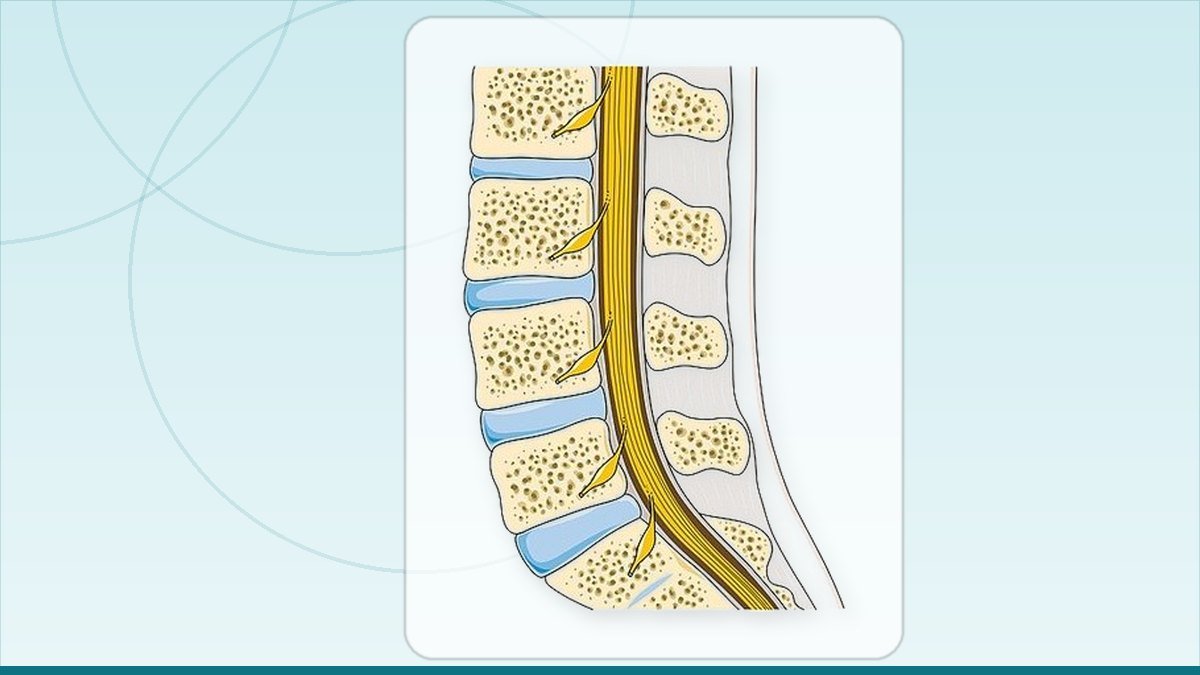
Endoscopic surgery for spinal stenosis
Endoscopic spine surgery for spinal stenosis: who needs it, who does not, how the canal is opened, safety,…
Read this
Full-endoscopic versus microscopic spine surgery
Full endoscopic vs microscopic discectomy: what trials really show about pain relief, blood loss, recovery…
Read this
Transforaminal or interlaminar: the two endoscopic routes explained
Transforaminal endoscopic discectomy or interlaminar route? A Faisalabad spine surgeon explains which one…
Read thisAll patient questions · Spine surgery in Faisalabad · Book an appointment
Ask about your own scan. Send your MRI or X-ray on WhatsApp and get a straight answer on whether surgery is needed at all, from a consultant neurosurgeon in Faisalabad.
Dr. M. Abdur Rehman is a consultant neurosurgeon in Faisalabad. Send your scan on WhatsApp and ask what it actually shows.
Published for the practice of Dr. M. Abdur Rehman, consultant neurosurgeon, Mujahid Hospital, Faisalabad. General information only, not a substitute for examination.