
There is no single price. In Pakistan, endoscopic spine surgery is quoted in rupees as a package that depends on the hospital, the level operated, the anaesthesia used and how long you stay. Quotes usually sit below fusion surgery because no screws or cages are used. Ask for the full cost in writing before you agree.
What this page covers. This page is about the cost of ENDOSCOPIC (keyhole) spine surgery specifically. For the rest: What drives the price of spine surgery generally · What spinal fusion costs, and why it is more
Why can nobody quote you one price on the phone?
Because the price is assembled from parts, and the parts depend on your MRI and your body. Two patients can both be told they have a slip disc and still receive very different bills.
What changes the number:
- How many levels. One disc is not the same job as two.
- What the problem actually is. A soft disc fragment pressing a nerve is a shorter operation than a narrowed canal that needs bone work.
- Which hospital. A large private hospital in Lahore, a mid-sized private hospital in Faisalabad and a trust hospital do not price theatre time the same way.
- Anaesthesia. General, spinal or local sedation carry different charges.
- Room and stay. Many endoscopic cases go home the same day or after one night. A private room for three nights is a different bill.
- Implants. Endoscopic discectomy uses none. The moment screws or a cage enter the plan, the cost changes category.
So when a receptionist says the price depends on the MRI, that is usually true rather than an evasion. What is not acceptable is being kept in the dark after the surgeon has seen your films. At that point a number should exist, and it should be written down.
Do I even need surgery, or is this money I can save?
Most back pain never needs an operation. This is the part patients are rarely told before a quote appears.
Ordinary kamar dard, even severe kamar dard, usually improves over weeks with movement, simple painkillers and time. Most sciatica, the taang mein dard that runs from the hip down the leg, also settles without surgery. A bulging disc seen on MRI is common in people who have no pain at all, so an MRI report alone is never a reason to operate.
Surgery starts to make sense when the leg pain or weakness is severe, the MRI shows a disc or a narrowing that matches exactly where your pain runs, and honest non-surgical treatment has been given a fair trial. If the story and the scan do not match, an operation is unlikely to fix you.
There are exceptions that cannot wait. Go to a hospital the same day if you lose control of urine or stool, go numb around the private area and inner thighs, or your foot starts dropping and getting weaker by the day. Fever, unexplained weight loss, night pain that wakes you, a past cancer or a recent fall also need urgent assessment rather than another week of maalish.
Most families in Punjab try a hakeem, cupping or massage first. For plain back pain that is usually harmless, and sometimes it helps. The danger is only when the warning signs above are present and the visits keep delaying a scan.
What should actually be inside the quote?
A quote is not one figure. It is a list. Ask the hospital to break it into the items below so you can see what you are buying.
- Surgeon fee
- Anaesthetist fee
- Operation theatre charges and theatre time
- Imaging used during surgery, such as the C-arm
- Room charges per night, and the room category assumed in the quote
- Pre-operation tests, blood work and physician clearance
- Medicines and consumables during admission
- Post-operation follow-up visits and dressing changes
- Physiotherapy, if it is included at all
Then ask what is not included. This is the question most people forget and most regret. What happens if you need an extra night. What happens if a second level has to be treated. What happens if the surgeon has to convert to open surgery in theatre. What happens if there is a complication and you need intensive care.
A hospital that answers those four questions calmly, in writing, is telling you something useful about how it will behave later.
Why is spinal fusion so much more expensive?
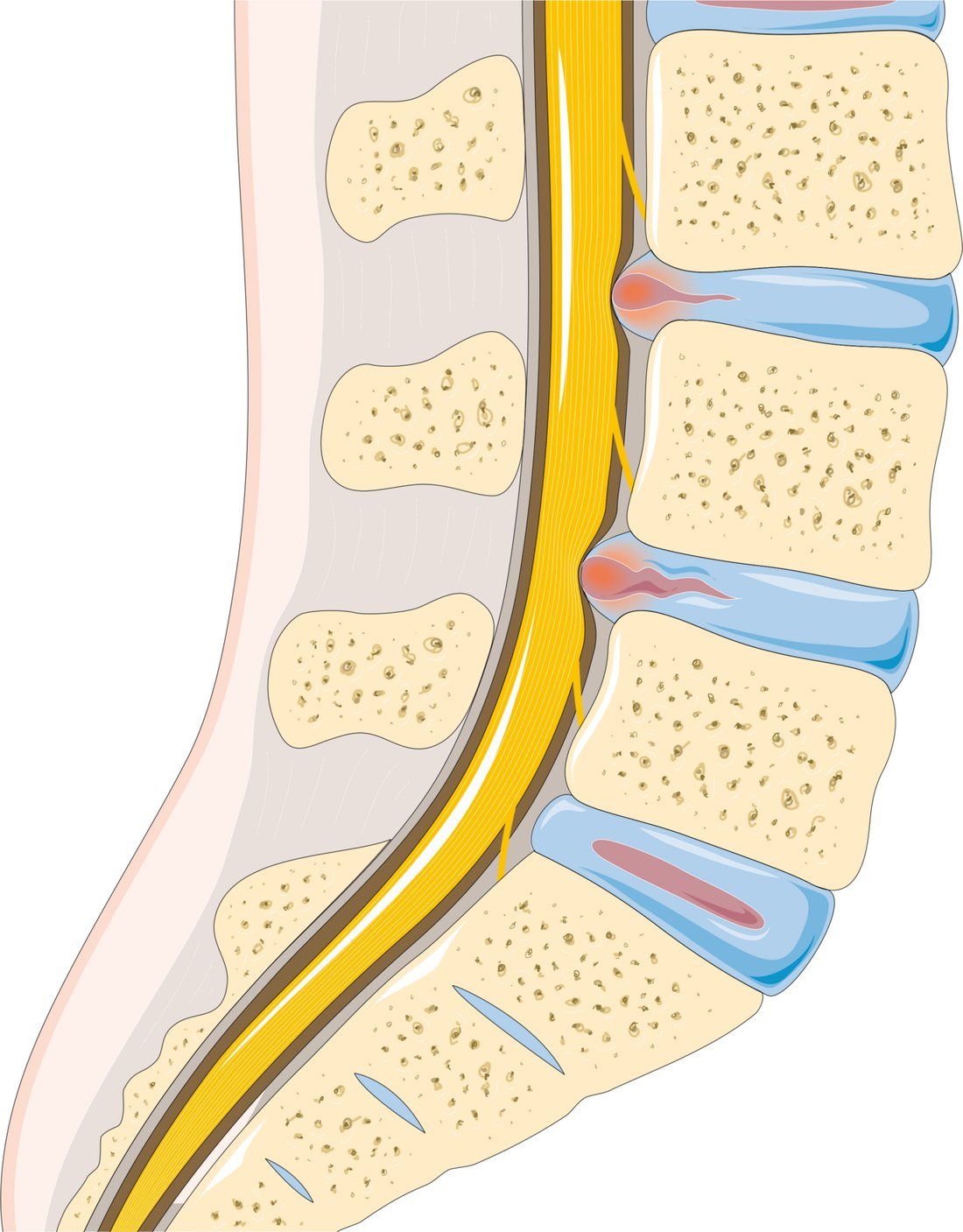
Because it is a different operation for a different problem, and it involves hardware. Fusion means the surgeon joins two or more vertebrae together, usually with screws, rods and a cage that goes in place of the disc. Those implants are imported, they are priced in dollars, and they are often the single largest line on the bill.
Fusion also takes longer in theatre, needs a longer admission, and has a longer recovery at home. All of that adds cost.
Fusion is done for instability: a vertebra that has slipped forward, a spine deformed by disease, an unstable fracture, or a segment that has already been operated on repeatedly. It is not the standard answer for a simple herniated disc pressing on one nerve.
So be careful with the comparison in both directions. If a surgeon proposes fusion for a straightforward disc, ask what specifically shows instability on your scans. And if someone offers to replace a recommended fusion with a cheaper endoscopic procedure purely on price, ask how that addresses the instability. Cost is a bad reason to choose a different operation.
Is laser spine surgery the same thing, and is it worth the price?
No, and the name causes real confusion. "Laser spine surgery" is a marketing label rather than a single defined operation, and in Pakistan it is often used loosely to mean any small-incision procedure.
Sometimes it refers to percutaneous laser disc decompression, where a needle and laser energy shrink part of the disc from inside. That is a much smaller intervention than removing the fragment that is actually pressing your nerve, and the evidence supporting it is limited. It is not accepted as a replacement for discectomy.
Sometimes it simply means that during a proper endoscopic procedure the surgeon used a laser or radiofrequency probe for a few seconds as one instrument among several. That does not make it a different, better operation, and it should not carry a premium price.
The question that cuts through this is simple. Ask: what exactly is being removed, and with what instrument? If the answer is that a camera goes in through a small opening and the disc fragment pressing your nerve is taken out under direct vision, that is endoscopic discectomy, whatever the brochure calls it. If nobody can explain what is being removed, be careful.
Should I travel to India, Lahore or Karachi for a cheaper operation?
The same logic applies inside Pakistan, at smaller scale. Lahore and Karachi have excellent spine units, and for a complex case a referral there is entirely reasonable. But for a routine disc, weigh the saving against three or four post-operative journeys and the cost of an attendant staying with you.
Wondering whether spine surgery is actually cheaper abroad, in Egypt, Turkey or Dubai? What the advertised price usually leaves out, and the one question that matters more than the airfare, has its own page: Travelling abroad for spine surgery: is it actually cheaper?
Is endoscopic spine surgery safe?
It is an established procedure with a good safety record in appropriate cases, but it is still surgery on the spine and it carries real risks. Anyone who tells you otherwise is selling something.
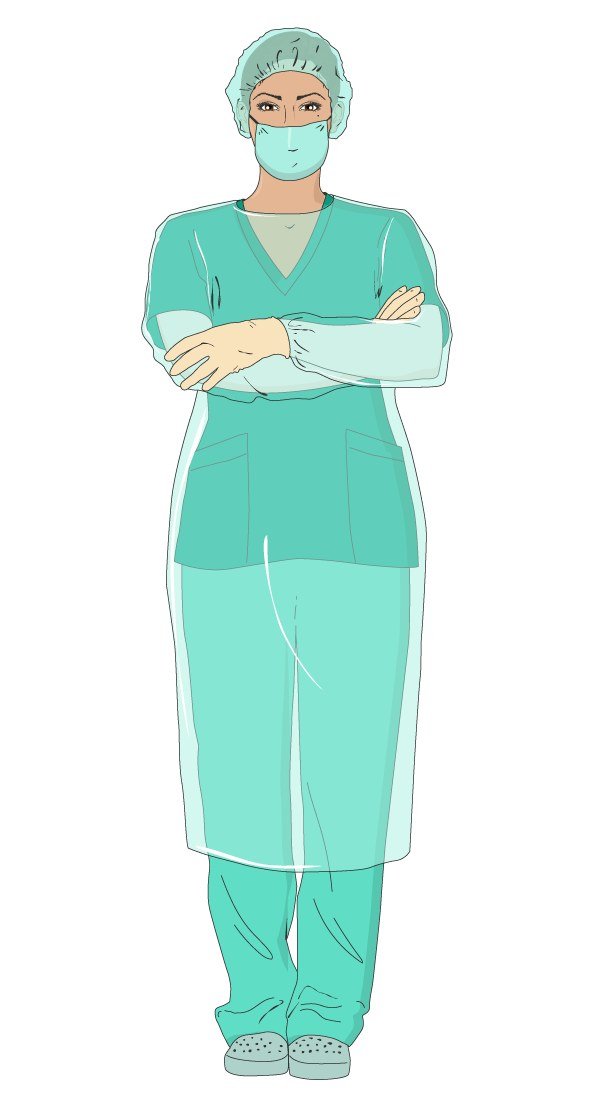
The advantages are structural rather than magical. The opening is small, the back muscles are pushed aside rather than stripped, blood loss is minimal, and most patients walk within hours and go home the same day or the next morning. Less muscle damage tends to mean less post-operative back pain and a faster return to normal work.
The risks that must be named to you before you sign: infection, a tear in the covering of the nerves with leakage of spinal fluid, nerve irritation causing numbness or temporary weakness, bleeding, incomplete relief of your pain, the same disc herniating again later, and the possibility that the surgeon has to convert to an open operation during the procedure to do the job properly. Conversion is not a failure. It is a judgement call in your favour.
The fear of paralysis is what keeps most families awake. Speak it out loud in the consultation and ask the surgeon to explain the actual risk for your specific problem at your specific level. Serious neurological injury is uncommon in this kind of surgery, but it is not zero, and you deserve a straight answer rather than reassurance.
One more honest point. Endoscopic technique has a genuine learning curve. Ask how often the surgeon performs this operation and what they do when a case turns out harder than expected.
How do I get the quote in writing, and what should it say?
Ask for it plainly at the end of the consultation: a written estimate on hospital letterhead or a printed billing estimate, with a date and a name on it. This is a normal request. A hospital that refuses it has told you something.
Take this list with you:
- Total estimated cost in PKR, itemised
- Which room category the estimate assumes
- How many nights are included
- Whether any implant is planned, and if so its cost
- Cost per extra night if you stay longer
- What is excluded, spelled out
- Whether follow-up visits and suture removal are included
- Which insurance panels or schemes the hospital accepts, and how much they actually pay
Bring a family member who is not frightened to ask about money. In most Pakistani families the decision is made by more than one person anyway, so bring the person who will hold the paperwork. Take your MRI films, not only the report, and take any earlier scans so the surgeon can see whether the disc has changed.
If you are given a number verbally that is much lower than the written one, believe the written one.
What to do next
Start with a diagnosis, not a quote. Get a proper consultation where someone reads your MRI in front of you, examines your legs, and tells you honestly whether you need an operation at all. If the answer is that you do not, that is the most valuable thing you will be told all week.
If surgery is genuinely indicated, then compare written estimates, ask what is excluded, and ask who will look after you in the weeks after. Searching for the best endoscopic spine surgeon in Faisalabad is a reasonable way to begin, but judge the answer by the consultation itself: a clear explanation, a plain statement of risk, an honest opinion on whether waiting is safe, and a quote you can hold in your hand.
Dr. M. Abdur Rehman, consultant neurosurgeon, sees spine patients at Mujahid Hospital, Faisalabad. Bring your MRI films, a list of the treatments you have already tried, and one family member. Ask every question on this page. You are allowed to.
Endoscopic spine surgery in Faisalabad Read the full page on endoscopic spine surgery in faisalabad, including who it suits, what recovery looks like and how to arrange a review.
Questions patients ask about this
Is endoscopic spine surgery cheaper than open surgery in Pakistan?
Usually yes, though not always. The endoscopic procedure uses no implants and the hospital stay is short, which lowers the bill. But an open microdiscectomy at a modest hospital can cost less than an endoscopic case at a large private one. Compare written quotes, not procedure names.
Does insurance or a government scheme cover spine surgery in Pakistan?
Some employer panels, Sehat Card categories and corporate policies cover part of spine surgery, and some do not cover endoscopic procedures at all. Ask the hospital billing desk in writing which scheme they accept, what percentage it pays, and what you will pay yourself before admission.
Do I have to repeat my MRI at a new hospital?
Often not. Bring the original films or the CD, not just the typed report. If the MRI is recent and the images are clear, most surgeons will read it and save you the cost. A repeat scan is asked for when the study is old, poor quality, or your symptoms have changed.
Is a very low quote a bad sign?
Not by itself. A low quote is a problem only when it is vague. Ask what happens if you stay an extra night, if a second disc level needs treatment, or if a complication arises. A cheap number that grows on discharge day is worse than an honest higher one.
Related articles
Endoscopic discectomy or microdiscectomy: which one fits your scan?
Endoscopic discectomy vs microdiscectomy: what your MRI decides, when surgery is not needed, costs in…
Read this
Am I a candidate for endoscopic spine surgery?
Not everyone with a slip disc needs surgery. Here is who is a candidate for endoscopic spine surgery, what…
Read this
Recovery after endoscopic spine surgery, week by week
Endoscopic spine surgery recovery time, week by week: when you walk, sit, drive, lift and return to work.…
Read thisAll patient questions · Spine surgery in Faisalabad · Book an appointment
Ask about your own scan. Send your MRI or X-ray on WhatsApp and get a straight answer on whether surgery is needed at all, from a consultant neurosurgeon in Faisalabad.
Dr. M. Abdur Rehman is a consultant neurosurgeon in Faisalabad. Send your scan on WhatsApp and ask what it actually shows.
Published for the practice of Dr. M. Abdur Rehman, consultant neurosurgeon, Mujahid Hospital, Faisalabad. General information only, not a substitute for examination.