
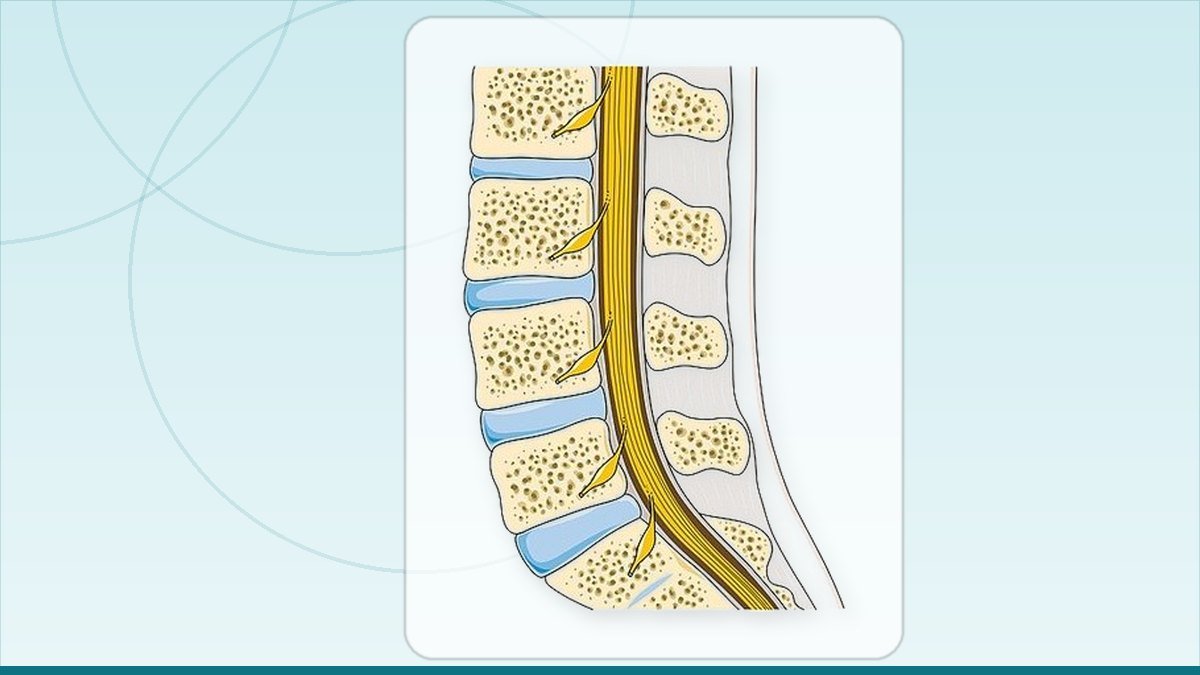
Endoscopic spine surgery treats spinal stenosis by widening the narrowed canal through a cut of about one centimetre, using a camera and fine instruments. It relieves leg pain and walking difficulty, called neurogenic claudication, without removing the joints or adding screws in most cases. It suits patients whose leg symptoms have not settled after several weeks of proper treatment.
What is spinal stenosis, and why does my leg hurt more than my back?
Spinal stenosis means the tunnel that carries your nerves has become narrow. In most patients this happens slowly, over years, as the discs flatten, the small joints thicken and a ligament inside the canal grows heavier. The nerves have less room, so they get squeezed.
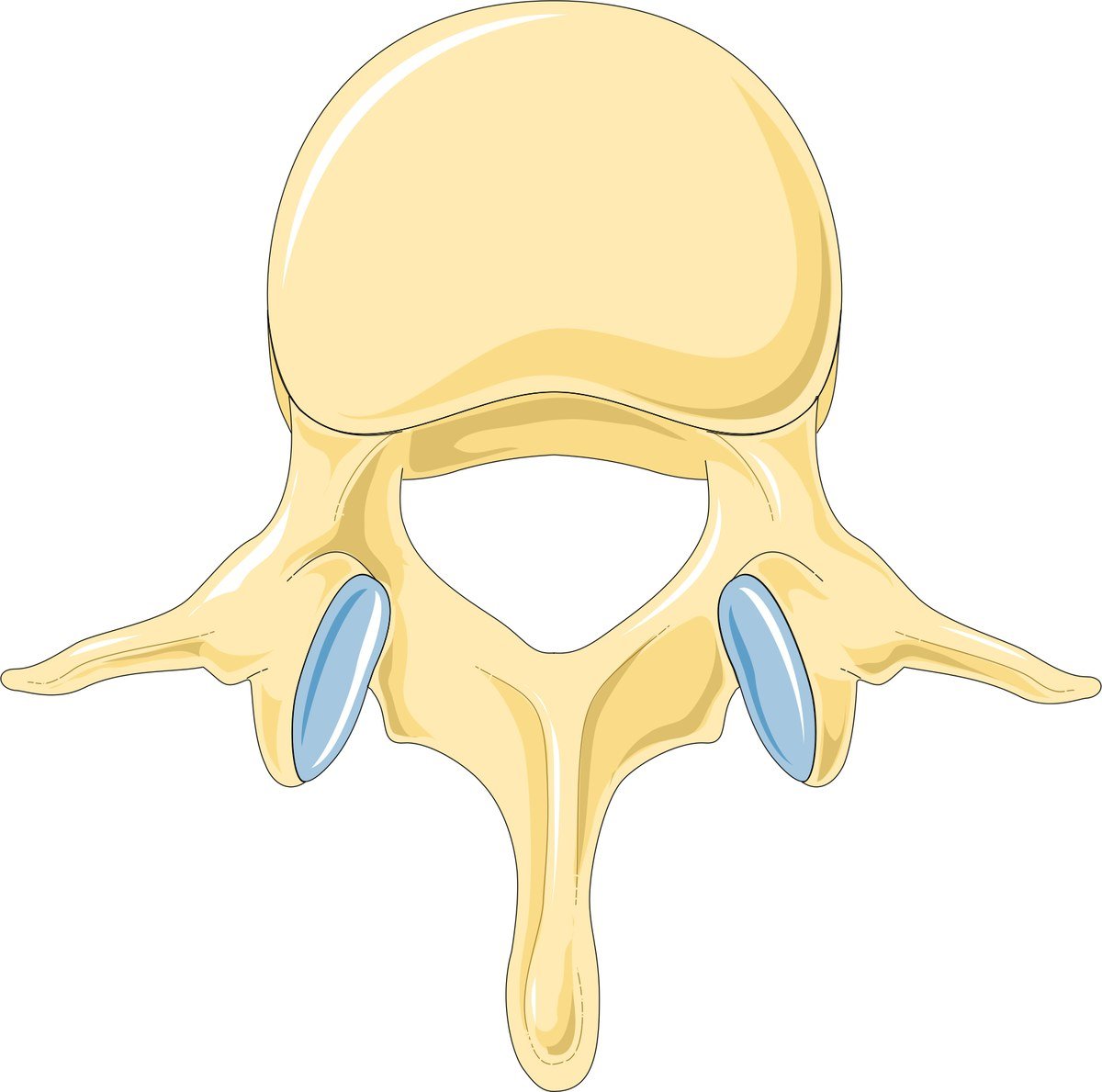
That is why the leg complains more than the back. Patients often come saying taang mein dard, or heaviness, or a feeling that the leg is not their own. Some feel burning in the calf. Some feel nothing but weakness after a few steps. The kamar dard may be mild, or may have settled years ago.
Stenosis is not the same thing as a slip disc, although a patient can have both. A slip disc is usually one soft fragment pressing one nerve, and it often comes on suddenly in a younger person. Stenosis is a slow tightening around several nerves, and it is more common after fifty. The treatment is different, which is why the MRI report alone is not the answer. The findings have to match what you actually feel.
Why can I stand for only a few minutes before my legs give way?
This is the most typical story in spinal stenosis, and it has a name: neurogenic claudication. You start walking, and after some distance the legs become heavy, painful or numb. You sit down for two or three minutes, or lean forward on a counter, and the feeling clears. Then you can walk again.
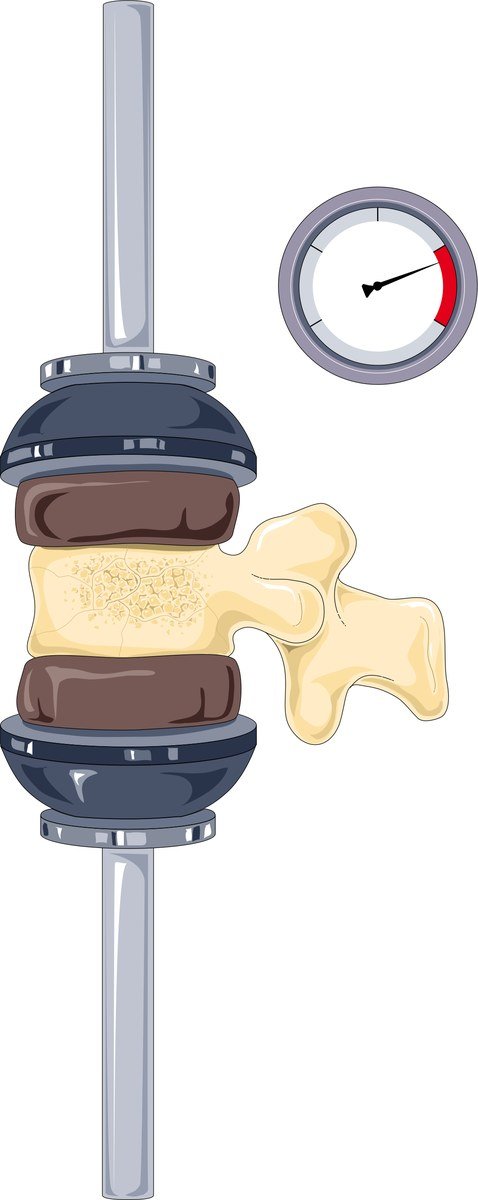
The reason is mechanical. When you stand straight or bend backwards, the canal narrows further. When you sit or bend forward, it opens. That is why many patients tell us they can walk a long way pushing a trolley in the bazaar, or ride a motorcycle for an hour, but cannot stand in a queue for ten minutes.
Two other conditions look similar and must be ruled out first:
- Poor blood supply in the legs, common in diabetics and smokers. Here the pain comes at a fixed distance every time and eases with simple standing rest, not with bending forward. The foot pulses may be weak.
- Hip or knee arthritis, where the pain is in the groin or the joint itself and moves with the joint, not with the position of the back.
If you can tell your doctor exactly how far you walk before the leg stops you, and exactly what makes it settle, you have given the single most useful piece of information in the whole consultation.
Do I actually need surgery for spinal stenosis?
Most people with spinal stenosis do not need an operation, at least not now. Stenosis is usually a slow condition. It does not typically turn into paralysis overnight, and many patients stay at the same level for years with sensible treatment.
A proper non-surgical trial means real treatment, not just painkillers on and off. It includes medicines chosen for nerve pain, a supervised physiotherapy programme, weight reduction where it applies, tight sugar control in diabetics, and learning which positions open your canal. Some patients get useful relief from an injection near the nerve. Give this a fair trial of several weeks before anyone talks about theatre.
Surgery becomes the honest recommendation when one of these is true:
- Your walking distance is shrinking and it is now controlling your life. You cannot go to the mosque, to work, to a wedding.
- You have real weakness. The foot drags, the slipper falls off, you cannot climb stairs on that leg.
- You have numbness around the private parts or the inner thighs, or you have lost control of urine or motions. This is an emergency. Go to a hospital the same day.
- You have had a fair trial of good non-surgical treatment and the leg symptoms have not improved.
Pain alone, on a good MRI, in a person who still walks normally, is usually not a reason to operate. Any surgeon who recommends theatre on the first visit, before trying anything else and before examining your legs, is moving too fast. Ask for the reason in plain words, and ask what happens if you wait three months.
How does endoscopic surgery open up a narrowed spinal canal?
An endoscope is a thin tube with a camera and a light at its tip. It is passed through a small opening, usually about a centimetre, down to the exact level of the narrowing. The image comes onto a screen, magnified, so the surgeon works with a much clearer view of the nerve than the naked eye gives.
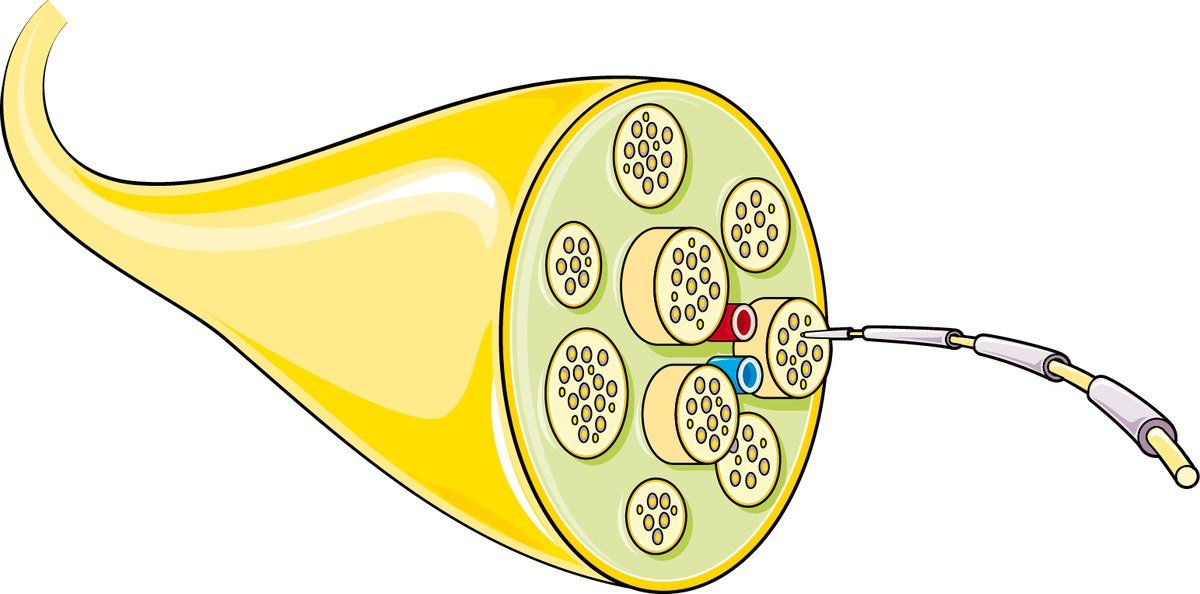
Through that same tube, fine instruments and a small burr are used to shave away what is crowding the nerve: the thickened ligament, the overgrown edge of the bone, and any disc bulge that is adding to the squeeze. The aim is to give the nerve room again. The muscles are pushed aside rather than cut off the bone, and the stabilising joints are preserved as far as possible.
Practical points patients ask about:
- It is done under anaesthesia. Depending on the level and the patient, this may be spinal or general anaesthesia.
- One small stitch or a sterile strip, not a long scar down the back.
- Many patients stand and walk the same day or the next morning, and some centres do it as a short stay.
- Because less muscle is disturbed, the back soreness afterwards is usually less than with an open operation.
Endoscopic surgery is not a different disease being treated. It is the same decompression, done through a smaller door. What matters most is still whether the decompression was complete and whether it was the right patient.
Will I need screws and fusion, or is decompression enough?
For most patients with straightforward stenosis, decompression alone is enough. Screws are not part of a routine stenosis operation. This matters, because fusion is a bigger operation, a longer recovery and a much larger bill.
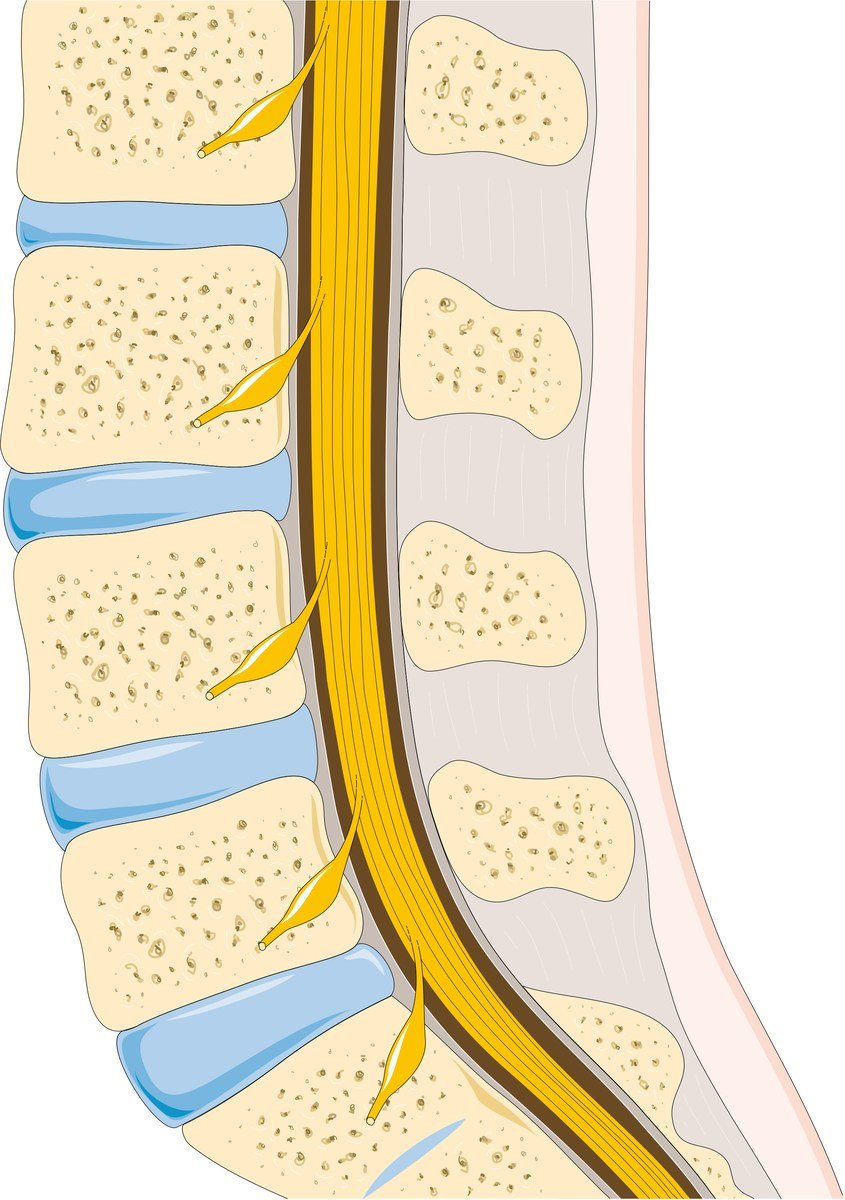
Fusion is considered when the spine is unstable as well as narrow. The usual reasons are a slipped vertebra that moves on bending films, a significant curve, or a case where opening the canal safely would require removing so much joint that the segment would be left loose. Your surgeon should be able to point at the film and show you the movement or the deformity that justifies it.
If someone recommends fusion for your stenosis, it is reasonable to ask three questions, and no good surgeon will mind them. Why do I need screws rather than decompression alone. What exactly on my films shows instability. What is the cost of the implants, in writing. If the answers are vague, take the films for a second opinion. This is a normal thing to do and it is your right.
Where fusion is genuinely needed, take it seriously and have it done properly. Avoiding a necessary fusion in order to have a smaller operation is not a win.
Is endoscopic spine surgery safe, or will I end up paralysed?
The fear of paralysis is the reason many families in Punjab delay for years, going first to a hakeem, then for oil massage, then to a physiotherapist, then to another hakeem. It is worth answering directly. Spine surgery carries risk, as all surgery does, but paralysis after a routine lumbar decompression is a rare complication, not the expected outcome.
The honest list of what can happen includes bleeding, infection, a tear in the covering of the nerves that may leak spinal fluid, temporary numbness or increased leg pain, and the possibility that symptoms return over the years as the spine continues to age. Some patients get partial relief rather than complete relief, particularly if the nerve has been compressed for a very long time. Diabetics and smokers heal more slowly.
Two things reduce risk more than the choice of technique. The first is patient selection, meaning the surgeon operates on the person whose symptoms actually match the films. The second is that the surgeon is experienced with the specific instrument being used. An endoscope in trained hands is a good tool. An endoscope used as a marketing point is not.
The other side of the risk should also be stated. Waiting too long has its own cost. A nerve that has been squeezed for years, with an already weak muscle, recovers less completely than one treated earlier. Massage and manipulation over a narrowed canal do not open it, and forceful manipulation on a stenotic spine is not a good idea.
Is laser spine surgery the same thing, and does it work?
No, they are not the same, and the difference is worth understanding before you pay for anything. People search for laser spine surgery cost in Pakistan because the word laser sounds modern and painless. What is usually being marketed under that name is not an operation that removes the bone and ligament pressing on your nerve.
A laser is a heat source. In some procedures it is used inside a needle or an endoscope to shrink a small amount of disc tissue or to seal small bleeding points. Used that way, as one instrument among several during a proper decompression, it is unremarkable. Used as a standalone treatment sold as laser spine surgery, the evidence for lasting benefit is weak, and it is particularly weak in spinal stenosis. Your narrowing comes from thickened ligament and overgrown bone. Heating a disc does not remove either of those.
So if a centre offers you a laser procedure for stenosis, ask what tissue will actually be removed and how the canal will be made wider. Ask to see it explained on your own MRI. A vague answer about melting the disc is not an answer.
The same caution applies to any promise of a permanent cure, a guaranteed result, or a same-day fix with no recovery period. Genuine spine surgery involves selection, a real procedure and a real recovery.
What does endoscopic spine surgery cost in Pakistan?
Costs vary a great deal between cities, hospitals and patients, so any figure quoted on a website or over the phone is unreliable. The one rule that protects you is simple. Ask for an itemised written quote in PKR, from the hospital, before admission.
What drives the price is worth knowing so you can read the quote:
- Whether implants are used. A decompression without screws costs substantially less than an instrumented fusion, because screws, rods and cages are the single biggest item on a spine bill.
- Number of levels being decompressed.
- Length of stay and room category. A day-care or one-night stay costs less than several days in a private room.
- Anaesthesia, theatre charges, surgeon fee, imaging and follow-up visits. Ask whether the follow-up and the post-operative physiotherapy are included or billed separately.
Ask directly what is not included in the quote, because that is where surprises live. Ask what happens to the bill if you have to stay an extra night. If you or a family member works somewhere with a company panel, or you hold a Sehat Card, ask the hospital's admissions desk in advance whether your procedure is covered and get the answer in writing rather than by word of mouth.
Comparing quotes is sensible. Comparing only the final number is not. A cheap fusion and a fairly priced decompression are not the same product, and the right question is whether you needed the screws in the first place.
For the full cost breakdown, see what endoscopic spine surgery costs in Pakistan.
What should you do next?
If you are reading this for a parent who has stopped walking to the market, here is a practical plan. Get a recent MRI of the lumbar spine, on CD as well as on film if possible. Write down, in numbers, how many minutes or how many steps they can walk before the leg stops them, and what relieves it. List every medicine they are taking, including anything from a hakeem, and their sugar and blood pressure readings.
Then take all of that to a consultation, with the family member who will actually be part of the decision. Bring your questions written down. In Faisalabad, patients also come in from Jhang, Chiniot, Toba Tek Singh and Sargodha, so plan the day so nobody is rushed at the end of a long journey.
At the consultation, expect to be examined, not just to have the report read out. Expect to be told clearly whether you need surgery now, whether you should try proper non-surgical treatment first, and what the alternative options are. If the answer is that you do not need an operation, that is a good outcome, not a wasted trip.
Dr. M. Abdur Rehman is a consultant neurosurgeon and spine surgeon at Mujahid Hospital, Faisalabad, and sees patients who are looking for the best endoscopic spine surgeon in Faisalabad as well as those simply wanting an honest second opinion on films they have already been given. Bring the MRI, bring your questions, and ask for the recommendation in plain Urdu or English until it makes sense to your family.
Endoscopic spine surgery in Faisalabad Read the full page on endoscopic spine surgery in faisalabad, including who it suits, what recovery looks like and how to arrange a review.
Questions patients ask about this
Can spinal stenosis be cured without surgery?
Stenosis itself does not reverse, because the bone and ligament changes are permanent. The symptoms, however, can often be controlled for years with nerve pain medicines, supervised physiotherapy, weight loss and sometimes an injection. Many patients live comfortably without surgery. Surgery is for those whose walking or strength keeps getting worse.
How long is recovery after endoscopic decompression?
Most patients walk within a day and manage their own bathroom and meals quickly. Light household activity usually resumes over the first two weeks. Desk work is often possible sooner than heavy or field work. Full comfort while walking longer distances can take several weeks. Follow the physiotherapy plan you are given.
I keep seeing results for a spine surgeon in Faridabad. Is that in Pakistan?
No. Faridabad is in India, near Delhi, and it appears in search results because the spelling is close to Faisalabad. If you are searching for care in Punjab, Pakistan, add Faisalabad or Pakistan to your search so you see local hospitals, local costs and doctors you can actually visit.
Is it safe to have massage or manipulation for spinal stenosis?
Gentle massage of tight back muscles is usually harmless, but it does not widen a narrowed canal and will not fix the underlying problem. Forceful manipulation or someone standing on your back is not advisable with stenosis, especially if you already have leg weakness or numbness. Get the diagnosis confirmed first.
What is the difference between endoscopic and open surgery for stenosis?
The goal is identical: take pressure off the nerve. Endoscopic surgery reaches the nerve through a roughly one centimetre opening using a camera, so less muscle is disturbed and early soreness is generally less. Open surgery uses a larger incision. Both can work well. Suitability depends on your films and your symptoms.
Related articles
Full-endoscopic versus microscopic spine surgery
Full endoscopic vs microscopic discectomy: what trials really show about pain relief, blood loss, recovery…
Read this
Transforaminal or interlaminar: the two endoscopic routes explained
Transforaminal endoscopic discectomy or interlaminar route? A Faisalabad spine surgeon explains which one…
Read this
What your MRI must show before laser or endoscopic surgery makes sense
Before laser or endoscopic surgery for a slipped disc, your MRI has to match your symptoms exactly. What the…
Read thisAll patient questions · Spine surgery in Faisalabad · Book an appointment
Ask about your own scan. Send your MRI or X-ray on WhatsApp and get a straight answer on whether surgery is needed at all, from a consultant neurosurgeon in Faisalabad.
Dr. M. Abdur Rehman is a consultant neurosurgeon in Faisalabad. Send your scan on WhatsApp and ask what it actually shows.
Published for the practice of Dr. M. Abdur Rehman, consultant neurosurgeon, Mujahid Hospital, Faisalabad. General information only, not a substitute for examination.