
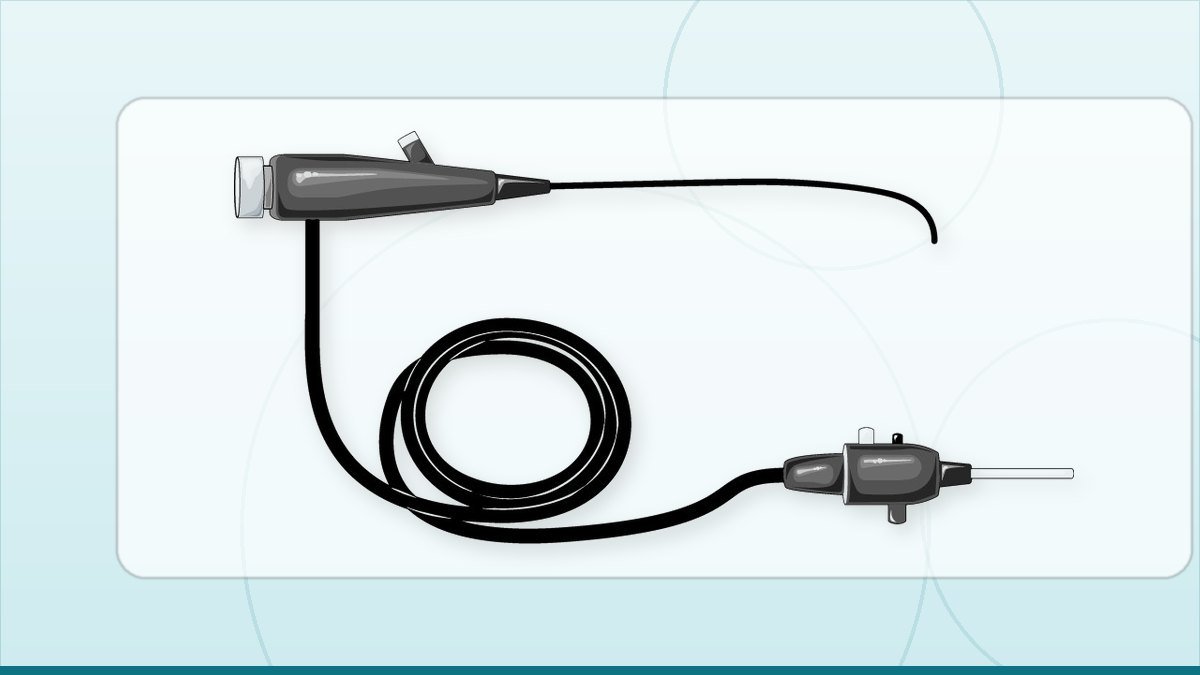
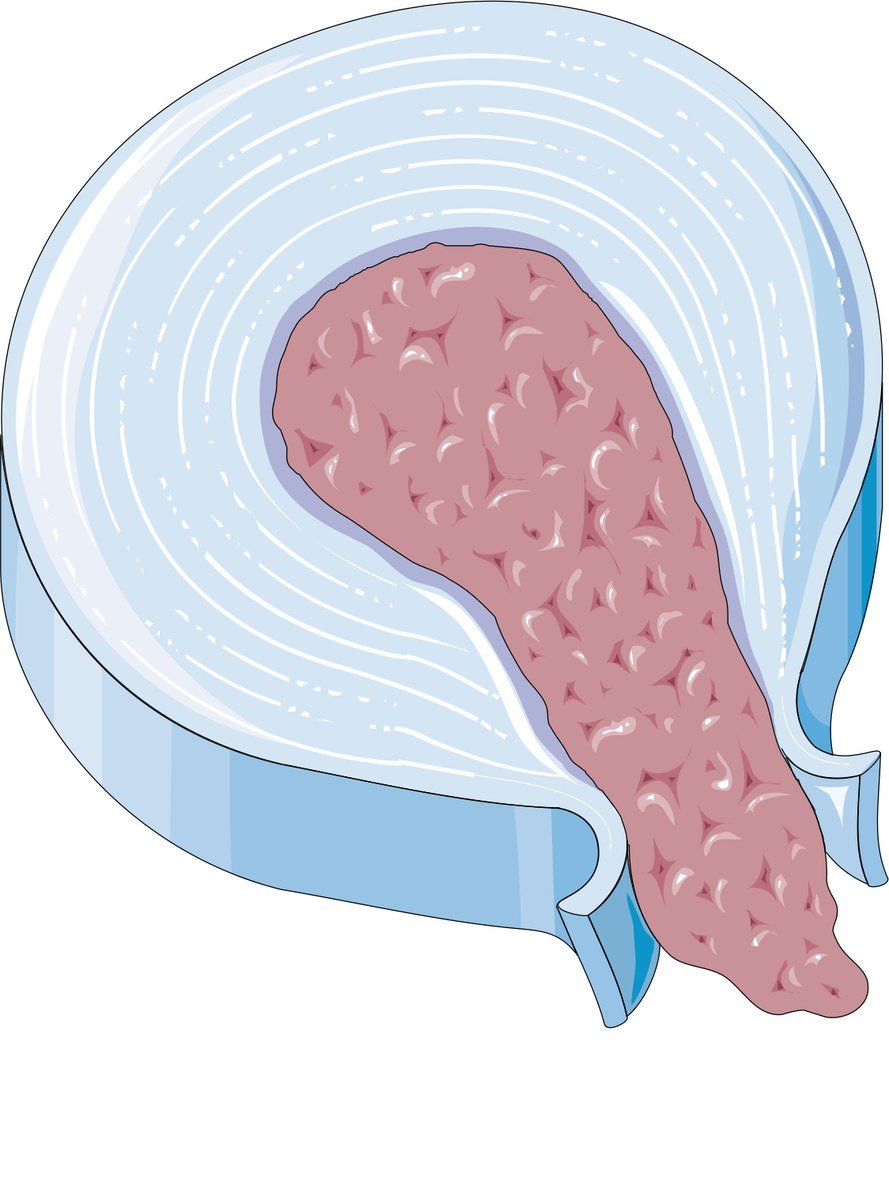
Before laser or endoscopic surgery makes sense for a slipped disc, your MRI has to show disc material touching a nerve at the exact level and side of your leg pain, not just a bulge. Laser shrinks small, contained bulges from the inside. Endoscopic surgery removes the fragment pressing on the nerve, using a camera and a small cut.
What is the actual difference between laser spine surgery and endoscopic spine surgery?
The two are often confused because both are advertised as "minimally invasive." Laser spine surgery, more correctly called percutaneous laser disc decompression, passes a thin needle into the disc under X-ray guidance and uses heat from a laser to shrink or vaporise a small amount of disc tissue from the inside. There is no camera and the surgeon cannot see the nerve directly.
Endoscopic spine surgery uses a small camera and fine working instruments passed through an 8 to 10mm cut. The surgeon watches the nerve and the disc fragment on a screen in real time and physically removes the piece of disc that is pressing on the nerve, rather than just shrinking tissue from a distance.
In Pakistan, the word "laser" is sometimes used loosely in clinic advertising for any small-incision procedure, not always the true laser technique described above. If a clinic tells you your slip disc will be treated with "laser," ask exactly what will be inserted, whether a camera is used, and whether the disc fragment will actually be removed or only heated.
What a laser cannot do:
- It cannot pull out a fragment of disc that has broken off and moved into the nerve canal.
- It cannot remove thickened bone or ligament in spinal stenosis. Bone needs a burr or a punch.
- It cannot stabilise a slipped vertebra (spondylolisthesis) or a spine that moves abnormally.
- It cannot repair a fracture or treat infection or tumour.
Is endoscopic disc surgery safe? Will I end up paralysed?
Permanent paralysis from endoscopic disc surgery is a rare complication, not an expected risk. Most families ask this question because they have heard of a bad outcome from an open spine operation, or because of stories from a hakeem or attendant about "operation se maslay ho jatay hain."
Endoscopic surgery works through a small working channel with continuous saline irrigation, which keeps the surgical field clear so the surgeon can see the nerve at all times rather than working blind. Many endoscopic disc procedures are done under local anaesthesia with light sedation, so the patient stays awake enough to say if something feels wrong, which is itself a safety check that fully asleep, open surgery does not have.
As with any operation, risks such as infection, bleeding, or a recurrence of the disc bulge do exist and should be discussed honestly before you sign a consent form. But the fear of walking into surgery and never walking out normally again is disproportionate to how this specific procedure is actually performed.
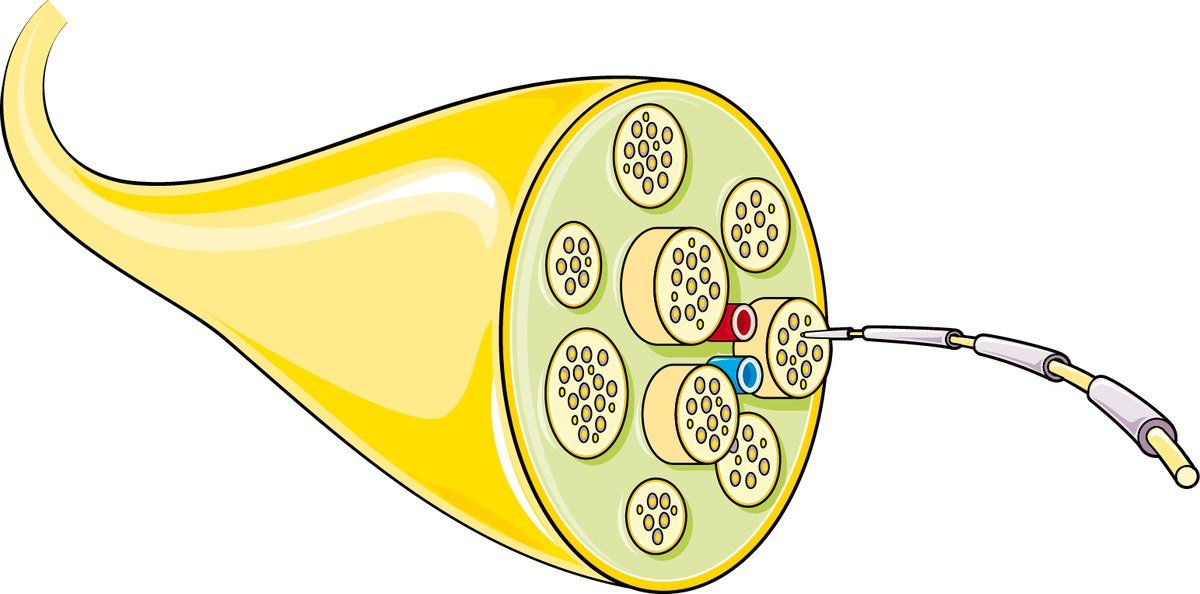
In the lower back, below roughly the level of the lowest ribs, the spinal cord has already ended. What lies there is a bundle of nerve roots floating in fluid. That is why paralysis after routine lumbar disc surgery, endoscopic or open, is very rare. It is not zero, and no honest surgeon will say zero, but it is rare.
What does the MRI actually need to show before surgery is even considered?
An MRI report alone, without symptoms to match it, is not a reason for surgery. Many people in their thirties and forties have some disc bulging on MRI and no pain at all, so the picture has to be read together with the exam, not on its own.

For surgery to make sense, the MRI generally needs to show disc material touching or compressing a nerve root at the same level, and on the same side, as where the leg pain, numbness, or weakness is actually occurring. If the MRI and the symptoms do not line up, or if there are several bulging discs but pain in only one leg, the mismatch needs to be sorted out before any procedure, laser or endoscopic, is planned.
The surgeon should be able to point at the film and connect it to your body. If your pain runs down the back of the thigh into the sole and your ankle is weak, there should be compression of the S1 nerve root at L5-S1. If the numbness is on the top of the foot and the big toe is weak, there should be L5 involvement. Left leg symptoms should have a left-sided compression. When the picture and the patient do not match, operating on the picture is how people end up with a scar and the same pain.
Bring the actual films or the CD, not only the printed report, and bring any previous scans so change over time can be judged. Bring your medicine list too. Blood thinners, uncontrolled sugar and untreated infection all change the plan.
Does laser spine surgery actually work for a slipped disc, or is it just marketing?
It works, but only for a narrow group of patients. Laser disc decompression is suited to an early, contained disc bulge, where the outer ring of the disc is still intact and there is no free fragment pressing directly on the nerve. In that limited situation, shrinking the disc from within can reduce pressure and ease symptoms.
It is not an appropriate treatment for a disc that has extruded or broken off into the spinal canal, for significant leg weakness, or for cauda equina symptoms such as loss of bladder or bowel control. In these more common and more severe presentations, heating the disc from a needle does nothing to remove the piece of tissue that is actually compressing the nerve.
Because "laser" is an appealing word to patients who are afraid of "operation," it is sometimes offered for cases it was never designed to treat. The honest question to ask is not "is laser good or bad" but "does my MRI show the kind of disc problem laser is meant for."
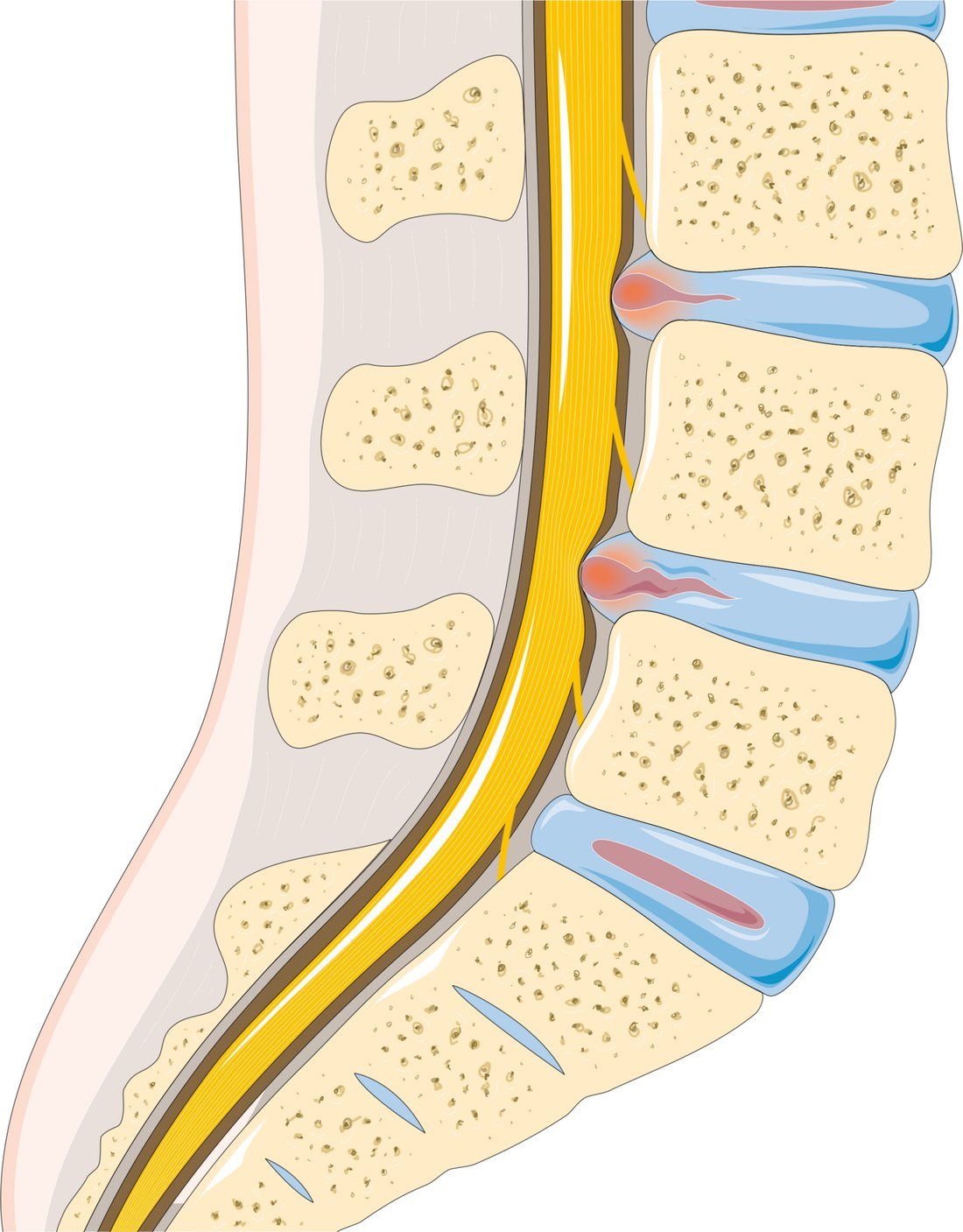
Where it clearly does not work is where the problem is mechanical and needs material physically removed. A big extruded fragment, a sequestrated piece sitting in the canal, bony stenosis, a calcified disc, recurrent herniation with scar tissue: heating the centre of the disc does nothing for any of these. Patients in that group who are offered a laser often end up having a second, proper operation later.
Do I even need surgery for kamar dard aur taang mein dard?
Most people with kamar dard, even with some pain running into the leg, do not need surgery. The majority of disc-related back and leg pain settles on its own within a few weeks with rest from heavy activity, appropriate medication, and physiotherapy.
Surgery is usually considered when leg pain has not improved after a reasonable trial of conservative treatment, when there is measurable weakness in the leg or foot, or when an MRI shows disc material pressing on a nerve at exactly the level that matches your symptoms and exam findings.
Trying a hakeem, oil massage, or bed rest first for mild pain is common and usually harmless. What should not be delayed is any assessment when there is new weakness, numbness around the groin or inner thighs, or loss of control over bladder or bowel. Those symptoms need urgent evaluation, not a few more weeks of massage.
How much does endoscopic spine surgery cost in Pakistan?
There is no single fixed price, because cost depends on the hospital, the surgeon's fee, the length of stay, anaesthesia, and whether any implant is used. Any figure you see online, including for laser spine surgery cost or spinal fusion surgery cost in Pakistan, should be treated as a rough starting point, not a quote you can rely on.
Before agreeing to any procedure, ask for a written quote that itemises the surgeon's fee, hospital charges, anaesthesia, any implants, and the follow-up visits included. Endoscopic and laser day-care procedures generally involve a shorter hospital stay than open surgery with fusion, which affects the total bill, but the only reliable number is the one written down for your specific case.
What is dependable is the relative order. A day-case endoscopic discectomy sits at the lower end because there are no implants. Microdiscectomy is broadly in the same territory, with a longer hospital stay. Spinal fusion is several times more expensive than either, because screws, rods and cages are costly items and the operation is longer, the stay is longer and the anaesthesia is heavier. If someone recommends fusion, ask why a simpler decompression will not do, and get a second opinion.
What an itemised written quote should name:
- Surgeon's fee and anaesthetist's fee
- Operation theatre charges and the expected duration
- Every implant by name, if any are planned
- Room category and the number of nights included
- MRI, blood work and any pre-operative cardiac clearance
- Post-operative follow-up visits and physiotherapy
- What happens to the bill if the plan changes during surgery
For the full cost breakdown, see what endoscopic spine surgery costs in Pakistan.
How is spinal fusion different from endoscopic disc surgery?
Spinal fusion permanently joins two vertebrae together using screws, rods, and sometimes a cage, so that segment of the spine no longer moves. It is a bigger operation, with a longer hospital stay and recovery, and it is reserved for a smaller group of patients.
Fusion is generally considered when there is instability between two vertebrae, spondylolisthesis where one vertebra has slipped forward on another, disease at multiple levels, or a disc that has already been operated on and has come back with instability. A straightforward, single-level slipped disc causing leg pain is usually treated with endoscopic or microdiscectomy techniques that remove the fragment without fusing anything.
If a doctor recommends fusion for a first-time, single-level disc herniation, it is reasonable to ask why the less invasive option was ruled out, and to seek a second opinion before agreeing.
Is it worth travelling abroad, such as to Egypt or Turkey, for cheaper spine surgery?
Wondering whether spine surgery is actually cheaper abroad, in Egypt, Turkey or Dubai? What the advertised price usually leaves out, and the one question that matters more than the airfare, has its own page: Travelling abroad for spine surgery: is it actually cheaper?
What should I do next if surgery has been suggested?
Ask for the name of the exact procedure planned, not just the word "laser" or "operation," and ask what it will remove or shrink. Ask to see your own MRI images with the findings pointed out, not just the typed report. Ask for a written quote covering the surgeon's fee, hospital stay, anaesthesia, and any implant, before you commit.
A second opinion before spine surgery is normal practice, not an insult to the first doctor, and a reasonable surgeon will not discourage it. If you are searching for the best endoscopic spine surgeon in Faisalabad to review your MRI and explain your options plainly, Dr. M. Abdur Rehman, consultant neurosurgeon and spine surgeon at Mujahid Hospital, Faisalabad, sees patients for exactly this kind of second opinion.
Laser spine surgery: what it actually means Read the full page on laser spine surgery: what it actually means, including who it suits, what recovery looks like and how to arrange a review.
Three questions worth asking before you agree:
- Which nerve is compressed, and where do you see it on my MRI.
- What happens if I wait three more months and continue physiotherapy.
- What is your plan if you cannot complete it through the endoscope.
Questions patients ask about this
Is laser spine surgery effective for a slipped disc?
It can help a narrow group of patients with small, early, contained disc bulges, but it does not remove a disc fragment and is not suitable for most herniations causing significant leg pain. Ask your surgeon exactly what your MRI shows before agreeing to it.
Is laparoscopic surgery the same as spine surgery?
No. Laparoscopic surgery is keyhole surgery inside the abdomen, used for organs such as the gallbladder or appendix. Endoscopic spine surgery is a separate keyhole technique performed through the back or side to reach the spine, not the abdominal cavity.
Is spine surgery cheaper abroad, such as in Egypt?
Advertised prices abroad often leave out travel, stay, and follow-up costs, and complications are harder to manage from a distance. For most patients in Punjab, treatment locally with a written quote and easy follow-up access is simpler and often not more expensive.
What is the difference between microdiscectomy and endoscopic discectomy?
Both remove the disc fragment pressing on a nerve. Microdiscectomy uses a slightly larger cut and an operating microscope, while endoscopic discectomy uses a smaller cut of about 8 to 10mm and a camera, generally with less muscle disruption and a faster early recovery.
Can a laser fix spinal stenosis or a slipped vertebra?
No. Stenosis means thickened bone and ligament narrowing the canal, and that has to be physically removed with a burr or punch. A slipped vertebra is a stability problem and may need fusion. Heat from a laser addresses neither. Be cautious of any clinic offering a laser for these conditions.
Related articles
Laser spine surgery in Pakistan: what it actually means
Read this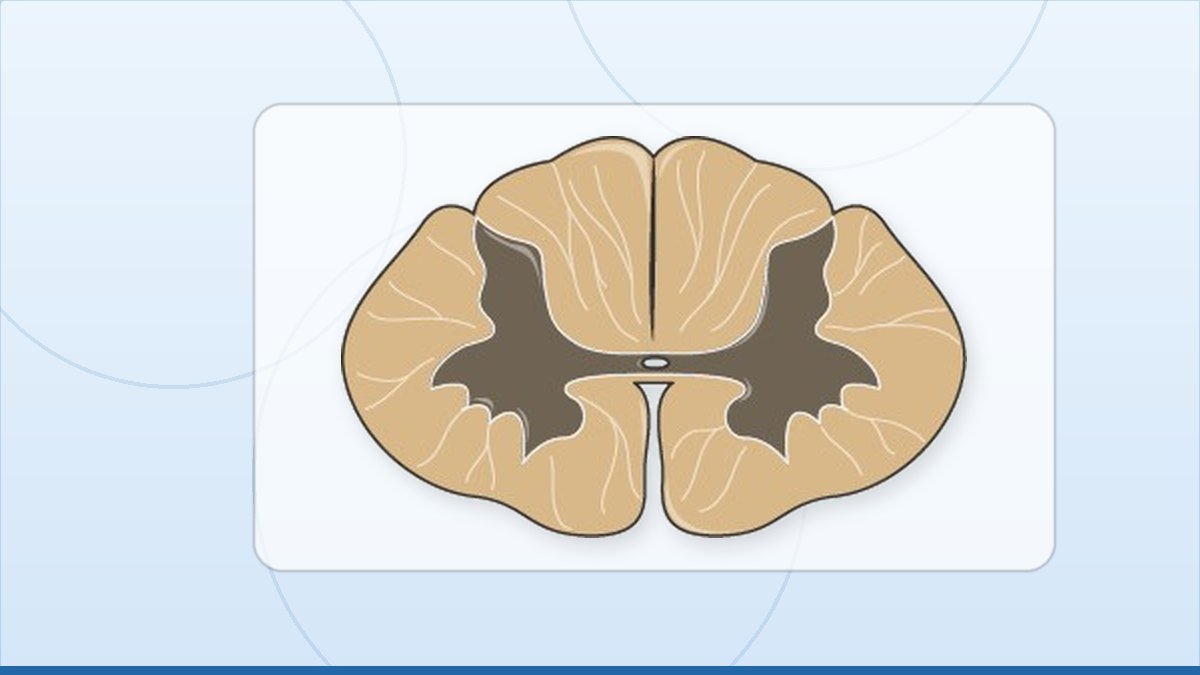
Spinal injury: the first hours decide a lot
Spinal injury treatment: what to do in the first hours, when surgery is needed, and how to find trustworthy…
Read this
Spinal trauma: what happens from the accident to the operating theatre
Spinal trauma treatment explained: what happens from accident to operating theatre, when surgery is needed,…
Read thisAll patient questions · Spine surgery in Faisalabad · Book an appointment
Ask about your own scan. Send your MRI or X-ray on WhatsApp and get a straight answer on whether surgery is needed at all, from a consultant neurosurgeon in Faisalabad.
Dr. M. Abdur Rehman is a consultant neurosurgeon in Faisalabad. Send your scan on WhatsApp and ask what it actually shows.
Published for the practice of Dr. M. Abdur Rehman, consultant neurosurgeon, Mujahid Hospital, Faisalabad. General information only, not a substitute for examination.