

Laser spine surgery is not one operation. Most clinics that advertise it use a laser or radiofrequency probe briefly inside a small opening, while the disc fragment causing your pain is removed with instruments, under a camera. We do not offer laser as a standalone treatment. We perform endoscopic spine surgery, which physically removes what is pressing on your nerve.
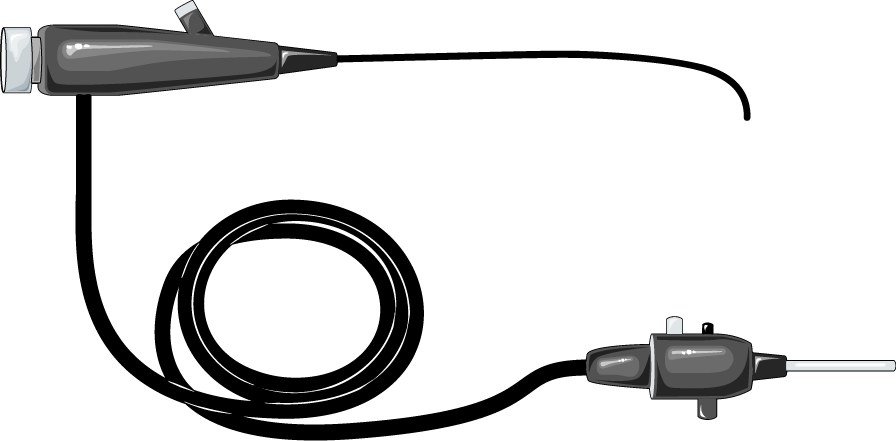
| What "laser" usually means | A tool used briefly during a procedure, not the operation itself |
|---|---|
| What actually removes the disc fragment | Instruments, under camera vision, during endoscopic surgery |
| Do we offer laser alone | No, not as a standalone treatment |
| What we do instead | Endoscopic spine surgery, a real decompression through a small opening |
Is laser spine surgery a real operation?
Not on its own. "Laser spine surgery" describes a family of things different clinics do differently, and the name alone does not tell you what actually happens on the table. In an endoscopic procedure, a laser or a radiofrequency probe is sometimes used through the working channel to shrink a small amount of tissue or seal a bleeding point. The disc fragment pressing on your nerve, the actual source of your pain, is still taken out mechanically, with instruments, under direct vision on a screen. What you should be wary of is a needle procedure where a laser fibre is put into the disc to shrink it from the inside, with no fragment removed and nothing seen on a camera. That is a different thing, sold under the same name, and the evidence behind it as a standalone treatment is weaker than for a proper decompression.
Is laser spine surgery safe, or is it a way to avoid a real operation?
Both questions come from the same fear, so it is worth answering plainly. A laser or radiofrequency probe used as one instrument inside a real decompression carries the same categories of risk as any spine procedure: infection, a tear in the nerve covering, temporary numbness, incomplete relief. That is not the risky part. The risk sits in the version sold as avoiding surgery altogether, a needle-only shrinking procedure with nothing physically removed, because if the fragment is genuinely pressing on your nerve, shrinking the disc from a distance may not free it. A treatment that skips the actual problem is not safer for being smaller.
What actually happens if you choose endoscopic surgery instead?
An endoscope is a thin tube, about the width of a pencil, with a camera and a light at the tip, passed through an opening of about 7 to 8 millimetres. Through a working channel inside that same tube, fine instruments reach the fragment of disc or bone pressing on your nerve and remove it, while saline keeps the view clear. Muscles are pushed aside rather than cut. Most patients walk the same day. This is a real decompression, not a shrinking procedure, and it is what a laser alone is not.
Why do some clinics advertise laser so heavily?
"Laser" sounds modern and painless, and a clinic that leads with it is answering the fear behind the search, not necessarily the medicine. Ask a direct question before you agree to anything: will the piece of disc touching my nerve actually be removed, physically, yes or no. If the honest answer is no, ask what the plan is if shrinking the disc does not relieve your leg pain. A clinic willing to answer both questions plainly is worth more than one that only shows you the word laser.
Do I actually need surgery, or could this settle without one?
Most back pain, including a good number of slipped discs, improves without any operation, laser or otherwise. A proper non-surgical trial over roughly six weeks, real physiotherapy, the right medicine, staying gently active rather than resting in bed, resolves a large majority of cases. Surgery of any kind becomes a reasonable discussion when leg pain has not improved despite that trial, or when there is real weakness. If a clinic offers you a laser procedure before your MRI has even been reviewed properly, that is a reason to ask more questions, not fewer.
What does it cost, laser versus endoscopic?
There is no single number for either, and a quote given over the phone before your MRI is seen is a guess. Ask for a written quote in PKR, itemised, whichever procedure is proposed, covering the surgeon fee, facility charges, anaesthesia, room and follow up. A pure needle based laser procedure is sometimes priced lower than a full endoscopic decompression. That price difference should prompt one question, not relief: lower cost for less actually being removed is not automatically a saving.
How do I ask a clinic whether their laser claim is real?
Bring your MRI films, not just the report, and ask three things at the consultation. What exactly will be removed, and how will you see it while you do it. What happens if the procedure does not relieve my leg pain, is there a second plan. Can I see where on my scan the nerve is actually compressed. A surgeon willing to answer all three in plain language, on your own images, is giving you more than any procedure name can.
What should I do next?
Searching for laser spine surgery usually means one thing: you want relief without a big operation, and that is a reasonable thing to want. If you are looking for an endoscopic spine surgeon in Faisalabad for a genuinely minimally invasive option, Dr M. Abdur Rehman, consultant neurosurgeon at Mujahid Hospital, Faisalabad, will show you your own MRI, explain plainly whether a laser tool has any role in your case, and tell you honestly if surgery is needed at all.
Questions patients ask about this
Does laser spine surgery avoid cutting altogether?
No. Even a needle-based laser procedure still involves a puncture through the skin. What it avoids is a larger incision, not cutting entirely. Endoscopic surgery uses a similarly small opening, under a centimetre, and additionally removes the disc fragment itself rather than only shrinking tissue from a distance.
Is laser spine surgery cheaper than endoscopic surgery?
A pure laser or needle-based procedure is sometimes priced lower, because less is actually being done. Ask for a written quote for whichever procedure is proposed and ask plainly what is and is not being removed before comparing the two numbers.
Can laser alone fix a slipped disc?
Sometimes symptoms improve after a needle-based laser procedure, and sometimes they do not, particularly when the disc fragment is genuinely pressing on a nerve rather than simply bulging. Ask your surgeon whether your specific MRI shows a fragment that needs physical removal, or a bulge that might respond to a less invasive approach.
Is laser spine surgery safe?
Used as one instrument inside a real decompression, it carries the ordinary risks of spine surgery: infection, nerve irritation, incomplete relief. Used as a standalone needle procedure with nothing removed, the bigger risk is that it does not solve the actual problem, not that the tool itself is dangerous.
Ask about your own scan. Send your MRI or X-ray on WhatsApp and get a straight answer on whether surgery is needed at all.
Dr. M. Abdur Rehman is a consultant neurosurgeon in Faisalabad. Send your scan on WhatsApp and ask what it actually shows.
Two clinics in Faisalabad, each with its own timing. Mujahid Hospital, Madina Town, Susan Road, Faisalabad: 4:00 PM to 7:00 PM. IDC, 563-B, Satiana Road, Faisalabad: 8:00 PM to 9:00 PM. Message before travelling to check availability on the day.
Read more before you decide
What is endoscopic spine surgery, and how is it different?
Endoscopic spine surgery uses a 7 to 8 mm opening to free a trapped nerve. What it treats, what it cannot, safety, cost in Pakistan and when to avoid
Read thisEndoscopic discectomy or microdiscectomy: which one fits your scan?
Endoscopic discectomy vs microdiscectomy: what your MRI decides, when surgery is not needed, costs in Pakistan, how to choose. Faisalabad spine surgeo
Read thisEndoscopic spine surgery cost in Pakistan: what to ask
What really drives endoscopic spine surgery cost in Pakistan, what belongs in the quote, and the questions to ask before you agree to any spine operat
Read this