
Both are keyhole routes to the same slipped disc. Transforaminal endoscopic discectomy enters from the side, through the natural hole where the nerve exits, often under local anaesthetic. The interlaminar route enters from the back, through the gap between two laminae, and is the usual choice at L5-S1. Your disc decides, not the surgeon's preference.
What is endoscopic discectomy, in plain words?
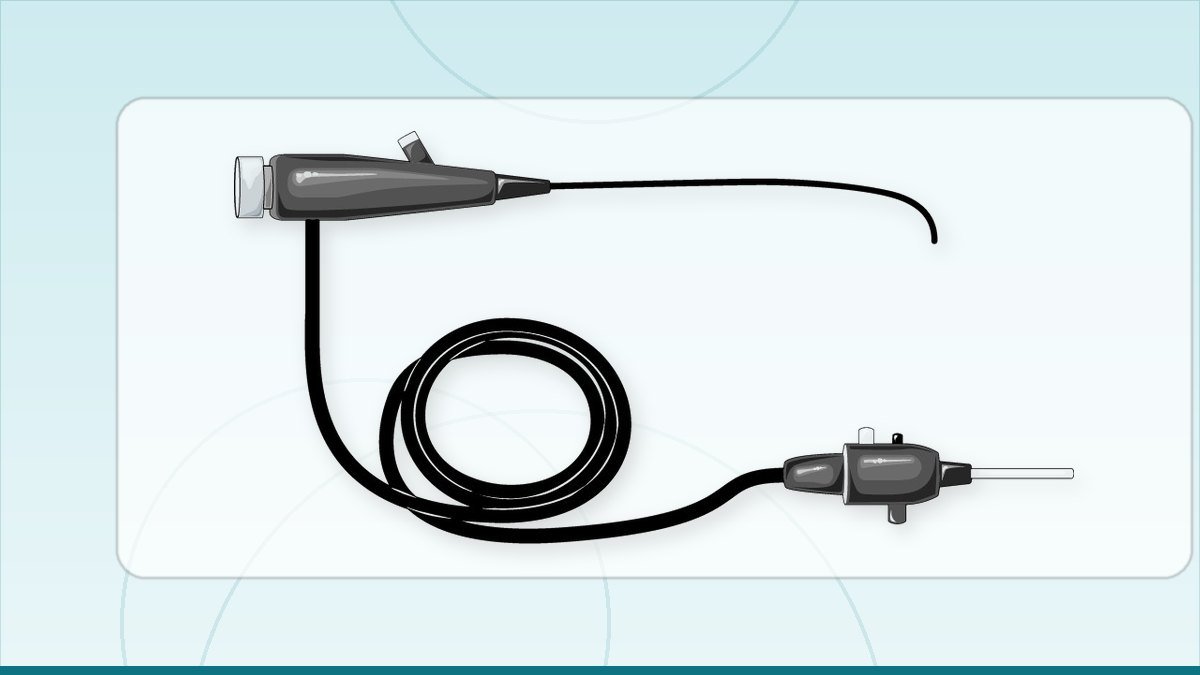
It is the removal of the piece of disc that is pressing on a nerve, done through a tube about the width of a pen refill. A camera sits inside that tube. The surgeon watches a screen, takes out the loose fragment, and leaves the rest of the spine alone.
Saline runs continuously through the tube to keep the view clear and wash the area. The skin cut is usually under one centimetre. There is no long incision down the back, and the back muscles are pushed apart rather than stripped off the bone.
The word people search is full endoscopic spine surgery. It simply means the whole operation is done through the endoscope, with the surgeon looking at a screen the entire time, rather than through a microscope over an open wound.
What it does not mean is a different disease or a different goal. The target is the same as any discectomy: take the pressure off the nerve so the leg pain settles.
Where does the disc sit, and why does that decide the route?
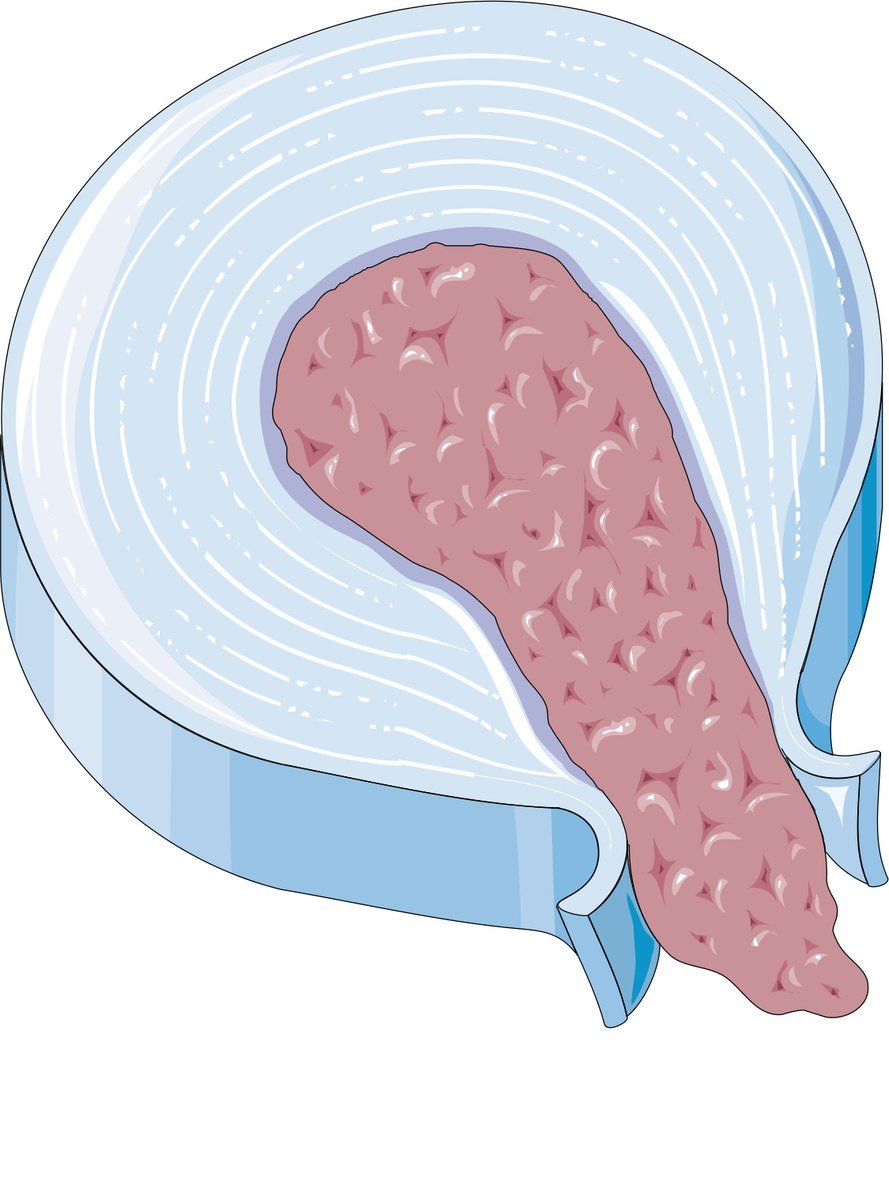
A disc does not always bulge in the same direction. That direction is the single biggest factor in choosing the route. Your MRI report and the images themselves show it clearly.
Broadly, a herniation sits in one of these places:
- Central: straight backwards, in the middle of the canal.
- Paracentral: slightly to one side, the most common pattern, pressing the nerve that is travelling down.
- Foraminal: inside the tunnel where the nerve exits the spine.
- Far lateral: outside that tunnel altogether.
- Migrated: the fragment has slipped up or down behind the vertebral body, away from the disc space.
A far lateral or foraminal disc is difficult to reach from the back without removing bone, but it sits almost in the path of a side approach. A fragment that has migrated far downwards is often easier to lift out from the back. This is why two patients with identical leg pain can be offered two different routes, and both can be right.
When a surgeon says the route is decided by the MRI, that is not a way of avoiding your question. Ask to be shown the image and told where the fragment is. A good answer takes about two minutes.
What is the transforaminal route?
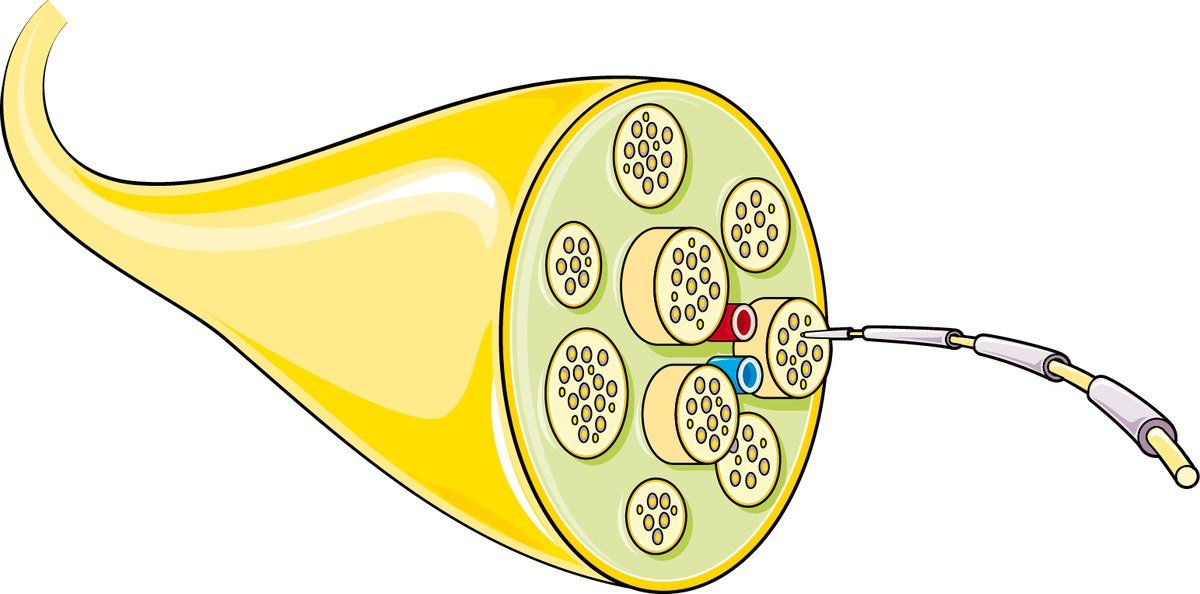
The surgeon enters from the side of your waist, several centimetres away from the midline, and travels forward at an angle towards the disc. The tube passes through a small safe corridor next to the exiting nerve root, then docks on the disc itself. If the bony tunnel is tight, a small burr can widen it before the endoscope goes in.
The main advantages are practical ones. Nothing is removed from the back of the spine, the ligament covering the canal is often left untouched, and the muscles running down your back are not disturbed. Because the approach is away from the spinal canal, this route can be done under local anaesthetic with sedation in suitable patients, which matters for people with heart or lung problems.
Being awake has one more use. If the tube is irritating the exiting nerve, the patient can say so at once, and the surgeon can adjust before any harm is done.
It has real limits. The hip bone gets in the way at the lowest level in many patients, particularly men with a high pelvis. Very large fragments that have migrated a long way can be hard to reach. Some patients get a burning or tingling sensation in the thigh afterwards from irritation of the exiting nerve. It usually settles, but it is unpleasant while it lasts and you deserve to be warned about it beforehand.
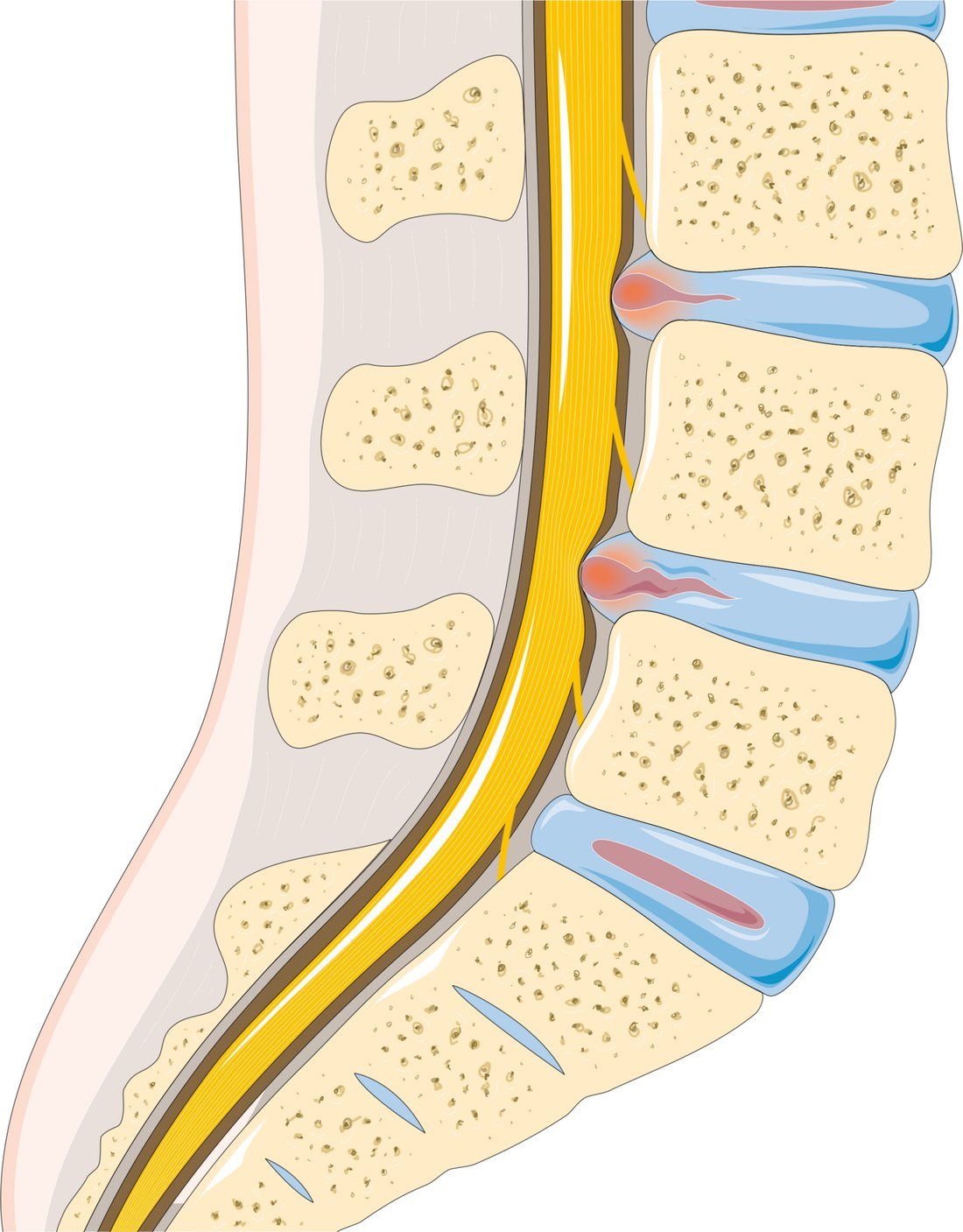
Why is L5-S1 usually done through the interlaminar route?
L5-S1 is the lowest disc, the one most commonly involved in what patients call slip disc with taang mein dard. Two pieces of anatomy make it different from the levels above it.
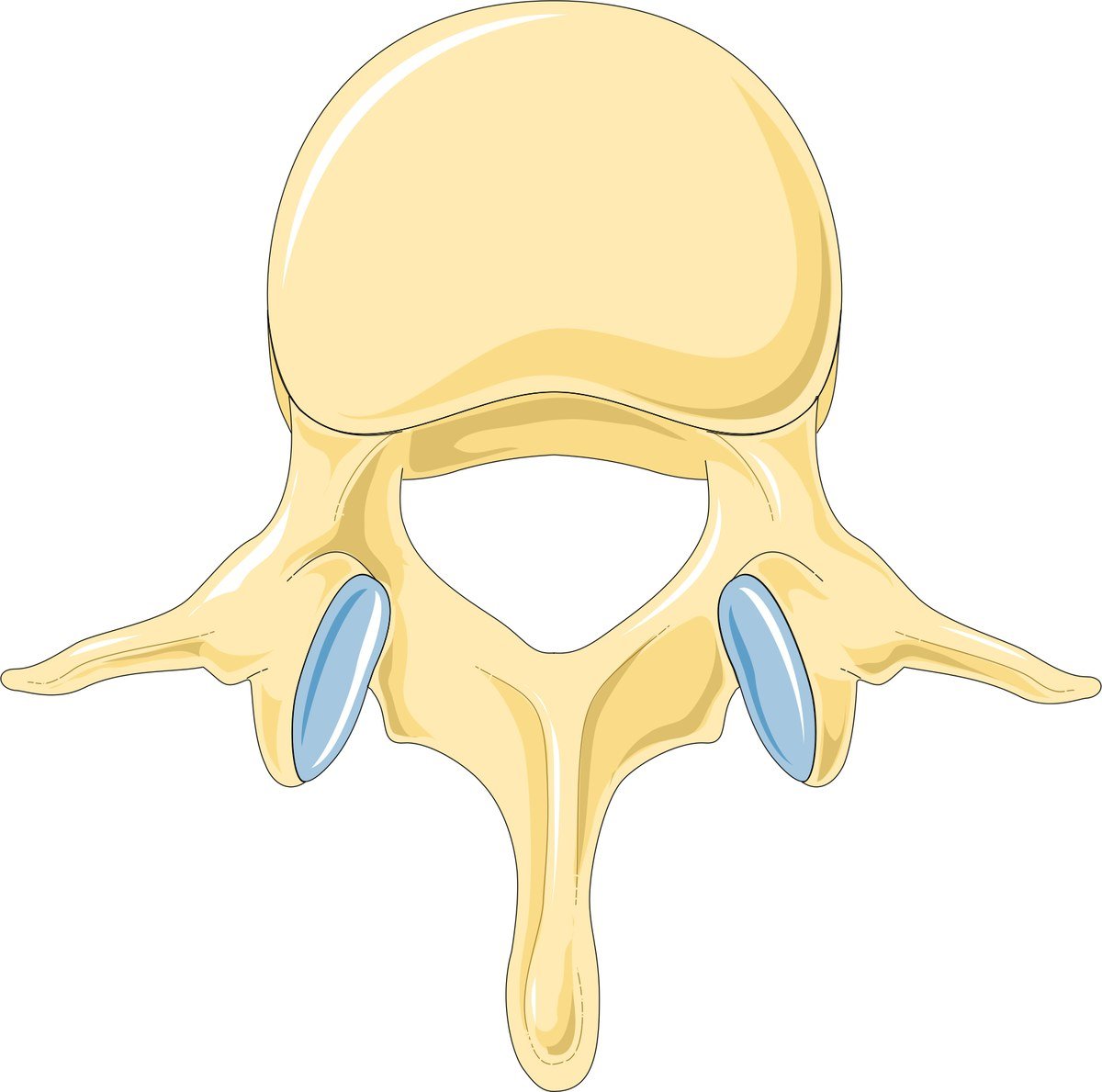
First, the iliac crest, the top of the hip bone, sits high on the side at this level in many people. It physically blocks the angle a transforaminal tube needs. Second, the natural window between the L5 and S1 laminae is wide here, wider than at any other lumbar level. So the back door is open, while the side door is often shut.
In the interlaminar route the endoscope goes in from the back through that window, opens the ligamentum flavum, gently moves the nerve root aside, and lifts out the fragment. Bone removal is minimal or none in many cases. This route is usually done under general anaesthesia, because the working area is inside the canal and the patient must be still.
It is also the better route for a fragment that has migrated downwards behind the sacrum, or one sitting in the armpit between the nerve root and the dural sac. The trade-off is that the surgeon is working right next to the nerve and the dura from the start, so the margin for error is smaller and experience counts.
Do I actually need surgery for kamar dard and taang mein dard?
Most likely not. The majority of disc herniations settle without any operation, and most back pain is not a surgical problem at all. If your pain is mainly in the back with no leg pain, an endoscopic discectomy is usually the wrong answer, whatever the MRI shows.
The pattern that responds well to surgery is leg pain that follows a nerve, running down the buttock into the calf or foot, matching the level shown on MRI, and not settling after six to twelve weeks of proper treatment. Proper treatment means adequate medication, activity as tolerated rather than complete bed rest, and physiotherapy from someone trained. Not four weeks of lying flat.
Go to a hospital the same day, not next week, if you have any of these:
- Difficulty passing urine, or leaking without knowing.
- Numbness around the private parts or inner thighs, the saddle area.
- Weakness that is getting worse, a foot that drags or slaps when you walk.
- Numbness or weakness in both legs.
About hakeem treatment, cupping and malish. Many families in Punjab try these first, and for ordinary muscular kamar dard a gentle massage rarely does harm. The danger is different. Forceful manipulation while a nerve is being compressed can make matters worse, and the weeks spent trying one remedy after another are weeks in which a weak foot can become a permanently weak foot. If you have leg weakness or bladder symptoms, that is not the time for another course of treatment. That is the time for an MRI.
A surgeon who examines you, looks at your MRI and tells you that you do not need an operation has just done his job properly. Take that answer seriously.
Is endoscopic spine surgery safe?
It is an established technique performed in spine centres worldwide, and in appropriate patients the results for leg pain are comparable to conventional surgery. But it is real spine surgery, done millimetres from a nerve, and safety depends heavily on correct patient selection and the surgeon's experience with the route being used.
The complications you should be told about before you sign consent:
- Recurrence. The disc can herniate again at the same level. This is a known risk of every type of discectomy, endoscopic or open, and it is the commonest reason for a second operation.
- Incomplete removal. A fragment can be missed, or the position may not allow safe removal, and the operation may need to be converted to an open microdiscectomy. Ask your surgeon in advance what he will do if this happens.
- Dural tear. A tear in the covering of the nerves, leaking spinal fluid. Uncommon, usually managed at the time.
- Nerve irritation or injury. Temporary burning, tingling or numbness is not rare, particularly after the transforaminal route. Lasting weakness is rare but possible.
- Infection. Rare with a wound this small, but never zero.
The honest summary is that the small wound reduces damage to muscle and bone, and that is a genuine advantage. It does not remove the risks that come from operating next to a nerve. Be careful with any clinic that describes the procedure as risk free.
Endoscopic or microdiscectomy: is microdiscectomy worth it?
Yes, microdiscectomy remains a very good operation. It has decades of published results behind it, it works reliably for sciatica from a herniated disc, and it is the technique with which most spine surgeons are most experienced. Choosing it is not choosing something outdated.
Microdiscectomy uses a small incision, usually two to three centimetres, with an operating microscope. Some muscle is lifted off the bone and a small amount of lamina may be removed. The endoscopic approach uses a smaller cut and less muscle disturbance, and patients typically mobilise and go home faster in the first days after surgery.
Where the published comparisons land is worth knowing: the early recovery tends to favour the endoscopic route, while by the time you reach several months to a year, leg pain relief and satisfaction are broadly similar between the two. So the choice is less about which operation is better in the abstract, and more about which one suits your disc, your anatomy, and the surgeon in front of you.
Here is the practical rule. A surgeon who is highly experienced in microdiscectomy doing a microdiscectomy will serve you better than a surgeon doing his early endoscopic cases on your spine. Technique matters less than the hands using it.
What does endoscopic spine surgery cost in Pakistan?
This is answered in full on what endoscopic spine surgery costs in Pakistan, so it is not repeated here.
What should I ask before I agree to an operation?
Take these questions with you, written on paper. A surgeon who is comfortable with his plan will not mind answering them.
- Show me on my MRI where the fragment is sitting.
- Which route are you planning, transforaminal or interlaminar, and why that one for my disc?
- What are my chances of the leg pain settling if I wait longer instead?
- What will you do if the fragment cannot be reached through the endoscope?
- How many nights in hospital, and when can I sit, drive and return to work?
- What is the plan if the pain comes back?
Searching for endoscopic spine surgery near me and reading endoscopic spine surgery reviews is a reasonable place to start, but reviews tell you about parking, staff and waiting time far more reliably than they tell you about surgical judgement. The better test is the consultation itself. Did he examine your legs, or only read the MRI? Did he explain when you would not need surgery? Did he give you a written quote without being pushed?
Dr. M. Abdur Rehman is a consultant neurosurgeon at Mujahid Hospital, Faisalabad, where endoscopic spine surgery and microdiscectomy are both performed. If you are looking for the best endoscopic spine surgeon in Faisalabad, judge the shortlist on those questions rather than on advertising, and bring your MRI to the appointment so you can leave with a clear answer about whether an operation is needed at all.
Questions patients ask about this
Can transforaminal endoscopic discectomy be done at L5-S1?
Sometimes, but often not. In many patients the top of the hip bone blocks the angle the tube needs at this lowest level, particularly in men with a high pelvis. The interlaminar route is usually preferred at L5-S1 because the natural window between the laminae is wide there.
Will I be awake during the operation?
Possibly, if you have the transforaminal route. It can be done under local anaesthetic with sedation, and being able to report nerve irritation is useful. The interlaminar route is usually done under general anaesthesia because the work is inside the spinal canal and you must stay completely still.
How soon can I go back to work after endoscopic discectomy?
Most patients walk the same day or the next morning and go home within a day or two. Desk work often restarts within two to three weeks. Heavy lifting, long driving and field work take longer, usually six weeks or more. Your surgeon should give you dates, not vague advice.
Can the disc slip again after endoscopic surgery?
Yes. Recurrence at the same level is a known risk of every discectomy technique, endoscopic and open alike, and it is the commonest reason patients need a second operation. Keeping your weight controlled, staying active and learning safe lifting reduces the risk but does not remove it.
My MRI shows a disc bulge but my leg does not hurt. Do I need surgery?
Almost certainly not. Disc bulges are found on MRI in large numbers of people with no symptoms at all, and they increase with age. Surgery treats a nerve being compressed, not a picture. Without leg pain, weakness or bladder symptoms, an operation is unlikely to help you.
Related articles
What your MRI must show before laser or endoscopic surgery makes sense
Before laser or endoscopic surgery for a slipped disc, your MRI has to match your symptoms exactly. What the…
Read this
Awake spine surgery under local anaesthesia: is it safe?
Awake endoscopic spine surgery under local anaesthesia: who it suits, what it feels like, real risks, and…
Read this
Day-care spine surgery: home the same day
Day care spine surgery in Faisalabad: who can go home the same day after endoscopic or keyhole disc surgery,…
Read thisAll patient questions · Spine surgery in Faisalabad · Book an appointment
Ask about your own scan. Send your MRI or X-ray on WhatsApp and get a straight answer on whether surgery is needed at all, from a consultant neurosurgeon in Faisalabad.
Dr. M. Abdur Rehman is a consultant neurosurgeon in Faisalabad. Send your scan on WhatsApp and ask what it actually shows.
Published for the practice of Dr. M. Abdur Rehman, consultant neurosurgeon, Mujahid Hospital, Faisalabad. General information only, not a substitute for examination.