
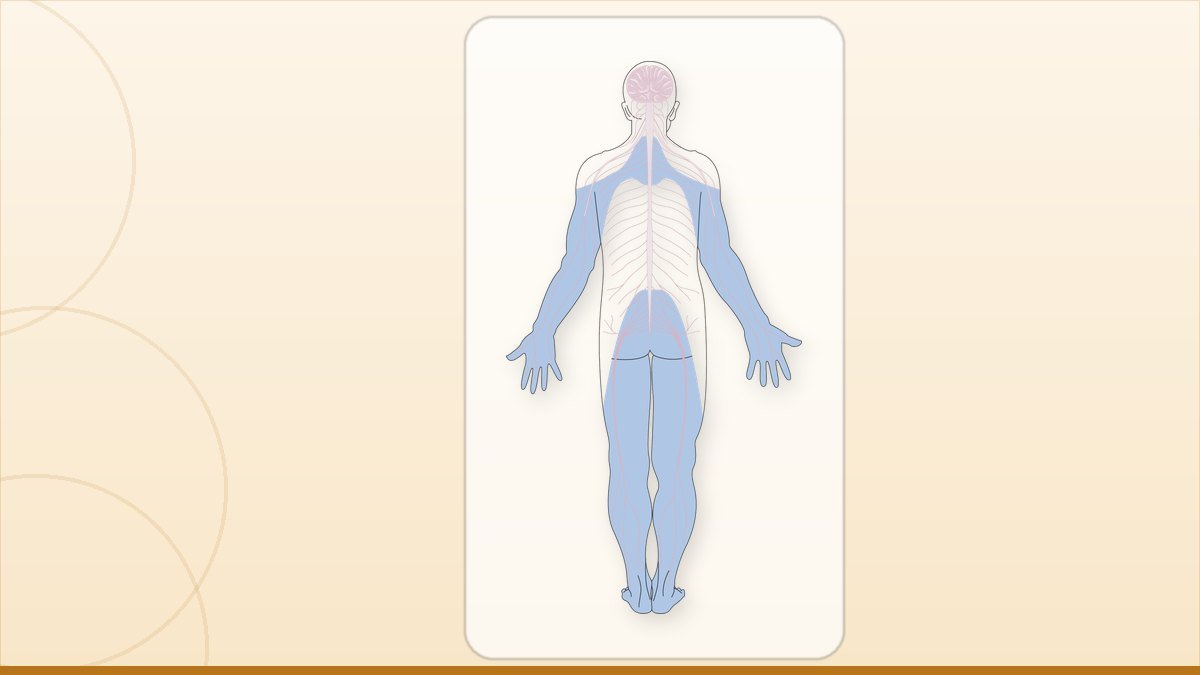
Numbness or tingling down the leg usually means a nerve in your lower back is being pressed, most often by a slipped disc or spinal stenosis. The pattern of numbness tells us which nerve is involved. Most cases settle with time and treatment. Surgery is needed only when weakness, bladder problems, or unrelenting pain appear.
What causes numbness and tingling down the leg?
Numbness or a sui chubhna feeling down the leg almost always begins in the lower back, not in the leg itself. A nerve root leaves the spine between two vertebrae, runs through the buttock and down the leg, and supplies sensation to one specific strip of skin. When something presses on that root, the strip of skin it feeds goes numb, tingles or burns.
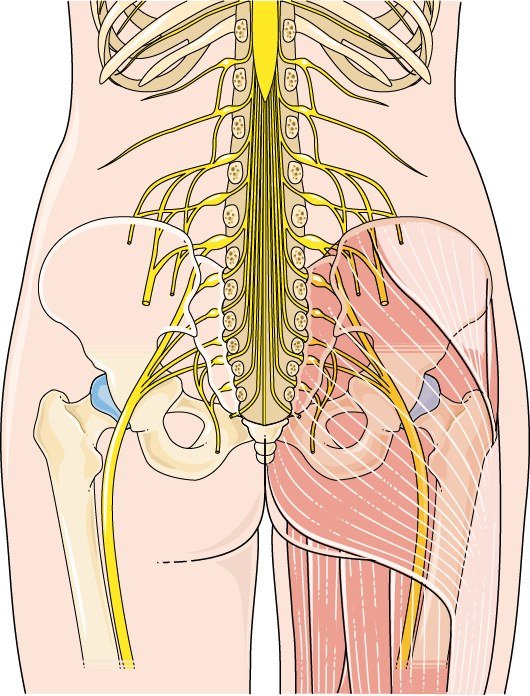
The usual causes we see:
- Slip disc (lumbar disc herniation). The soft centre of a disc bulges out and presses the nerve root. This is the most common reason for taang mein dard with numbness in one leg, and it often starts after lifting, a jerk, or sometimes for no clear reason at all.
- Spinal stenosis. The canal carrying the nerves narrows with age. Typical story: your legs feel heavy, numb or dead after walking a few hundred metres, and sitting down or leaning forward gives relief.
- Degenerative or deteriorating discs. Discs dry out and lose height over years. On their own they cause kamar dard more than leg numbness, but a settled disc can narrow the exit hole where the nerve leaves.
- Spondylolisthesis. One vertebra slips forward on the one below and drags on the nerves.
- Problems outside the spine. Hip arthritis, piriformis muscle tightness, and pressure on nerves at the knee can mimic sciatica.
One cause matters a lot in Pakistan and gets missed often: diabetic neuropathy. If both feet are numb, the numbness started at the toes and crept upwards, and it burns most at night, that is usually sugar affecting the nerves, not a disc. A spine operation will not help that. A blood sugar and HbA1c test will tell us more than an MRI.
Is this dangerous? Will I become paralysed?
For the large majority of people, no. A pinched nerve root in the lower back causes pain, numbness and sometimes a little weakness, but it does not cause the wheelchair paralysis that families are frightened of. That fear is the single most common reason patients come to us in tears, and in most cases we are able to send them home reassured.
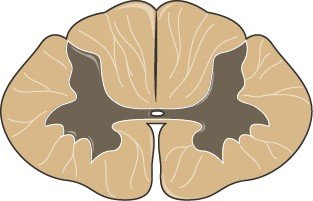
Here is why. In the lower back, below roughly the first lumbar vertebra, the spinal cord has already ended. What runs down there is a bundle of loose nerve roots, like a horse tail. Pressure on one of them is painful and can weaken one specific movement, but it does not cut off the cord. This is very different from a neck or upper back problem, where the cord itself is involved.
What we do take seriously is weakness. Numbness alone rarely damages anything permanently. But if your foot is dragging, if your slipper keeps slipping off, if you cannot stand on your toes or lift your foot upward, the nerve is not just irritated, it is being squeezed hard. That is the situation where waiting too long can leave lasting damage, and that is the situation where we act quickly.
The honest summary: numbness is a warning light, not a disaster. Weakness is a reason to be seen soon. Neither is a reason to panic.
When is leg numbness an emergency?
Some symptoms mean go to a hospital emergency the same day, not next week. Do not wait for an appointment and do not try a hakeem first.
- You cannot pass urine, or you are leaking urine without knowing.
- You have lost control of your motions, or you cannot feel when you need to go.
- Numbness in the area that touches a saddle: the inner thighs, around the private parts, the back passage.
- Sudden weakness in both legs, or numbness spreading up both legs.
- New loss of sensation with fever, unexplained weight loss, or a known cancer.
This combination is called cauda equina syndrome. It is uncommon, but it is one of the few genuine spine emergencies, and results depend heavily on how fast the pressure is taken off. Hours matter here, not days.
Slightly less urgent but still within a few days: a foot that has clearly become weak, numbness that is rapidly spreading, or pain so severe that no medicine touches it and you cannot sleep at all.
Which part of the leg is numb, and what does that tell us?
The map of numbness is one of the most useful clues we have. Each nerve root supplies a known band of skin, called a dermatome. When you tell us exactly where the numbness sits, you are usually telling us which disc level is involved before we have even seen the MRI.
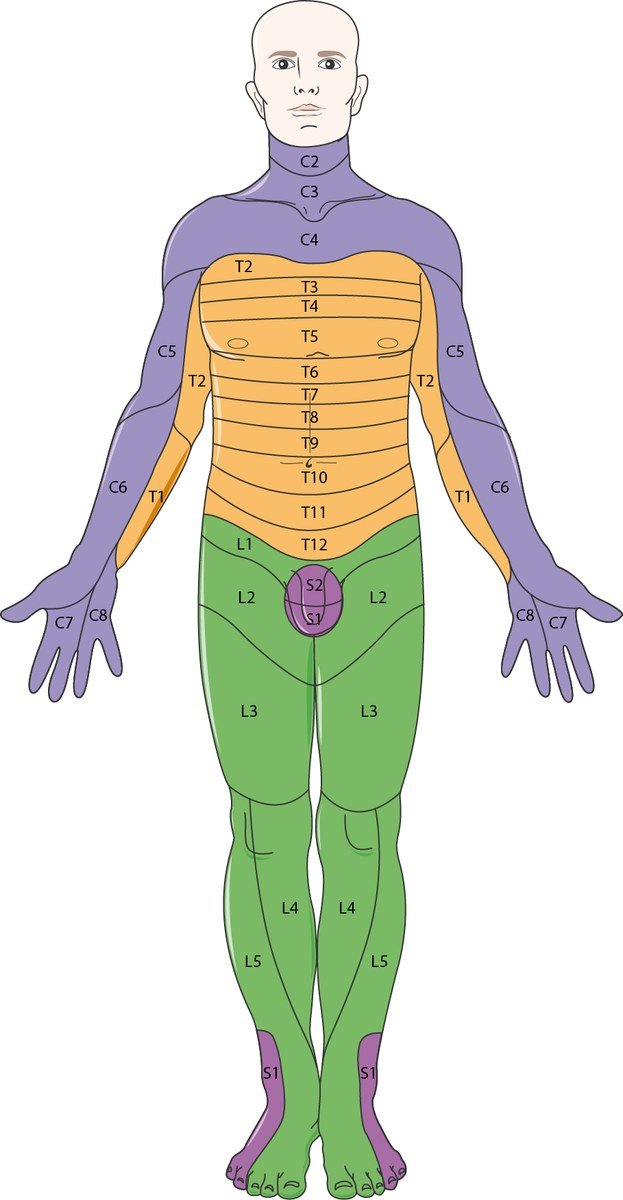
Lower back nerve roots
- L3 and L4: front of the thigh, inner side of the knee and shin. The thigh muscle may feel weak, and climbing stairs or getting up from a low chair becomes hard.
- L5: outer side of the calf, across the top of the foot, into the big toe. This is the level that causes foot drop, where the front of the foot will not lift and the foot slaps down when you walk.
- S1: back of the calf, the heel, the sole, and the little toe side of the foot. Standing on tiptoes on that leg becomes weak, and the ankle reflex disappears.
If the numbness is in your arm instead
The same principle applies higher up. Neck pain with numbness into the thumb points to the C6 root, the middle finger to C7, and the little finger to C8. Neck problems need a little more caution than the lower back, because the spinal cord itself passes through the neck. Trouble with fine work like buttons, a change in handwriting, or unsteadiness while walking with neck pain should be checked properly rather than treated with massage.
Bring this detail to your appointment. Draw it on your leg with your finger if that is easier. It is more valuable to us than a description of how bad the pain is.
Do I need an MRI, and what will it show?
Not on day one, in most cases. If your leg numbness started recently, you have no weakness and no red flag symptoms, the sensible plan is treatment first and imaging later if things do not settle. An MRI ordered too early usually changes nothing about what we do next.
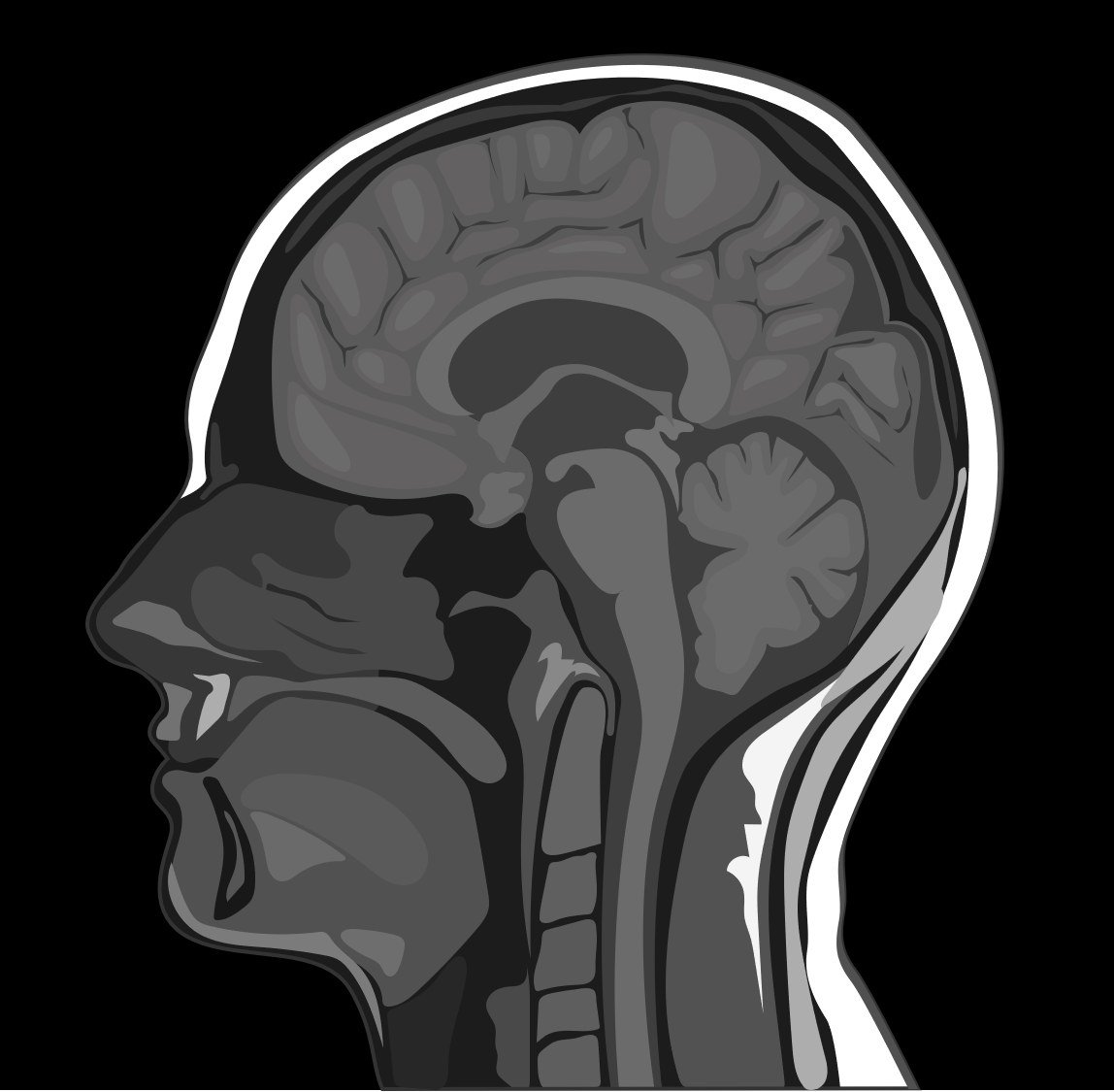
An MRI becomes genuinely useful when: symptoms have not improved after roughly six weeks of proper treatment, there is real muscle weakness, there are red flags, or surgery is being seriously considered. In that situation the MRI shows us the disc, the exact nerve root being pressed, the width of the canal, and whether the problem is one level or several.
Now the part nobody tells patients. An abnormal MRI is not by itself a reason for surgery. If you take a hundred people over forty who have no back pain at all and scan them, a large proportion will show disc bulges, dried out discs and mild narrowing. These are age changes, like grey hair inside the spine. Surgery is decided when the MRI finding matches your symptoms and your examination. A disc pressing the L5 root on the scan, plus numbness on the top of your foot, plus a weak foot lift, is a real story. A disc bulge on a report with no matching symptoms is not.
Bring your films, not only the report, and bring any previous scans. Comparison over time is often more revealing than a single image.
Can this get better without surgery?
Yes, and for most people it does. A large majority of disc-related leg numbness and sciatica improves over some weeks to a few months without any operation. The bulged disc material shrinks and gets absorbed by the body on its own. This is the single most important fact on this page, and it is the reason we send many patients home without booking a theatre date.
What actually helps in that waiting period:
- Keep moving. Two or three days of relative rest is enough. Long bed rest makes the back stiffer and the recovery slower.
- The right medicines. Ordinary painkillers help the back pain. Nerve pain and tingling often need a different class of medicine, prescribed properly and given a few weeks to work.
- Physiotherapy from a trained physiotherapist, once the sharpest pain has settled. Core strength, hamstring flexibility and walking distance are the targets.
- Fix what caused it. Weight, sitting posture, how you lift, long bike rides on bad roads, hours on a soft mattress.
- Control your sugar if you are diabetic. Nerves under pressure recover badly when sugar is uncontrolled.
About the hakeem, the pehlwan malish and the person who cracks backs. Gentle massage for muscle spasm is not going to harm you and many people find it soothing. Forceful pulling, jerking or standing on the back when a nerve root is already inflamed can make things sharply worse, and we have seen that. The bigger risk is time. If you spend four months on treatments while a weak foot gets weaker, the nerve may not come all the way back even after a perfect operation. Try what you like for pain. Do not delay assessment when there is weakness.
What about spinal stenosis and worn out discs specifically?
Stenosis behaves differently from a slip disc and needs a different plan. The classic story is age above fifty, both legs going numb, heavy or crampy after walking a certain distance, and full relief within a minute or two of sitting or bending forward over a trolley. Many patients tell us they can walk fine in the bazaar pushing a cart but not on a flat open road.
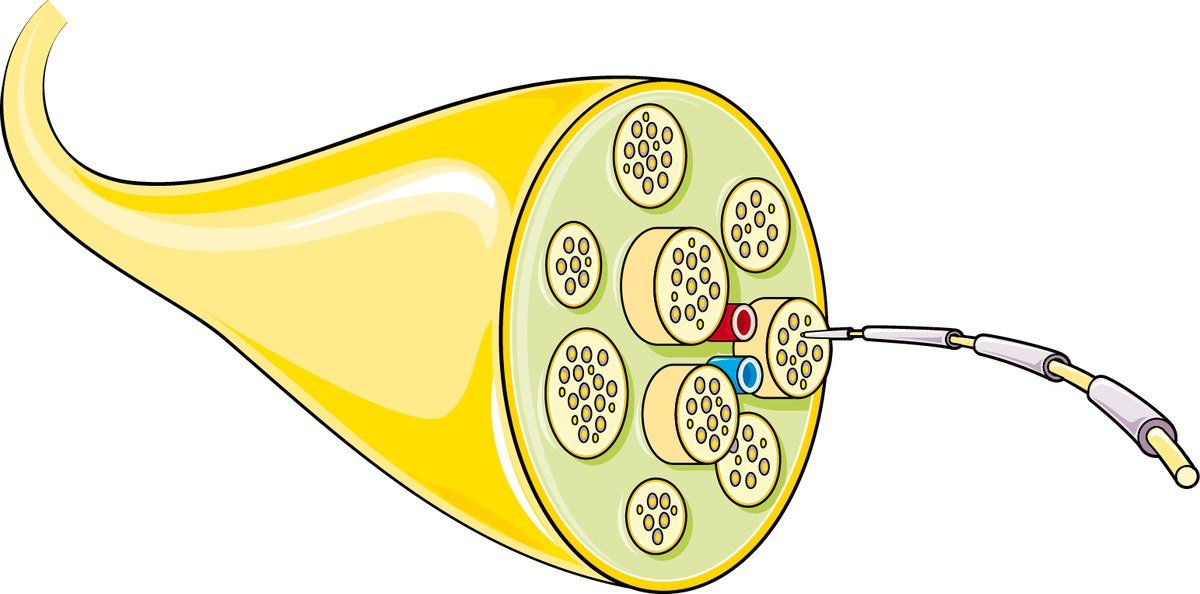
Stenosis is a slow, mechanical narrowing, so it does not shrink away by itself the way a fresh disc bulge does. That does not make surgery automatic. Many people manage for years with exercise, weight control, medication and simply adjusting how far they walk at a stretch. Surgery is offered when your walking distance has shrunk to the point where it is taking your independence away, or when weakness appears.
Deteriorating discs are the background change behind much of this. Discs lose water content with age, get flatter, and the joints behind them thicken to compensate. On its own this causes stiff, aching kamar dard that is worse in the morning and after long sitting. It is treated with exercise and time, not with an operation. Disc degeneration seen on a report is not, by itself, a diagnosis that needs cutting.
If surgery is needed, what are the options?
Surgery is offered for a minority of patients: those with significant weakness, those with cauda equina symptoms, and those whose leg pain and numbness have refused to settle after a fair trial of non-surgical treatment, when the MRI clearly matches the symptoms. The aim of all these operations is the same, which is to take pressure off the nerve.
- Endoscopic spine surgery. A small camera and instruments are passed through an opening of roughly a centimetre. The surgeon sees the nerve on a screen and removes the fragment of disc or the bone that is pressing it. Because the back muscles are separated rather than cut, most patients are up and walking the same day and hospital stay is short.
- Microdiscectomy. The established operation for a herniated disc, done through a small incision using an operating microscope. It has decades of evidence behind it and remains the right choice in many situations.
- Decompression for stenosis. Widening the tunnel so the nerves have room again.
- Fusion. Only when the spine is unstable, for example a vertebra that has genuinely slipped. Fusion is not a routine treatment for a slip disc or for plain back pain, and anyone recommending screws for simple disc pain deserves a second opinion.
Set your expectations correctly before you consent. Leg pain usually responds fastest and most reliably. Numbness is the slowest symptom to recover, often taking weeks to months as the nerve heals, and numbness that has been present for a very long time may never return completely even though the pressure has been removed. Back pain improves less predictably than leg pain. A surgeon who promises you everything back to normal by next week is not being straight with you.
Every operation carries risk, including infection, bleeding, a tear of the nerve covering, recurrence of the disc, and in a small number of cases no improvement. These should be explained to you and your family in plain Urdu before you sign anything.
What should you do next in Faisalabad?
Work through it in this order.
- Check for red flags today. Bladder or bowel changes, saddle numbness, or weakness in both legs means go to an emergency department now.
- If there are no red flags, start proper non-surgical treatment and give it real time. Keep a note of your walking distance and whether the numbness is spreading or shrinking.
- Get assessed by a spine specialist if there is weakness, if nothing has improved after about six weeks, or if you are simply frightened and want a clear answer.
Bring your MRI films and reports, a list of the medicines you have already tried and for how long, your sugar and vitamin D reports if you have them, and one family member who will be part of the decision. Decisions about surgery in our families are rarely made alone, and it is better that the person paying and the person caring for you hear the same explanation directly rather than second hand.
On cost, be businesslike. Prices in Punjab vary widely with the hospital, the room category, the anaesthesia and whether any implant is used, so a number quoted on a phone call means very little. Ask for a written quote in PKR that separates surgeon fee, hospital and theatre charges, anaesthesia, implants if any, and follow-up visits. A clinic that will not put it in writing is telling you something. Also ask what happens if you need a second night in hospital.
Two questions worth asking any surgeon you consult, including us. First: what happens if I do nothing for three more months? Second: what exactly on my scan matches my symptoms? A surgeon who answers both clearly is worth more than one with the loudest advertising. If you are searching for the best endoscopic spine surgeon in Faisalabad, judge on whether the consultation left you understanding your own spine, not on the claims made in the advertisement. Dr. M. Abdur Rehman, consultant neurosurgeon, sees spine patients at Mujahid Hospital, Faisalabad, and a consultation that ends with no surgery is a perfectly good outcome.
Questions patients ask about this
Can numbness in the leg go away on its own?
Often, yes. When numbness comes from a slipped disc, the bulged material is gradually absorbed by the body and most people improve over some weeks to a few months without surgery. Nerves recover slowly, so numbness usually fades after the pain does. Weakness that is getting worse should not be watched at home.
Why is only one leg numb and not both?
Because a disc usually presses a nerve root on one side only. One-sided numbness following a clear band down the leg points strongly to a spine problem. Numbness in both feet that started at the toes and crept upward is more often diabetes or a vitamin deficiency, and needs blood tests rather than an MRI.
Is numbness worse than pain?
Not necessarily, but it is a different signal. Pain means a nerve is irritated. Numbness means it is not conducting properly. What genuinely worries us is weakness, such as a dragging foot or being unable to stand on your toes, because prolonged pressure with weakness risks lasting damage and needs assessment within days.
Can a hakeem, massage or bone setter fix a slipped disc?
Gentle massage may ease muscle spasm and feels good, and it is unlikely to harm you. Forceful pulling or cracking of the spine when a nerve root is already inflamed can worsen symptoms. The real risk is delay. If your foot is weak or bladder control has changed, get medical assessment first.
How long does numbness take to settle after endoscopic surgery?
Leg pain often improves within days. Numbness recovers more slowly, typically over weeks to several months, because the nerve fibre itself needs time to heal after the pressure is removed. Numbness present for a long time before surgery may not return completely, which is one reason not to postpone assessment when weakness appears.
If surgery is on the table
If numbness is persistent and a scan has found a cause, these explain when an operation helps and when it does not.
Related articles
Foot drop: when the foot stops lifting
Foot drop treatment: why the foot stops lifting, when a slipped disc needs surgery, and how fast you should…
Read this
Back pain that is worse at night
Back pain worse at night: what it usually means, the warning signs that need urgent tests, and when a spine…
Read this
When back pain is not coming from your spine at all
Not all kamar dard is a slip disc. A Faisalabad neurosurgeon explains back pain causes other than the spine,…
Read thisAll patient questions · Spine surgery in Faisalabad · Book an appointment
Ask about your own scan. Send your MRI or X-ray on WhatsApp and get a straight answer on whether surgery is needed at all, from a consultant neurosurgeon in Faisalabad.
Dr. M. Abdur Rehman is a consultant neurosurgeon in Faisalabad. Send your scan on WhatsApp and ask what it actually shows.
Published for the practice of Dr. M. Abdur Rehman, consultant neurosurgeon, Mujahid Hospital, Faisalabad. General information only, not a substitute for examination.