
Foot drop means you cannot lift the front of your foot, so the toes catch or slap when you walk. In back patients it usually comes from a compressed L5 nerve root. It needs urgent assessment, not weeks of massage. When a disc is pressing on the nerve, early surgery gives the best chance of recovery.
What is foot drop and why has my foot stopped lifting?
Foot drop is weakness of the muscles that pull your foot and toes upward. The front of the foot hangs down, the toes scrape the floor, and you either trip or lift the knee high like a soldier marching to clear the ground. Many patients describe it simply as paon upar nahi uthta.
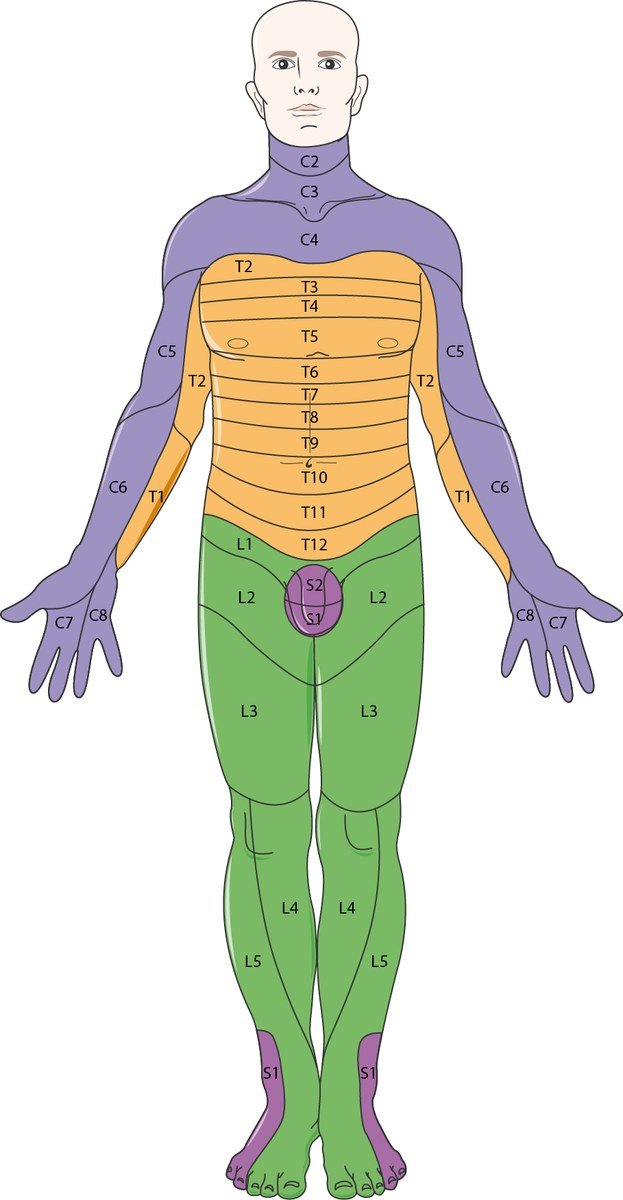
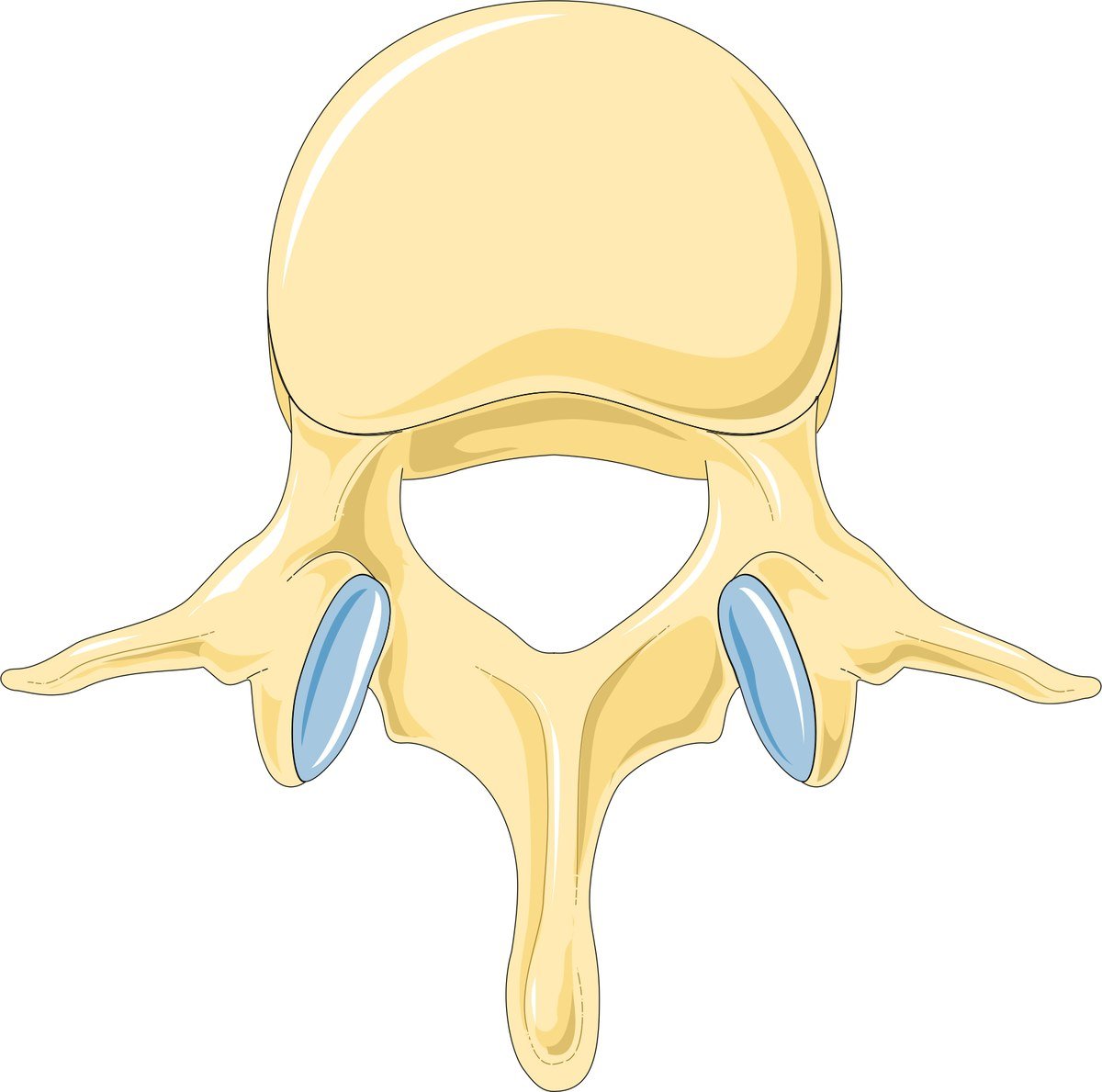
The commonest cause we see in spine clinic is pressure on the L5 nerve root in the lower back. A disc bulges or slips out at the L4-L5 level, presses the nerve where it exits, and the signal to the muscle on the front of the shin weakens. Usually there is taang mein dard going down the outer calf into the top of the foot, and numbness between the big toe and the second toe. Sometimes the pain settles just as the weakness appears, and families wrongly take that as improvement.
Not every foot drop comes from the back. The nerve can also be squeezed at the outer side of the knee, at the bony point below the knee joint, by sitting cross legged for long hours, by a tight plaster cast, or after significant weight loss. Diabetes, which is common here, damages nerves too. Stroke, spinal cord problems and motor neurone disease can also present with a dragging foot.
This is why the cause must be pinned down before anyone talks about treatment. Foot drop is a sign, not a diagnosis.
Is surgery safe, or will it leave me paralysed?
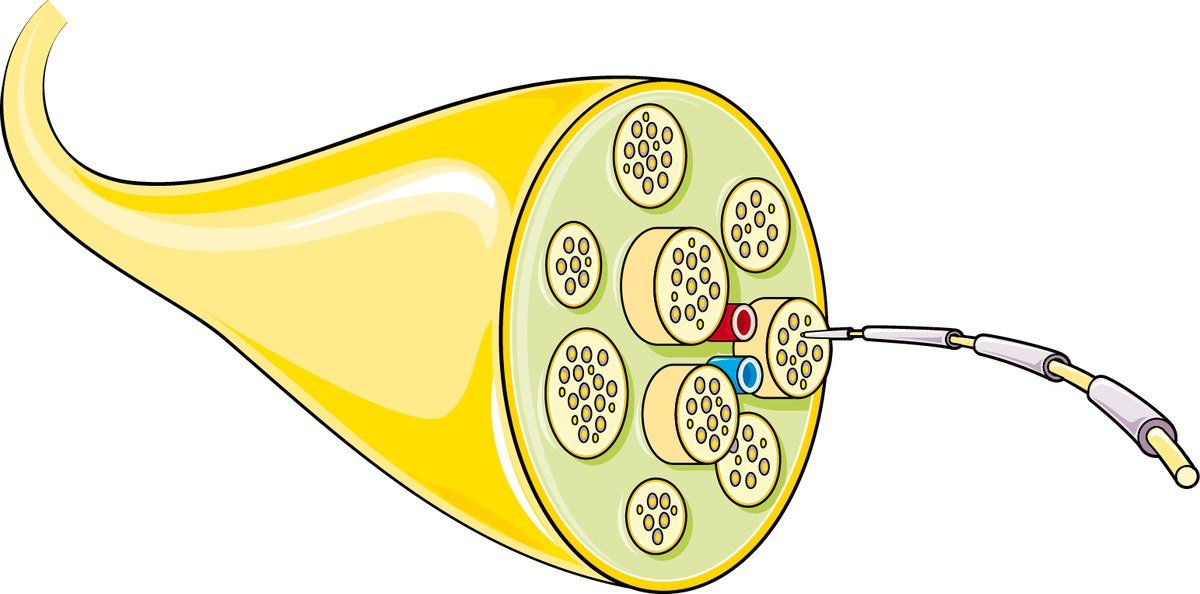
This is the first question almost every family asks, and the honest answer is that lumbar disc surgery does not carry a meaningful risk of paralysis. The spinal cord ends high in the back, around the level of the lowest ribs. Below that there are separate nerve roots hanging loose in fluid, like strands, and a disc operation at L4-L5 or L5-S1 works around those strands, not on the cord itself.
Serious complications are uncommon. The ones a surgeon should still name for you before you sign consent are infection, bleeding, a tear in the covering of the nerves that leaks spinal fluid, the disc slipping out again at the same level in the future, and numbness that does not fully clear. Every one of these is manageable and none of them means a wheelchair.
Here is the harder truth, and it matters more than the paralysis fear. Surgery takes the pressure off the nerve. It does not put the power back. The nerve has to heal on its own afterwards, and that takes weeks to months. If it has been crushed for a long time, some weakness may stay. So the real risk is not the operation. The real risk is waiting.
There is one situation that is a genuine emergency. If you lose control of urine or stool, cannot pass urine, or go numb around the private parts and inner thighs, go to a hospital emergency the same night. That is cauda equina syndrome and it will not wait for a morning appointment.
How much time do I have before the weakness becomes permanent?
Less than most people assume. Nerve recovery depends heavily on how badly the nerve is squeezed and how long it stays squeezed, so the window is measured in weeks, not seasons.
A useful way to think about it: a mild foot drop, where you can still lift the foot against some resistance and it is not getting worse, can often be watched and treated without surgery. A dense foot drop, where the foot barely moves or does not move at all, is a different matter. So is any weakness that is clearly worsening week by week. Those two situations push strongly toward early decompression.
The pattern we see again and again in Faisalabad is a patient who felt kamar dard for two months, then noticed the foot slapping, then spent another three months on tel malish, hakeem dawai, and a bone setter. By the time an MRI is done, the nerve has been under pressure for half a year. The disc can still be removed. The power often does not come all the way back.
If your foot has stopped lifting, treat it like a burst pipe. Get it looked at now and decide calmly afterwards.
Does foot drop always need surgery?
No. A good number of patients recover without an operation, and any surgeon who tells you every foot drop needs a knife is not being straight with you. Most back pain, on its own, is never a surgical problem at all.
Non-surgical treatment is reasonable when the weakness is mild, stable or improving, and the pain is controllable. It usually includes:
- Short-term medicines for nerve pain, prescribed properly and not taken indefinitely
- Supervised physiotherapy focused on the ankle and on safe walking
- An ankle foot orthosis, a light splint inside the shoe that holds the foot up so you stop tripping and falling
- Sorting out the things that make it worse, including sitting cross legged for hours, and getting blood sugar under control if you are diabetic
The splint deserves a special mention. It does not cure anything, but it stops the falls, and a fall on a stairway or a wet bathroom floor does far more damage than the foot drop itself. Older patients in particular should get one fitted early.
Surgery becomes the sensible choice when the MRI shows a disc clearly compressing the L5 root, the examination matches that level, and either the weakness is severe or it is not recovering. Then the operation is not a gamble. It is simply removing the thing that is choking the nerve.
What does the MRI have to show before surgery is justified?
An MRI alone never decides the operation. The scan and the patient must tell the same story, and the surgeon's job is to check that they match.
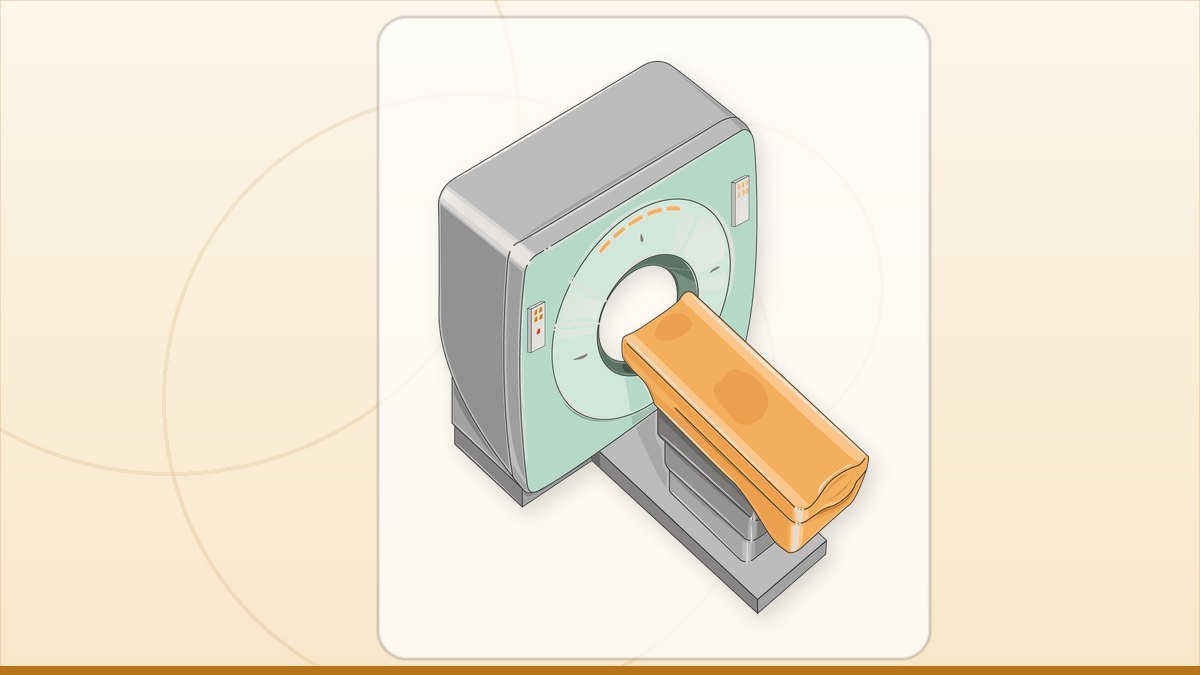
For a foot drop caused by the spine, the scan should show a disc herniation or a bulge pressing the L5 nerve root, usually at L4-L5, on the same side as the weak foot. If your right foot is dropping and the MRI shows a left sided disc, something is wrong with the diagnosis and more thinking is needed before any incision.
Bulges are extremely common on MRI reports in people with no symptoms at all. A report saying disc bulge is not a sentence to surgery, and a great deal of unnecessary operating in this country starts with a patient being frightened by their own scan report. Treatment for a bulged disk is decided by what the disc is doing to a nerve, not by the word printed on the film.
If the MRI of the back is clean and the foot is still dropping, the problem is elsewhere. Then nerve conduction studies and an EMG are used to locate where the nerve is being pinched, and blood tests are done to look for causes such as diabetes.
What are the treatment options for a slipped disc causing foot drop?
When the L5 nerve is confirmed to be under pressure, the aim of every option is the same: get the disc fragment off the nerve. The options differ in how big a hole is needed to do it.
Endoscopic spine surgery
A small tube carrying a camera and light is passed to the disc through an opening roughly the width of a pencil. The surgeon watches on a screen at high magnification and removes the fragment pressing the nerve. Muscle is pushed aside rather than cut. Blood loss is minimal, most patients walk the same day, and the wound is closed with a stitch or two. For a single disc pressing a single nerve root, this is a very good fit.
Microdiscectomy
The long established operation, done through a small incision using an operating microscope. It is well tested, reliable, and still the right answer in certain anatomy, including some large or migrated fragments and revision cases. A surgeon who offers both can choose by what your scan shows rather than by which instrument is available.
What about laser treatment for spine problems?
Be careful here. Advertising for laser spine treatment is heavy in Pakistan and the word is often used loosely, sometimes for procedures that only shrink a small amount of disc material rather than removing the fragment sitting on your nerve. For a genuine foot drop, the nerve needs to be physically decompressed and seen to be free. Before agreeing to anything labelled laser, ask exactly what will be removed, and ask whether the surgeon will actually visualise the nerve root. If the answer is vague, walk away.
Injections have a place for pain, but a steroid injection does not reliably restore a failing muscle. Do not let an injection buy three months you do not have.
What happens after surgery, and when will the foot lift again?
Expect pain relief early and power late. The leg pain often eases within days, sometimes as soon as you wake up. The foot is a slower story, because the nerve fibres have to repair and regrow.
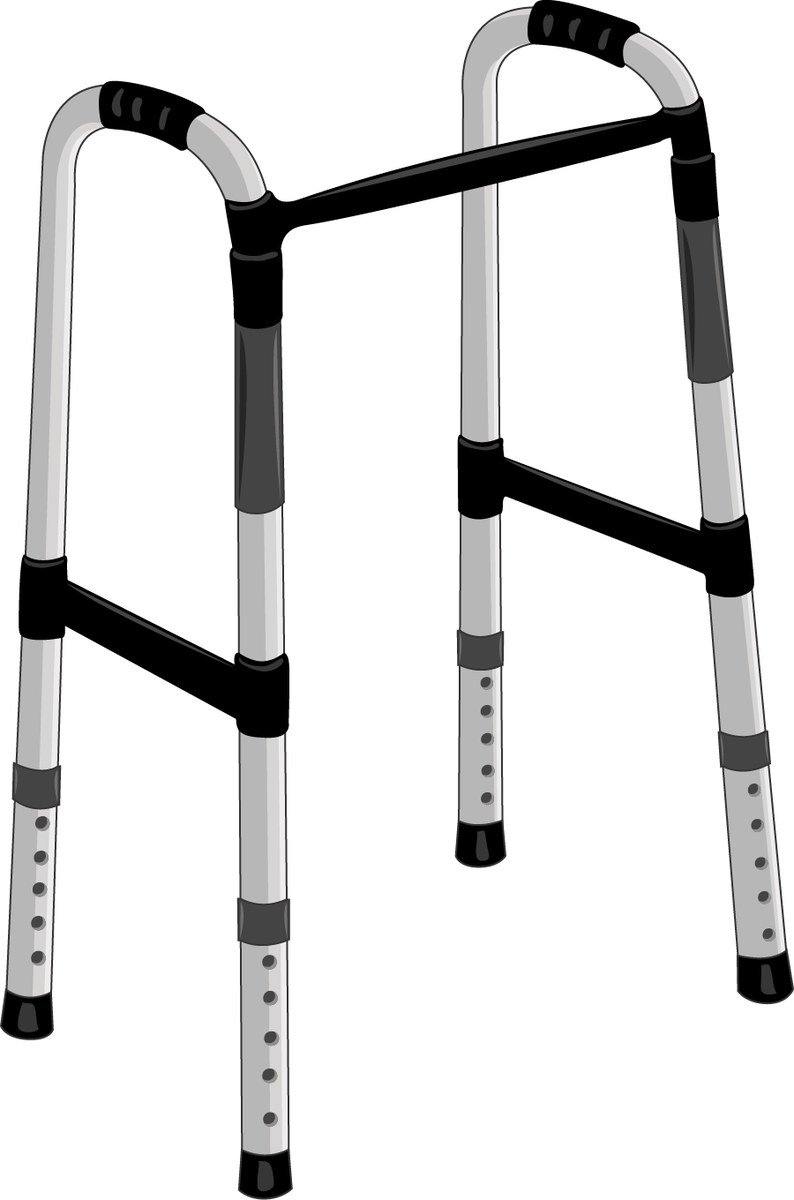
Improvement usually starts as a flicker of movement and builds gradually over weeks to months. Recovery tends to be better in younger patients, in those whose weakness was partial rather than complete, and in those operated sooner rather than later. Some patients regain full strength. Some regain useful strength but keep a mild limp on tired days. A few, usually those who waited a very long time, keep the drop and continue using a splint.
Physiotherapy after surgery is not optional. The muscle wastes while the nerve is compressed, and it has to be rebuilt once the signal returns. Keep the splint until your surgeon says you can walk safely without it.
Most people go back to office or shop work within a couple of weeks after endoscopic surgery, and to heavier physical work later, guided by the surgeon. Follow the lifting restrictions you are given. The disc space needs time to settle.
What does slip disc treatment cost in Pakistan?
This is answered in full on what spine surgery costs in Pakistan, so it is not repeated here.
Who should you see, and what should you ask?
Start with a doctor who will examine your leg properly, not just glance at the MRI report. A real assessment involves testing the power of the foot against resistance, checking sensation, checking reflexes, and watching you walk. That examination is what tells the surgeon whether the scan finding is actually the culprit.
Fair questions to ask, and you are entitled to clear answers:
- Which nerve root do you think is affected, and why?
- Is my weakness mild or severe, and is it getting worse?
- If I wait, what specifically are we risking?
- Would you do this endoscopically or as a microdiscectomy, and why that choice for me?
- Honestly, how much power do you expect me to get back?
If you are searching for slip disc treatment near me, or trying to find the best endoscopic spine surgeon in Faisalabad, judge the answer on those five replies rather than on advertising. A surgeon willing to tell you that you do not need surgery is the one worth trusting when the day comes that you do.
Dr. M. Abdur Rehman is a consultant neurosurgeon and spine surgeon at Mujahid Hospital, Faisalabad, seeing patients with slipped disc, sciatica and foot drop. Bring your MRI films and the CD, not only the report, and bring a family member who will be part of the decision. If the foot has stopped lifting, book the appointment this week.
Questions patients ask about this
Can foot drop be cured without surgery?
Sometimes yes. Mild weakness that is stable or improving often recovers with physiotherapy, medicines, an ankle splint and time. Severe weakness, or weakness that is getting worse while a disc presses the L5 nerve, usually does better with early decompression. The examination and the MRI together decide, not the label alone.
How long after surgery will my foot start lifting again?
Pain usually improves within days, but power returns slowly because the nerve has to repair itself. Most patients notice a flicker of movement first, then gradual gains over weeks to months. Recovery is generally better when the weakness was partial and when surgery was done early rather than after long delay.
Is laser treatment a good option for foot drop?
Be cautious. The term is used loosely in advertising and often refers to procedures that shrink disc material rather than remove the fragment compressing your nerve. Foot drop needs the nerve genuinely decompressed and seen to be free. Ask exactly what will be removed and whether the nerve root will be visualised.
I have foot drop but no back pain. Does that rule out a disc?
No, but it makes other causes more likely. Sometimes the leg pain settles as the nerve weakens, which patients mistake for recovery. Pressure at the outer knee, diabetes-related nerve damage and other neurological conditions also cause a dropping foot. Nerve conduction studies and an EMG help locate the true site.
Should I try massage or a hakeem first?
Not for a weak foot. Massage and traditional remedies may soothe simple kamar dard, but they cannot lift pressure off a compressed nerve, and the months spent trying them are months the nerve cannot afford. Get the cause identified first. If surgery is not needed, you will be told so plainly.
If surgery is on the table
Foot drop is one of the few situations where waiting has a real cost. These explain what a decompression involves.
Related articles
Back pain that is worse at night
Back pain worse at night: what it usually means, the warning signs that need urgent tests, and when a spine…
Read this
When back pain is not coming from your spine at all
Not all kamar dard is a slip disc. A Faisalabad neurosurgeon explains back pain causes other than the spine,…
Read this
X-ray, MRI or CT for back pain: which one and when
MRI vs X-ray for back pain: X-ray shows bone, MRI shows discs and nerves. A Faisalabad spine surgeon explains…
Read thisAll patient questions · Spine surgery in Faisalabad · Book an appointment
Ask about your own scan. Send your MRI or X-ray on WhatsApp and get a straight answer on whether surgery is needed at all, from a consultant neurosurgeon in Faisalabad.
Dr. M. Abdur Rehman is a consultant neurosurgeon in Faisalabad. Send your scan on WhatsApp and ask what it actually shows.
Published for the practice of Dr. M. Abdur Rehman, consultant neurosurgeon, Mujahid Hospital, Faisalabad. General information only, not a substitute for examination.