

If you are travelling to Faisalabad for spine treatment, plan one consultation visit with your MRI films and reports in hand. Most patients do not need surgery. A careful examination plus your scan usually settles that question in a single sitting, and you can go home the same day and discuss it with your family.
Do I really need to travel to Faisalabad for this?
Sometimes no. If your back pain started a few weeks ago, has no leg pain with it, and is slowly improving, travelling four hours for an opinion is not urgent. Rest, simple painkillers your local doctor approves, and gentle walking will do more in that first month than any consultation will.
Travel is worth it when the picture is different: pain running down the leg (taang mein dard) that is not settling after six to eight weeks, numbness or weakness in the foot, or an MRI already showing a disc pressing on a nerve and nobody has explained to you what it means. That is a real question, and it deserves a proper answer from someone who does spine work every day.
Faisalabad is a practical place to come for it. The M4 puts you a couple of hours from Multan and around two from Lahore, and the city is an easy road trip from Jhang, Chiniot, Toba Tek Singh, Sargodha, Gojra, Jaranwala and Sahiwal. Many families come in the morning and are back home by evening.
One exception. If you have lost control of urine or stool, gone numb between your legs, or your foot has become suddenly weak, do not plan a trip for next week. Go to the nearest emergency department today. That combination is treated as an emergency wherever you are.
Is spine surgery safe, or will I end up paralysed?
This is the fear behind almost every spine consultation in Pakistan, and it deserves a straight answer. Paralysis after routine lumbar disc surgery is very rare. In the lower back, below roughly the first lumbar vertebra, the spinal cord has already ended and what the surgeon is working around are individual nerve roots, which are far more forgiving than the cord itself.
That is not the same as saying the operation has no risk. Real risks exist and an honest surgeon will list them before you sign anything: infection, a tear in the covering of the nerves, bleeding, temporary numbness, the disc herniating again months or years later, and the possibility that the leg pain improves but some back pain remains. Ask about all of these out loud. A surgeon who becomes irritated by the question is telling you something useful.
What families often do not realise is that waiting also has a risk. A nerve that has been squeezed and weakened for many months may not recover fully even after the pressure is taken off. So the choice is rarely between risk and no risk. It is between two different risks, and the job of the consultation is to tell you honestly which one is bigger in your case.
Endoscopic surgery and microdiscectomy are both done through very small openings, with the muscle pushed aside rather than cut away. Most patients walk within hours. That is the normal course, not a promise, and your own recovery depends on your age, how long the nerve has been compressed and what else is going on in your spine.
How do I know whether I actually need an operation?
Start from the honest position: most back pain is not surgical. Muscular kamar dard, pain from long hours on a bike or behind a shop counter, mild degenerative changes on an MRI in a person of fifty, none of these are helped by an operation. Surgery treats nerve compression and instability, not a tired back.
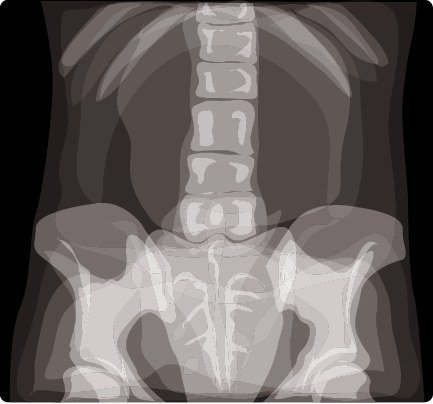
The clear reasons to consider surgery are narrower than most people expect:
- Leg pain from a proven disc herniation that has not settled after six to eight weeks of proper non-surgical treatment
- Real, measurable weakness in the foot or leg, not just the feeling of heaviness
- Loss of bladder or bowel control or numbness in the saddle area, which is an emergency
- Nerve pain so severe that it cannot be controlled and you cannot sleep or work at all
- Narrowing of the canal that has cut your walking distance down to a few minutes
Almost everything else starts with medicine, physiotherapy, weight and activity changes, and time. If a doctor recommends an operation in the first two minutes without examining your legs, without testing your power and reflexes, and mainly by pointing at an MRI screen, get a second opinion before you agree.
Many families in Punjab have already spent months with a hakeem, a massage wala or a bone setter before they reach a spine clinic. For simple back pain that delay usually costs nothing. Where it does matter is when there is a weak foot or a disc that is genuinely compressing a nerve, because strong massage on a hot, inflamed nerve tends to make things worse, and the weakness quietly deepens while everyone waits.

Can I do this in one visit, or will I need two trips?
Plan for one visit and be prepared for two. The first visit is the assessment: history, a proper neurological examination, and a review of your MRI. In most cases you will leave that visit knowing whether you are a surgical candidate, what the alternatives are, and what an operation would involve.
A second visit becomes necessary in three common situations. Your MRI is too old or too poor to decide on, and a fresh one is needed. You need a nerve conduction study or blood work first. Or surgery is genuinely indicated, and you want to go home, talk to the family and come back to fix a date rather than deciding on the spot. That last one is not a delay. It is the right way to make the decision.
If surgery is planned, the practical shape of the trip is usually: arrive a day before or early on the day, pre-operative tests and anaesthesia assessment, the procedure, and a short stay afterwards. Keyhole disc procedures are frequently done as a day case or with one night in hospital, though your surgeon will tell you what is realistic for your case rather than for an average case.
Book by phone before you travel. Coming from Sargodha or Multan and arriving to find the clinic list already full is an avoidable waste of a day and of fuel money.
What should I bring, and what does the MRI need to show?
Bring the actual MRI films, not just the CD. Many clinics can read a CD, but films let a surgeon flip through your images with you sitting there and point at the problem, which is worth far more than a report you do not understand. Bring the written report too.

Also bring:
- Every old prescription and any previous X-rays or scans, even if you think they are useless
- The strips of the medicines you are taking now, including blood pressure, diabetes and blood thinning medicines
- Your CNIC and, if you have panel or insurance cover, the card and letter
- One family member who will be part of the decision
On the MRI itself: for lower back and leg pain the study that matters is an MRI of the lumbosacral spine, and it should have been done reasonably recently. A scan from three years ago describes a spine that no longer exists. If your neck and arm are the problem, the scan needed is of the cervical spine. If you are unsure which one to get, phone the clinic and ask before spending the money, because the wrong scan is a wasted trip.
One thing an MRI cannot do is decide for you. Scans of healthy people over forty are full of bulges and degenerative changes that cause no trouble at all. What makes a finding meaningful is whether it matches your symptoms and your examination. That is why the physical examination in the room matters more than the picture.
What does endoscopic spine surgery cost in Pakistan?
This is answered in full on what endoscopic spine surgery costs in Pakistan, so it is not repeated here.
Is laser spine surgery effective, and should I be looking for it?
Be careful with the word laser. In Pakistani advertising it is often used loosely to mean any small, modern-sounding spine procedure, including procedures where no laser is involved at all. Before you chase the term, ask a plain question: what instrument will actually be used, and what exactly will be removed?
There is a genuine technique in which a laser fibre is passed into the disc to shrink part of it. It exists, but the evidence supporting it is thinner and the situations where it is appropriate are narrower than for the operations most spine surgeons rely on. Endoscopic discectomy and microdiscectomy, by contrast, are well-established procedures with a long published track record for removing the fragment of disc that is pressing on a nerve.
So the question to bring to the consultation is not "do you do laser surgery". It is "what is pressing on my nerve, what will you take out, and how". If the answer is clear, specific to your scan, and you can repeat it back to your family in your own words, you are in a good conversation. If the answer is mostly about the technology, you are in a sales conversation.
Should I see an orthopaedic doctor, a neurologist or a neurosurgeon?
These three searches get typed constantly, and they are not interchangeable. A neurologist diagnoses and treats nerve and brain conditions with medicine and investigations, and does not operate. If your problem is numbness, tremor, fits or a nerve disease, a neurologist is the right door. For a disc pressing on a nerve root, a neurologist may confirm the diagnosis but will refer you onward for treatment.
Spine surgery in Pakistan is performed by both neurosurgeons and orthopaedic surgeons who specialise in the spine. Neither training background is automatically better. What matters far more is how much spine work that particular surgeon does, whether they routinely perform the specific operation being recommended to you, and whether they are willing to tell you when you do not need one.
The most useful question you can ask in the room is simple: how often do you do this operation, and what do you do when it does not go to plan. A surgeon who does spine work regularly answers that easily. It is a fairer test than any title.
How do I plan the trip and decide who to trust?
Practical plan. Phone ahead and take an appointment. Get the correct, recent MRI done before you travel so the visit is not wasted. Come early in the day, bring films and old records, and bring one family member who can hear the same explanation you hear and ask the questions you forget. Keep the day free rather than booking a return ticket for two hours later.
Deciding who to trust is less about the fanciest waiting room and more about how the conversation goes. Good signs: the doctor examines your legs before looking at the scan, explains in language your family understands, tells you clearly if surgery is not needed, gives you the risks without being asked, and hands you a written cost estimate without hesitation. Warning signs: an operation offered within minutes, pressure to decide today, discounts that expire, and reluctance to write the price down.
You are allowed a second opinion. Nobody who is confident in their advice will be offended by it, and in a decision this size it is the sensible thing to do.
If you are searching for the best endoscopic spine surgeon in Faisalabad, use that search to build a shortlist and then judge the shortlist by the conversation. Dr. M. Abdur Rehman is a consultant neurosurgeon at Mujahid Hospital, Faisalabad, seeing patients from across Punjab for endoscopic spine surgery and microdiscectomy, and for the more common answer of all, which is that an operation is not needed yet. Call the hospital to fix an appointment, bring your MRI films, and come with your questions written down.
Questions patients ask about this
I live in Jhang. Can I come and return the same day?
Yes, for a consultation. Jhang to Faisalabad is a short road trip, so leave early, take a morning appointment, and plan to be free until afternoon. Bring your MRI films so no second trip is needed. If surgery is later planned, that becomes a separate visit with an overnight stay likely.
My MRI was done at a small local lab. Will it be acceptable?
Usually yes, if it is a lumbosacral spine MRI of reasonable quality and reasonably recent. Bring the films, not only the CD or the report. If the images are unclear or too old to rely on, you will be told, and a repeat scan can be arranged during the same visit.
Should I try a hakeem or massage before coming to a surgeon?
For ordinary muscular kamar dard, many people do and often improve with time regardless. The danger is delay when there is leg pain with weakness or numbness. Strong massage on an inflamed nerve can worsen it, and a nerve compressed for many months may not fully recover later. Get examined first.
How soon after endoscopic surgery can I travel back home?
Many keyhole disc procedures involve a day case or a single night in hospital, and most patients walk within hours. Travel timing depends on your case, the distance and the road. Ask your surgeon directly before booking transport, and plan the return journey with frequent stops rather than one long stretch.
Do I need to bring a family member to the consultation?
Bring one if you can. Decisions about spine surgery are usually made by the family, not the patient alone, and second-hand explanations lose detail. Someone who heard the diagnosis, the risks and the cost estimate directly will save you an argument at home and possibly a second trip.
Related articles

What to bring to your first spine appointment
Going to a spine doctor in Faisalabad? Bring MRI films, not just the report, plus your medicine list and old…
Read this
How to send your MRI on WhatsApp so a surgeon can actually read it
Sending an MRI report to a doctor on WhatsApp? Here is how to photograph the films, which images matter, and…
Read this
Private or government hospital for spine surgery in Punjab
Government hospital or private for spine surgery in Punjab? An honest look at waiting, cost in PKR, safety,…
Read thisAll patient questions · Spine surgery in Faisalabad · Book an appointment
Ask about your own scan. Send your MRI or X-ray on WhatsApp and get a straight answer on whether surgery is needed at all, from a consultant neurosurgeon in Faisalabad.
Dr. M. Abdur Rehman is a consultant neurosurgeon in Faisalabad. Send your scan on WhatsApp and ask what it actually shows.
Published for the practice of Dr. M. Abdur Rehman, consultant neurosurgeon, Mujahid Hospital, Faisalabad. General information only, not a substitute for examination.