
Photograph each MRI film against a bright white screen or lightbox, flash off, one film per picture, straight on and in focus. Send them on WhatsApp as a document, not a photo, so the detail is not compressed. Add your age, where the pain travels, and how long it has lasted.
Why can't the surgeon just read the radiologist's report?
The report is a summary in words. It is useful, but it is not the scan. A line like "disc bulge at L4-L5 with mild thecal sac indentation" appears in the reports of a large number of people who have no pain at all. It tells a surgeon almost nothing about whether you personally need an operation.
What a spine surgeon is looking for is different. Is the disc material actually touching a nerve root, and is it the nerve that matches your symptoms? If your left leg burns down to the foot, the images should show something pressing the left nerve at that level. If the report says one thing and the pictures say another, the pictures win.
So send both. The typed report, and photographs of the films. The report gives the level and the vocabulary. The films let the surgeon check it against your story.
Will the MRI mean surgery? Could I end up paralysed?
Most people who send an MRI do not end up in an operating theatre. Back pain, even severe back pain with a disc bulge on the scan, is usually treated without surgery. Medicine, a short period of relative rest, then physiotherapy and gradual movement settles a large share of slip disc cases over some weeks.
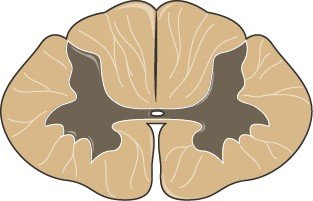
The fear behind the message is usually the same one. Kamar ka operation ho gaya to kya main chal sakoon ga? Families in Punjab have heard the story of someone who had spine surgery and was left in bed. It is worth saying plainly: a lumbar disc that is pressing a nerve root causes pain, numbness and weakness in one leg. The spinal cord itself ends higher up, above the usual slip disc levels, so a routine lumbar disc is not sitting on the cord.
There are situations that are genuinely urgent, and they are worth knowing so you do not sit at home waiting for a WhatsApp reply:
- You cannot pass urine, or you are leaking urine or stool
- Numbness in the area that touches the saddle when you sit
- A foot that has started slapping or dragging, or leg weakness that is getting worse day by day
- Fever with back pain, a history of TB or cancer, or a fall or accident
Any of those means go to a hospital now, in person. Everything else can safely be discussed over a message first.
How do I photograph MRI films with a mobile phone?
The single biggest mistake is using the flash. Flash bounces off the shiny film and destroys exactly the grey shades the surgeon needs. Turn it off before you take the first picture.
Here is the method that works with equipment you already have:
- Make a lightbox. Open a blank white page on a laptop or a second mobile, brightness to maximum. Do it at night or in a dim room. Tape the film flat against the screen. A window in daylight also works, but the laptop screen is more even.
- One film per photo. A single MRI sheet holds twenty or more small images. If you photograph three sheets in one frame, each image becomes unreadable. Fill the frame with one sheet.
- Straight on, not at an angle. Stand square to the film. A tilted photo stretches the anatomy and makes measurement guesswork.
- Tap to focus, then hold still. Tap the centre of the screen so the phone locks focus, breathe out, then press. Check the picture by zooming in. If the small numbers and the letters at the edge of the film are not sharp, take it again.
- Do not use scanner or document filters. Those apps push everything to black and white. An MRI is nothing but shades of grey.
Then send as a document. Attach, Document, Browse, and pick the saved image files. If you send them as normal photos, WhatsApp squeezes the file size down and softens the detail. As a document the file goes through at full quality.
Which MRI images actually matter?
If you can only send a few, send the side view and the cross sections at the painful level. Those two answer most questions.

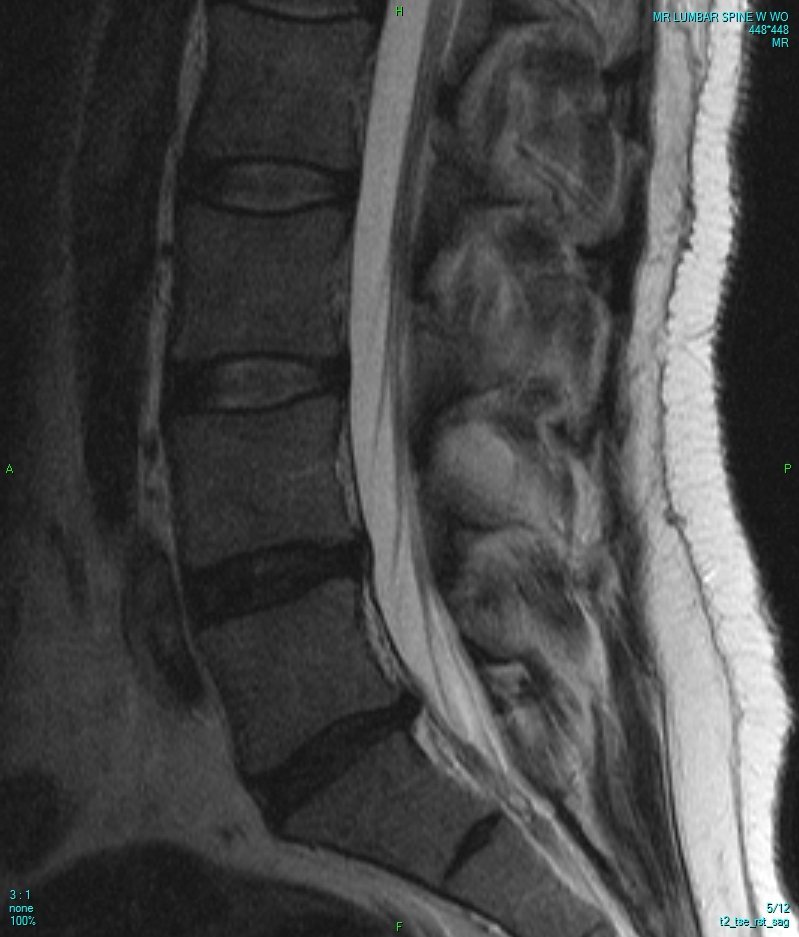
On the films, look for the sheet where the spine is seen from the side, stacked bones with the discs between them. That is the sagittal series, usually printed in two versions, one where the fluid looks bright white and one where it looks dark. Photograph both sheets. The bright one is the T2 and it is the one a spine surgeon reaches for first.
Then find the sheet of round or oval slices that look like a cross section through the body. Those are the axial cuts, taken level by level. The report will name the level, commonly L4-L5 or L5-S1 for a leg pain that runs down the back of the thigh. Send that whole sheet, not one image from it.
Also include the first page of the printed report and, if the film sheets have a small label strip with your name, date and the machine details, keep it in the frame. It confirms the scan is yours and how old it is. For neck problems, the same rules apply to the cervical films, and there the cord itself is visible, so the side view matters even more.
What should I write along with the images?
Images without a story are half a consultation. A surgeon reading a scan with no history is guessing which nerve to blame. Four or five lines are enough.
Type this in the message, in English or Roman Urdu, whichever is easier:
- Age, and whether you are male or female
- Where the pain sits and where it travels. "Kamar dard for three months, now taang mein dard going below the knee to the outer side of the left foot"
- How long, and whether it is getting better, worse, or the same
- Numbness, tingling, or weakness. Say it plainly: does the foot feel dead, does it drag, can you climb stairs or stand on your toes
- What you have already tried. Painkillers, physiotherapy, injections, hakeem, malish, oil massage. This is not a confession, it is useful information about what has already failed
- Other illnesses. Diabetes, blood pressure, heart problems, previous spine surgery
- The date of the MRI and the name of the centre
One more thing helps. Say what you are asking for. "Do I need an operation, or can this be treated with medicine and physiotherapy?" is a clear question and it gets a clear answer.
What if I have a CD or a PDF instead of films?
A CD is better than photographs, if the doctor can open it. The CD holds the original DICOM data, which means every slice, not only the ones the lab chose to print. If your MRI centre gave you a CD, ask them to also copy the folder onto a USB or share it by email or a drive link.
Many centres in Faisalabad and around Punjab now send a link by SMS or give a QR code. That link usually opens the whole study in a browser. Forward the link itself, not a screenshot of it. A screenshot of a viewer is a photograph of a photograph and loses more detail than the film pictures.
If all you have is the PDF report and no films at all, send it anyway. It will get you a first opinion on whether the findings match your symptoms and whether the scan needs to be repeated or reviewed properly. Just do not expect a surgical decision from it.
Can a surgeon really decide anything from WhatsApp?
A fair amount, and not everything. It is worth being honest about both.
From good images and a clear history, a surgeon can usually tell you whether the scan shows genuine nerve compression or only age related wear, whether the level matches your leg pain, whether this is the kind of problem that settles with time, and whether you should be seen soon or can wait. That alone saves many families a long trip from Sargodha, Jhang, Chiniot or Toba Tek Singh.
What cannot be done remotely is the examination. The decision to operate rests on things a phone cannot show. Power in the ankle and the big toe. Reflexes. What happens when the straight leg is lifted. Whether the numbness follows the nerve the scan blames. Whether your walking distance is genuinely shrinking. Two people can have identical MRI films and one needs surgery while the other does not.
So treat the WhatsApp reply as a direction, not a verdict. If the answer is "this does not look surgical, continue physiotherapy for six weeks", that is a real answer and you have saved yourself money and worry. If the answer is "come and be examined", it is because the scan raised something that deserves a proper look, not because a bill is being built.
Is it safe to send my MRI to a doctor I found on Google?
Two checks before you send anything. Is the doctor registered, and does the number belong to a hospital.
Registration with the Pakistan Medical and Dental Council can be verified online in a minute. A consultant neurosurgeon will have a registration you can look up. Second, a WhatsApp number that is listed on a hospital page, with an address and a landline, is safer than a number pulled from a Facebook advertisement. If you are being asked to send an advance payment to a personal account before anyone has seen your scan, stop there.
On money generally, be direct and ask early. MRI prices differ between centres in Faisalabad, and adding contrast raises the cost, so ask the price before the scan rather than after. If surgery is being discussed, ask for a written quote in PKR that lists the theatre charge, anaesthesia, the surgeon fee, the hospital stay, any implants, and the follow up visits. A verbal figure on the phone is not a quote. Any honest setup will put it on paper without being pushed, and your family can then decide together with the real number in front of them.
Your scan is medical information. Send it to a clinical number, not to a public group, and do not post films on Facebook asking for opinions. You will get a hundred answers and none of them will have examined you.
What to do next
Take twenty minutes tonight. Blank white page on the laptop, lights off, flash off, one sheet per photo, the side view films and the axial sheet at the level named in your report. Save them. Attach as a document. Add the seven lines about your age, your pain, your weakness, and what you have already tried.
Then ask a direct question and wait for a direct answer. People type kamar dard ka ilaj doctor, spine surgeon doctor near me, best orthopedic doctor in faisalabad and endoscopic spine surgery doctors near me and land on a dozen pages that all say the same thing. The test of whether you have found the right person is simpler than the search words. Ask whether you need surgery. If the reply explains why you probably do not, and tells you what to try first, you are talking to someone worth trusting.
Dr. M. Abdur Rehman is a consultant neurosurgeon at Mujahid Hospital, Faisalabad, and reviews spine MRIs sent this way. If you are searching for the best endoscopic spine surgeon in Faisalabad, judge the answer you get, not the advertisement. Send the films, ask the question, and take the reply to your family before anyone books a date.
Questions patients ask about this
Should I send the MRI as a photo or as a document on WhatsApp?
Send them as a document. WhatsApp compresses photos and the fine grey detail in an MRI is exactly what gets lost. Save each picture to your gallery, then choose Attach, Document, Browse, and pick the image files. The file will be larger and slower to send, and much easier to read.
Can a surgeon tell me I need surgery from WhatsApp images alone?
No. Images can show whether a nerve is being compressed and whether the level matches your leg pain. The decision to operate also needs an examination of your power, reflexes and straight leg raise. Two people with identical films can need completely different treatment, so treat the reply as direction, not a verdict.
My MRI is a year old. Do I need a new one?
It depends on whether your symptoms have changed. An older scan is still worth sending, because it shows what your spine looked like before. If the pain has moved, the leg has become weak, or numbness is new, a fresh scan is usually needed before any surgical decision is made.
I only have the report, not the films. Is that useless?
Not useless, just limited. The report gives the level and the wording, which is enough for a first opinion on whether the findings fit your symptoms. Phrases like disc bulge appear in many people with no pain at all, so the images are still needed before anyone discusses an operation.
Which MRI images should I send if I can only send a few?
Send the sheet showing the spine from the side where fluid appears bright white, that is the T2 sagittal. Then send the whole sheet of cross section slices at the level named in your report, commonly L4-L5 or L5-S1. Add the first page of the typed report.
Related articles
Private or government hospital for spine surgery in Punjab
Government hospital or private for spine surgery in Punjab? An honest look at waiting, cost in PKR, safety,…
Read this
Physiotherapy for a slip disc: what actually helps
Physiotherapy for slip disc: which exercises and treatments actually help, which waste your money, and when a…
Read this
Exercises to avoid when you have a disc problem
Exercises to avoid with a herniated disc: which movements push the disc onto the nerve, what is safe instead,…
Read thisAll patient questions · Spine surgery in Faisalabad · Book an appointment
Ask about your own scan. Send your MRI or X-ray on WhatsApp and get a straight answer on whether surgery is needed at all, from a consultant neurosurgeon in Faisalabad.
Dr. M. Abdur Rehman is a consultant neurosurgeon in Faisalabad. Send your scan on WhatsApp and ask what it actually shows.
Published for the practice of Dr. M. Abdur Rehman, consultant neurosurgeon, Mujahid Hospital, Faisalabad. General information only, not a substitute for examination.