
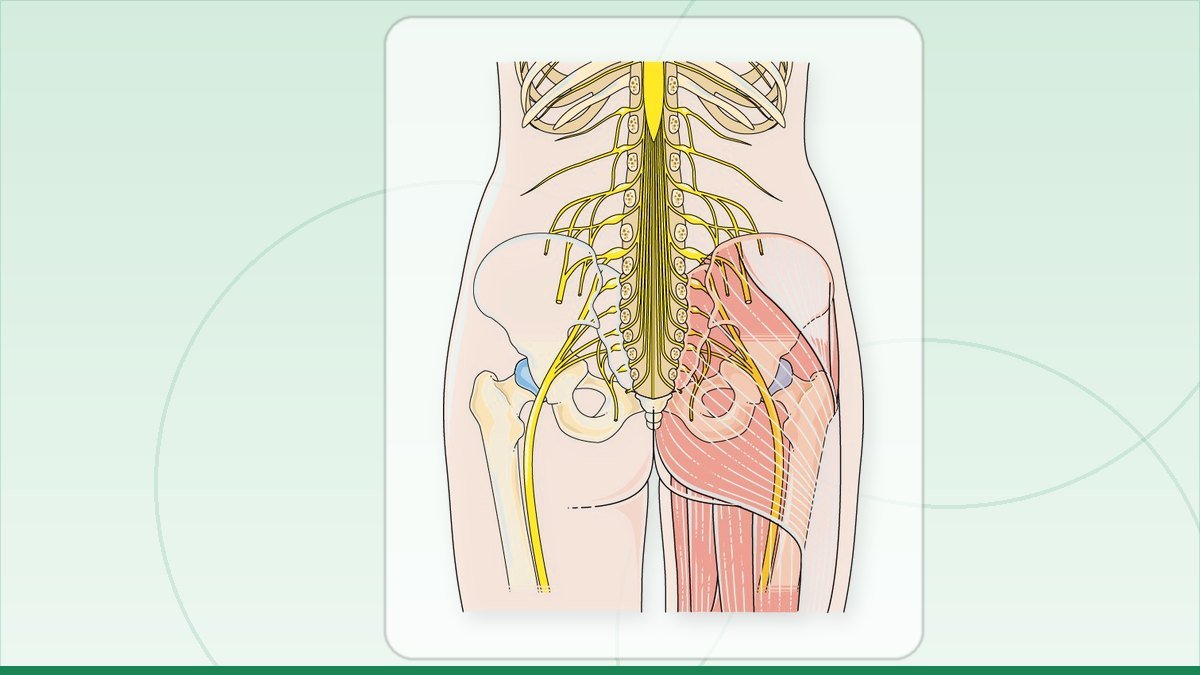
Sacroiliac joint pain sits low, just beside the dimple above your buttock, and usually stays above the knee. Sciatica from a slipped disc travels down the back of the leg, past the knee, often to the foot, with numbness or tingling. Where the pain stops is the first clue. Examination and imaging confirm it.
How do I know if it is my sacroiliac joint and not a slip disc?
Point one finger at the worst spot. Patients with sacroiliac joint pain almost always point to a small area just below the belt line, an inch or two to one side of the spine, near the dimple above the buttock. Patients with a slipped disc usually run their whole hand down the back of the thigh and calf.
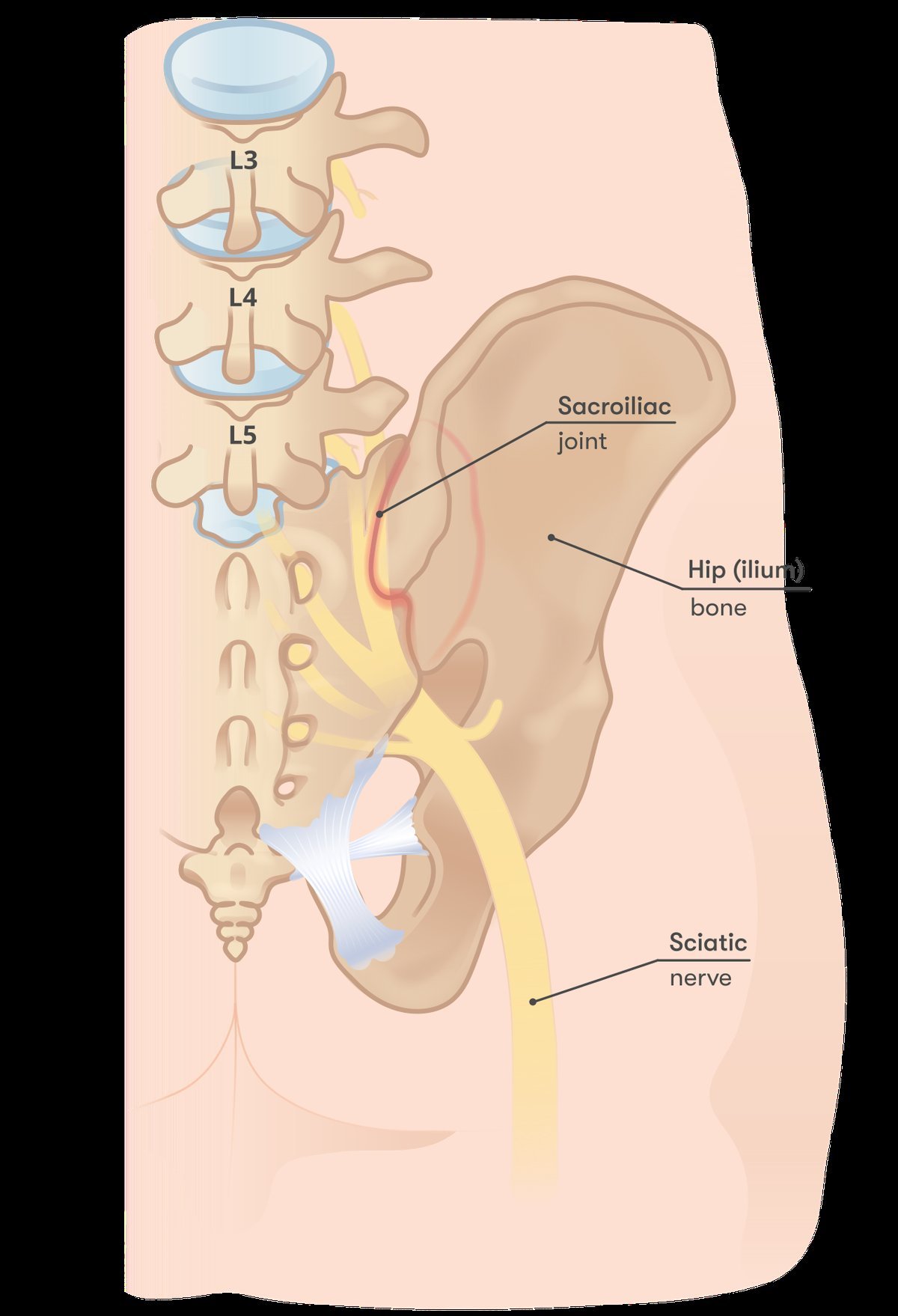
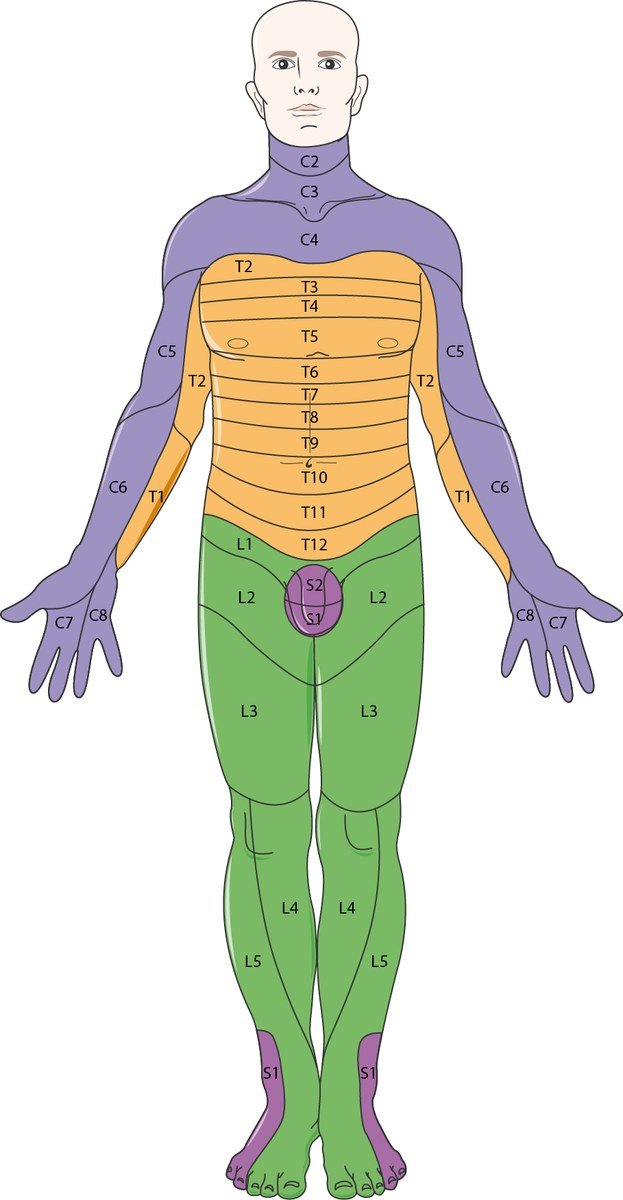
The second clue is how far the pain travels. Sacroiliac joint pain can spread into the buttock, the groin and the back of the thigh, but it usually fades above the knee. Disc pain, the taang mein dard people describe, tends to go past the knee into the calf or foot, and often brings numbness, tingling or a foot that feels weak on the stairs.
The third clue is what makes it worse. Sacroiliac pain flares with standing on one leg, climbing stairs, getting out of a car, rolling over in bed, and sitting with your weight on one side. Disc pain typically flares with sitting, bending forward, coughing and sneezing, and eases when you lie flat.
These are clues, not proof. The two conditions overlap, and some people have both at once. That is exactly why the examination matters more than the story alone.
Is this dangerous? Will I end up paralysed?
Sacroiliac joint pain does not cause paralysis. It is a joint problem, not a nerve or spinal cord problem. It can be severe enough to stop you working, praying comfortably or sleeping, but it does not damage the spinal cord and it does not creep towards paralysis, however frightening it feels.
Sciatica from a disc is pressure on a nerve, so the fear is more understandable. Even so, the large majority of slip disc patients never lose control of their legs. Most improve over weeks with rest from heavy work, medication and physiotherapy. Nerve pain is loud, and loud is not the same as dangerous.
There is one genuine emergency. Go to a hospital with a neurosurgeon the same day, not tomorrow, if you develop numbness around the private parts or inner thighs, difficulty passing urine or loss of control of urine or stool, or weakness in both legs. This is cauda equina syndrome. It is uncommon, but the window to protect nerve function is short.
Also take seriously a foot that is dropping, a leg that is clearly getting weaker week by week, fever with back pain, or back pain with unexplained weight loss. These need assessment quickly, not a wait and watch approach.
Which tests actually tell them apart?
The examination comes first, and it is not expensive. The surgeon or physiotherapist will move the pelvis in specific ways to load the sacroiliac joint and see whether your exact pain reproduces. These are simple manoeuvres done on a couch: pressing the pelvis from the sides, pushing the thigh backwards, and the position where your ankle rests on the opposite knee. When several of them reproduce your pain, the sacroiliac joint becomes the likely source.
For sciatica, the key test is raising the straight leg while you lie on your back. If lifting the leg brings on the shooting pain down the calf, that points at a nerve root, not the joint. The surgeon also checks power in your foot and ankle, sensation in defined patches of skin, and reflexes.
MRI is useful, but it is not the judge. MRI shows a slipped disc well. It is much less reliable for the sacroiliac joint. It is also very common for MRI to show disc bulges in people who have no leg pain at all, which is why a report alone should never decide surgery. The MRI has to match the leg your pain is in and the exact nerve your examination points to.
When the picture stays unclear, the most decisive test is a diagnostic injection of local anaesthetic into the sacroiliac joint under X-ray or ultrasound guidance. If your pain drops sharply for a few hours, the joint was the source. If nothing changes, look elsewhere. Plain X-rays and blood tests are added when inflammatory back disease is suspected, particularly in a younger patient with morning stiffness lasting more than half an hour.
Why does getting the diagnosis right matter so much?
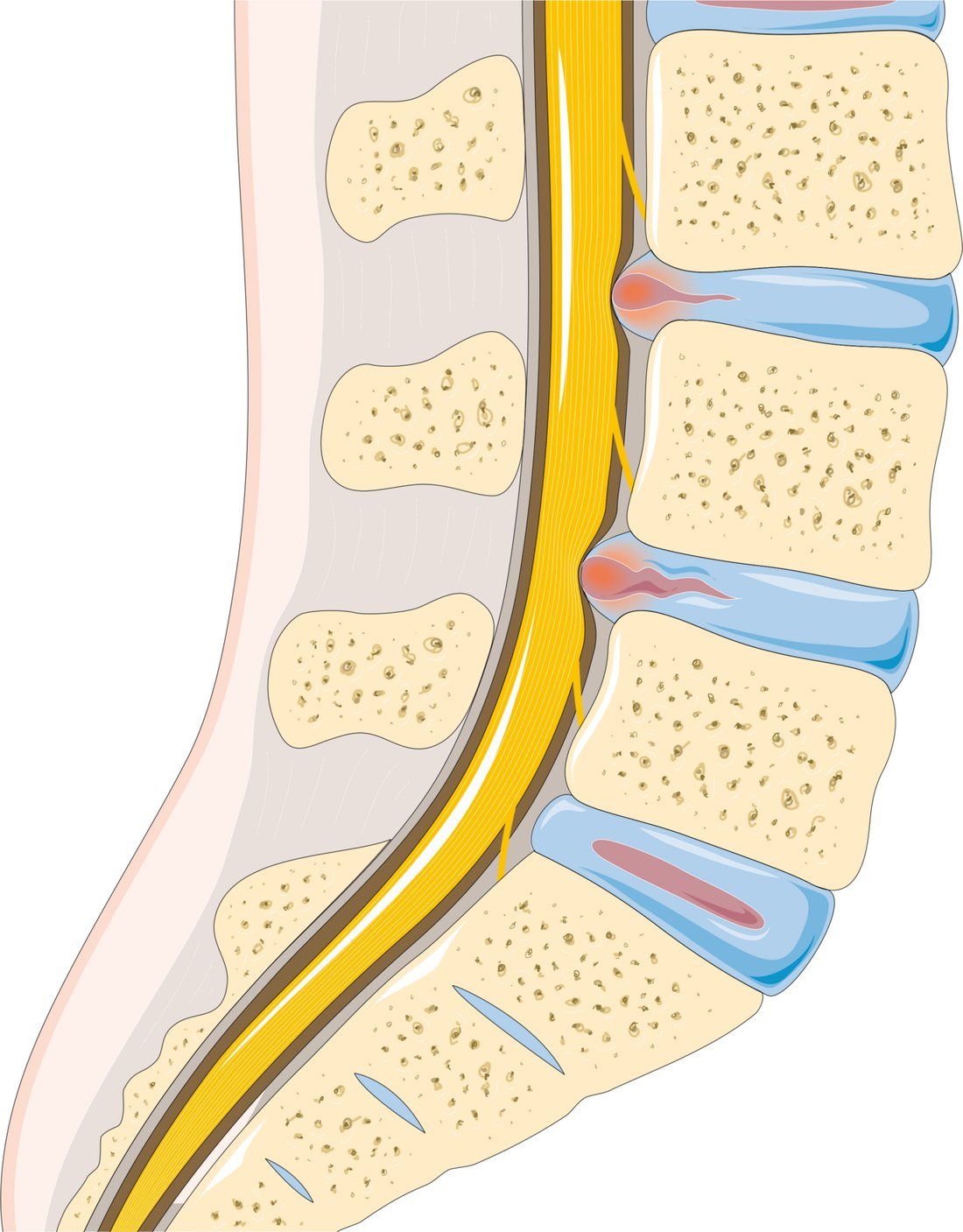
Because the treatments are different, and one of the saddest things in spine practice is a patient who had disc surgery for pain that was never coming from the disc. The MRI showed a bulge, the bulge was removed, and the buttock pain stayed exactly where it was. The operation was technically fine. The target was wrong.
Sacroiliac joint pain responds to targeted physiotherapy for the hip and core muscles, correcting how you walk and stand, a pelvic belt in some cases, and a guided steroid injection when pain is stubborn. None of that involves opening the spine.
Disc sciatica that will not settle responds to removing the fragment of disc pressing on the nerve. That is a different operation on a different structure for a different problem.
So if a surgeon looks only at your MRI report and offers surgery in the same visit without examining your leg, get a second opinion. A proper spine assessment involves your legs being tested, not just your films being read.
Do I need surgery for sacroiliac joint pain?
Almost certainly not. This is the honest answer, and it is the most important line on this page. The great majority of sacroiliac joint pain is mechanical and improves with non-surgical treatment over weeks to a few months.
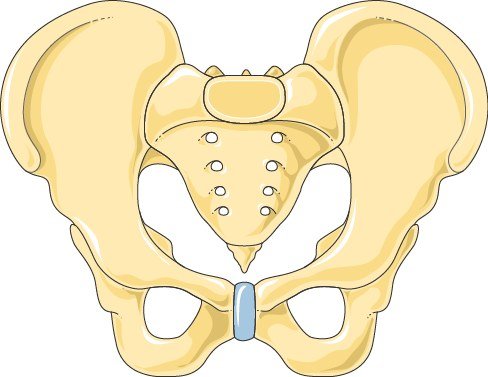
The usual path is: reduce the aggravating activity for a while, start structured physiotherapy aimed at the gluteal and core muscles, use simple pain medication as advised, and correct habits that overload one side of the pelvis. Sitting cross legged on the floor for long periods, carrying a child always on the same hip, and long rides on a bike over rough roads all keep flaring the joint.
If that fails after a fair trial, the next step is a guided injection, which is both a test and a treatment. Some patients get relief that lasts months. Radiofrequency treatment of the small nerves supplying the joint is an option in selected cases.
Sacroiliac joint fusion exists, but it belongs to a small group of patients: severe, disabling, one sided pain, confirmed by repeated positive diagnostic injections, after months of proper conservative treatment have failed. If someone offers to fuse your sacroiliac joint at the first visit, that is a reason to pause and seek another opinion.
When does sciatica from a disc actually need surgery?
Three situations. First, the emergency signs described above, which need same day surgery. Second, weakness that is getting worse, such as a foot you cannot lift properly. Third, leg pain that has not improved after roughly six to eight weeks of genuine conservative treatment and is stopping you from working or sleeping, with an MRI that matches your symptoms exactly.
Everything else can usually wait, and waiting often works. Many disc fragments shrink on their own.
Endoscopic spine surgery is the main approach used here for the disc that has to come out. The surgeon works through an opening of roughly one centimetre, passes a small camera and instruments to the nerve, and removes only the fragment pressing on it. The muscles are pushed aside rather than cut. Most patients walk the same day and stay in hospital briefly. Microdiscectomy, done through a small incision with a surgical microscope, is the other well established option and is sometimes the better choice depending on the disc, the level and your anatomy.
Both operations treat leg pain far better than back pain. Be careful with anyone who promises that surgery will cure years of kamar dard. It is the taang mein dard that responds best.
Should I try hakeem, massage or a maalish wala first?
Nearly every patient in Faisalabad has already tried something before reaching a clinic. Oil massage, cupping, a hakeem's course, injections from a local clinic, or a relative who pulls the leg to put the disc back. Some of it helps and some of it is harmless, and there is no judgement in it.
Where it becomes a problem is time. Two things make delay costly: a leg that is losing power, and the emergency symptoms listed earlier. If you have either, no amount of massage will help, and the delay itself causes the damage.
Forceful manipulation of the back is also risky when a nerve is already compressed. If a session makes your leg pain sharply worse, or leaves you with new numbness or weakness, stop and get examined.
A fair rule: try conservative treatment, absolutely, but give it a structure and a deadline. Four to six weeks. If the leg pain is not clearly better by then, get a proper spine assessment rather than starting another remedy.
What if my pain is in my neck rather than my back?
The same logic applies, one level higher. Neck pain that stays in the neck and shoulders is usually muscular or from wear in the joints, and it settles with time, posture correction, physiotherapy and simple painkillers. Neck pain that shoots down the arm past the elbow, with tingling in the fingers, suggests a nerve is being pressed by a disc in the neck.
For most people asking how to treat neck pain, the honest answer is not a procedure. Sleep with one pillow, not three. Bring the phone and laptop up to eye level. Keep the neck moving rather than immobilising it. Most episodes improve over a few weeks, and stubborn ones over a few months.
See a neurosurgeon promptly if you have arm weakness, clumsy hands, difficulty with buttons, unsteady walking, or neck pain after a road accident or fall. Those point at cord or nerve involvement and need imaging.
What will it cost, and who should I see in Faisalabad?
Costs vary a great deal between hospitals, and between procedures. A consultation and examination is modest. An MRI of the lumbar spine costs more in Faisalabad than a plain X-ray but is widely available. A guided sacroiliac injection is far cheaper than any operation. Endoscopic surgery and microdiscectomy cost considerably more once theatre, anaesthesia, stay and follow up are counted.
Always ask for a written quote in PKR before you agree to anything. Ask what it includes and what it does not: surgeon fee, anaesthesia, theatre charge, implants if any, hospital stay, medicines, and follow up visits. Ask what happens to the bill if you need to stay an extra night. A clinic that will not put a number on paper is telling you something.
Bring a family member to the consultation. In most Pakistani families this decision is made together, and it is better made with everyone hearing the same explanation rather than a summary passed on later. Bring your MRI films, not just the report, plus any previous prescriptions.
If you are looking for the best endoscopic spine surgeon in Faisalabad, judge on how the consultation goes, not on the advertising. A good assessment means your legs are examined, your MRI is compared against your symptoms, the non-surgical options are explained first, and you are told plainly when surgery is not needed. Dr. M. Abdur Rehman, consultant neurosurgeon, sees spine patients at Mujahid Hospital, Faisalabad, and patients travelling in from Jhang, Sargodha, Toba Tek Singh and across Punjab are welcome to bring their films for an opinion.
Questions patients ask about this
Can sacroiliac joint pain and sciatica happen together?
Yes, and it is common enough to cause confusion. Someone with a slipped disc may walk awkwardly for weeks and overload the sacroiliac joint on the other side. The examination sorts out which is causing what, and a diagnostic injection into the joint can settle the question when it stays unclear.
Will an MRI show my sacroiliac joint problem?
Often not. MRI is excellent for discs and nerves but frequently looks normal in mechanical sacroiliac joint pain. It is still worth doing to rule out a disc or inflammatory disease. A normal MRI does not mean your pain is imaginary, it means the source is somewhere the scan does not show well.
How long does sacroiliac joint pain take to settle?
Most episodes improve over several weeks with physiotherapy and activity changes, though some take a few months and some come and go for years. Progress is usually gradual rather than sudden. If there is no clear improvement after six weeks of proper treatment, get reassessed rather than continuing the same routine.
Is endoscopic spine surgery an option for sacroiliac joint pain?
Endoscopic surgery treats disc and nerve compression in the spine, not the sacroiliac joint itself. If your pain is genuinely coming from the joint, disc surgery will not fix it. That is the whole reason the diagnosis has to be confirmed before any operation is planned.
What should I bring to my first spine consultation?
Bring your MRI films rather than only the report, any X-rays, a list of medicines you have taken and for how long, and a family member. Be ready to point with one finger at the worst spot and describe how far down the leg the pain travels. That detail guides the whole assessment.
Related articles
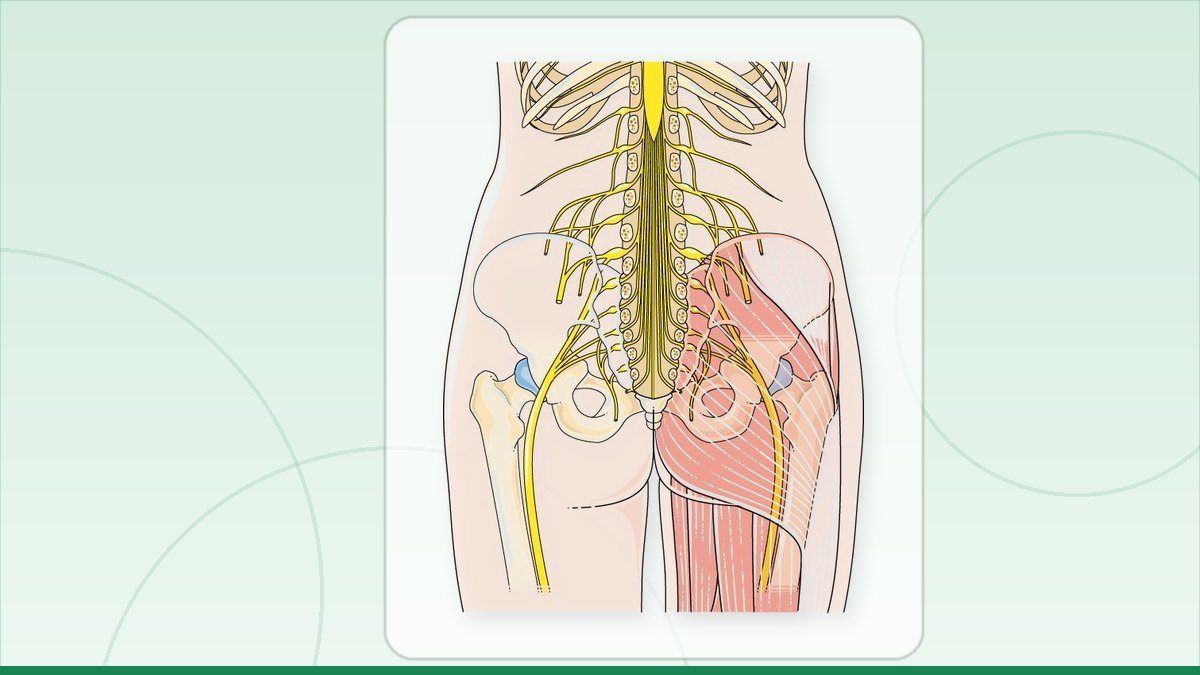
Piriformis syndrome or a disc? Same leg pain, different cause
Piriformis syndrome or a slipped disc? Both cause leg pain. Here is how to tell them apart, when surgery is…
Read this
Spinal tumours: rare, but this is how they present
Spinal tumor symptoms explained: night pain, pain at rest and weakness that keeps getting worse. When you…
Read this
TB of the spine (Pott disease) in Pakistan: what to know
Spine TB treatment in Pakistan: Pott disease is cured mostly with months of medicine. Know when surgery is…
Read thisAll patient questions · Spine surgery in Faisalabad · Book an appointment
Ask about your own scan. Send your MRI or X-ray on WhatsApp and get a straight answer on whether surgery is needed at all, from a consultant neurosurgeon in Faisalabad.
Dr. M. Abdur Rehman is a consultant neurosurgeon in Faisalabad. Send your scan on WhatsApp and ask what it actually shows.
Published for the practice of Dr. M. Abdur Rehman, consultant neurosurgeon, Mujahid Hospital, Faisalabad. General information only, not a substitute for examination.