

To arrange endoscopic spine surgery in Faisalabad, send your MRI report, X-rays and a short note about your symptoms for review, then come for a clinical examination. Surgery is only advised if leg pain, weakness or numbness matches the MRI finding. Most back pain settles without an operation. Bring a family member to the visit.
How do I arrange endoscopic spine surgery in Faisalabad?
Begin with the MRI, not with a booking. The practical route is to send your MRI report and images, plus a few lines about your symptoms, for review before you travel. That single step tells you whether an in-person consultation is worth the trip from Jhang, Sargodha, Toba Tek Singh or wherever you are coming from.
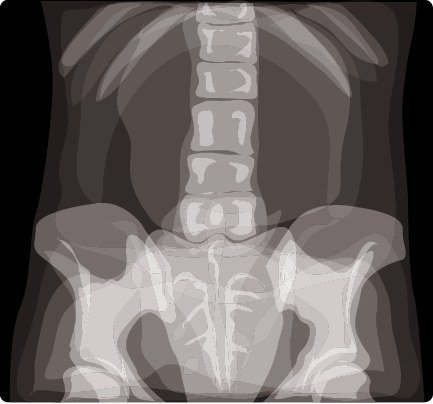
If the scan and the symptoms line up, the next step is a clinical examination at Mujahid Hospital, Faisalabad. Nothing can replace this. The examination checks power in your legs, reflexes, sensation and the way you walk. A disc bulge on a report means very little on its own. A disc bulge that explains exactly the pain and weakness in front of the doctor means a great deal.
A workable order of steps looks like this:
- Get an MRI of the level that hurts (lumbar for kamar dard with leg pain, cervical for neck and arm pain).
- Send the report and images ahead of the visit for a first opinion.
- Come for a clinical examination, with a family member if a decision has to be made together.
- Ask for the plan in writing, including the option of not operating.
- Ask for a written cost estimate in PKR before admission.
You are allowed to take that written plan home and think about it, or show it to another surgeon. A doctor who is confident in the plan will not object.
Is it safe, or will I be paralysed?
This is the fear that stops most people, and it deserves a straight answer. Serious nerve injury or paralysis after endoscopic discectomy is rare in trained hands. It is not zero, and no honest surgeon will tell you it is zero, but it is uncommon enough that fear of paralysis alone should not be the reason you refuse an operation you clearly need.
There is a harder truth on the other side. In some situations, waiting is the riskier choice. Progressive weakness in the foot, a foot that drags, loss of control over urine or stool, or numbness in the saddle area between the legs are warning signs. These need urgent assessment, not another course of painkillers and not another week of massage.
What makes endoscopic surgery different is the size of the working channel. The instruments and camera pass through an opening of roughly the width of a pencil, and the muscles are pushed aside rather than cut away. That means less blood loss, less muscle damage and usually a faster return to walking. The nerve itself is handled with the same care as in any spine operation.
Risks that are real and worth naming: infection, a tear in the covering of the nerves, incomplete relief, and recurrence of the disc herniation at the same level. Ask specifically what would happen in each case and who would manage it.
Do I actually need surgery, or will this settle on its own?
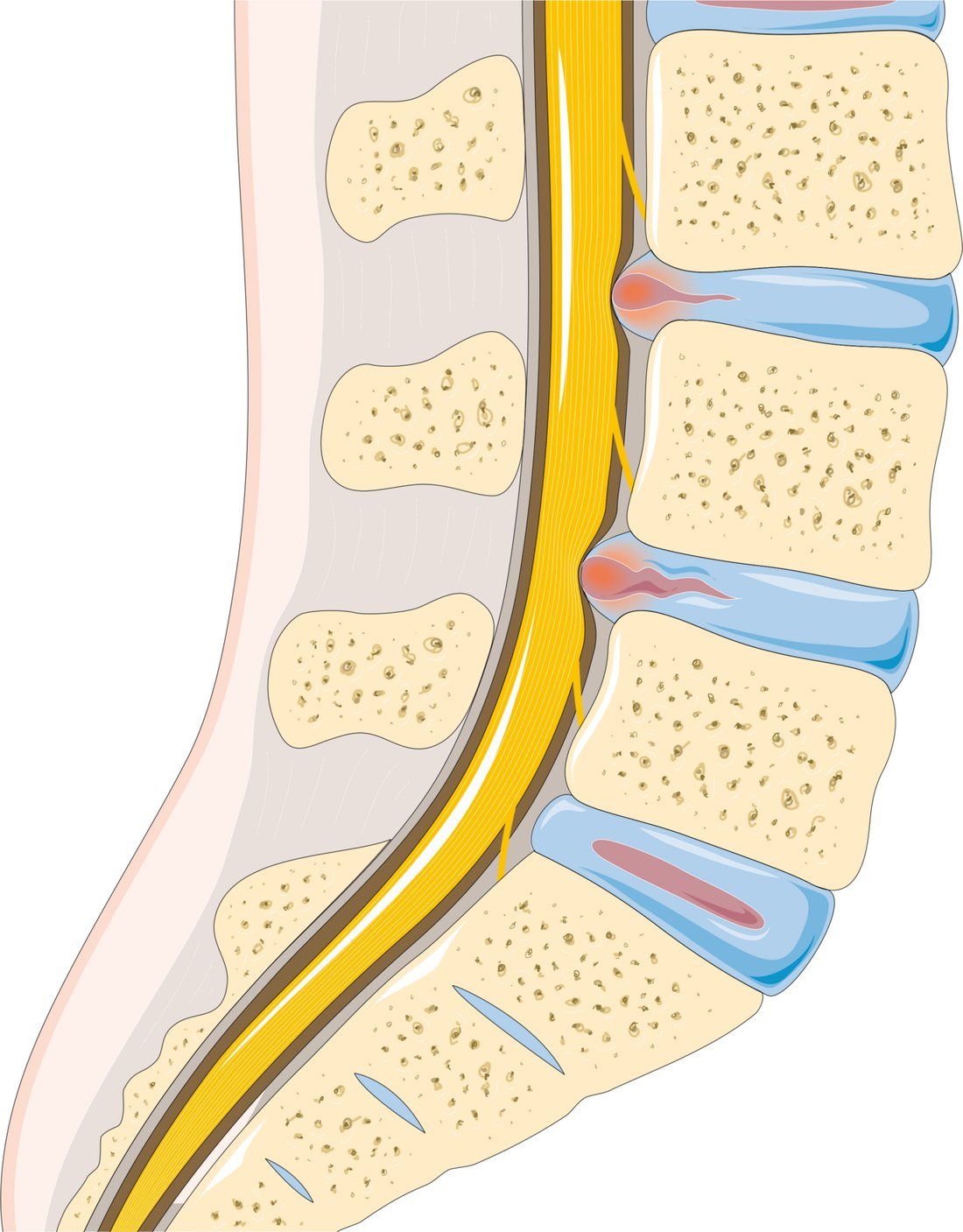
Most back pain is not surgical. That is the honest starting point. Plain kamar dard, without leg pain and without weakness, almost never needs an operation. It usually improves with time, movement, weight control and simple treatment. Being told you have a slip disc on an MRI does not by itself mean you need surgery.
Even true sciatica, taang mein dard running from the buttock down the leg, settles without surgery in a large share of patients over several weeks. Nature is on your side more often than people expect. This is why a good spine consultation often ends with a plan for physiotherapy and medication rather than a surgery date.
Surgery genuinely enters the conversation when one of these is true:
- Leg pain has continued for weeks despite proper medical treatment and physiotherapy, and it matches the level shown on MRI.
- There is real, measurable weakness, such as difficulty lifting the foot.
- There is loss of bladder or bowel control, which is an emergency.
- The pain is severe enough that you cannot work, sleep or pray comfortably, and it is not improving.
If a surgeon looks at your MRI for thirty seconds and offers you a date without examining you, treat that as a reason to slow down.
What should I send before the first visit?
Send four things, and the review will be far more useful. First, the MRI: the radiologist's report and the actual images, either the CD or clear photographs of the films. The images matter more than the report. Second, any X-rays, particularly standing or bending views if you have them.

Third, a short written history in plain words. When the pain started, where exactly it travels, whether it is worse on walking or sitting, how far you can walk before you must stop, and whether there is numbness or weakness. Mention if you have had a fall, fever, weight loss or previous spine surgery.
Fourth, your current medicines, including anything for diabetes, blood pressure or blood thinning, and any treatment already tried. It is completely normal here to have tried a hakeem, cupping, or a massage from someone in the mohalla first. Say so plainly. Nobody is going to scold you. It simply tells the doctor how long this has been going on and what has already failed.
What happens at the appointment in Faisalabad?
The visit is mostly conversation and examination. Expect questions about the pattern of your pain, then a physical check: straight leg raising, power in each muscle group, reflexes at the knee and ankle, sensation, and how you walk across the room. This takes time and it is the part that decides everything.
Then the MRI is discussed with you on screen, not just described. You should be shown the disc, the nerve it is touching, and asked whether that matches where your pain actually goes. If the picture and the symptoms disagree, the picture is not the problem.
Bring family. In most Pakistani households the decision about surgery is not made by the patient alone, and it is better for the son, husband, wife or elder brother to hear the plan directly than to receive it second hand at home. Bring a list of your own questions written on paper. People forget them in the room.
You should leave with a clear answer to three things: do I need surgery, what happens if I wait, and what will it cost.
What does endoscopic spine surgery cost in Pakistan?
This is answered in full on what endoscopic spine surgery costs in Pakistan, so it is not repeated here.
Is laser spine surgery the same thing?
No, and this confusion costs people money. Many patients search for laser spine surgery cost in Pakistan because the word laser sounds modern and painless. In practice, most of what is marketed locally as laser spine surgery is either a minimally invasive procedure that does not centrally rely on a laser, or a limited technique suitable for a narrow group of patients.
Endoscopic spine surgery is defined by the endoscope, a small camera passed through a working channel, which lets the surgeon see the nerve and remove the fragment of disc that is pressing on it. The removal is mechanical and direct. Some systems can use a laser or radiofrequency as an accessory tool, but the endoscope and the surgeon's view are what matter.
When a centre offers you laser treatment, ask two questions. What exactly is being removed, and will the fragment pressing on my nerve be taken out or only shrunk. A vague answer is your answer.
Should I see an orthopedic doctor, a neurologist or a neurosurgeon?
People type all three into Google, and the distinction is worth knowing. A neurologist diagnoses and treats nerve and brain conditions with medicine, and does not perform spine surgery. If your problem is nerve compression that may need an operation, a neurologist is not the endpoint.
Spine surgery is performed by neurosurgeons with spine training and by orthopaedic surgeons with spine training. Both routes are legitimate. What matters is not the label but three things: how regularly that surgeon does spine work, whether they perform endoscopic procedures specifically, and whether they will tell you when you do not need surgery.
A reasonable set of questions for any surgeon you meet: how often do you do this operation, what is your usual approach for my exact MRI finding, what happens if the disc comes back, and who looks after me if there is a complication at night. The answers, and how comfortable the surgeon is being asked, tell you more than any online rating.
What should I do next?
If you have back pain alone, with no leg pain and no weakness, you probably do not need a surgeon yet. Give it structured time: proper medication, physiotherapy from a qualified therapist, and movement rather than bed rest. Come back to this page if leg pain starts.
If you have leg pain that is not settling, numbness, or any weakness, get an MRI and have it reviewed properly. Do not spend three more months on massage and herbal treatment while a nerve stays compressed. And if you have lost control of urine or stool, or have numbness between the legs, go to a hospital emergency today.
To arrange a review in Faisalabad, send the MRI report and images with a short note about your symptoms to the clinic at Mujahid Hospital, and ask for an appointment for examination. If you are searching for the best endoscopic spine surgeon in Faisalabad, judge the answer by whether the surgeon examines you properly, shows you your own scan, explains what happens if you wait, and gives you the cost in writing. Bring your family, bring your questions, and take the plan home before you decide.
Endoscopic spine surgery in Faisalabad Read the full page on endoscopic spine surgery in faisalabad, including who it suits, what recovery looks like and how to arrange a review.
Questions patients ask about this
Can endoscopic spine surgery be done under local anaesthesia?
In many cases yes. Lumbar endoscopic discectomy can often be performed under local anaesthesia with sedation, which suits patients whose heart, lung or diabetes problems make general anaesthesia riskier. The choice depends on the level, the size of the disc fragment and your own comfort, and is decided with the anaesthetist before surgery.
How soon can I walk and go back to work after the procedure?
Most patients stand and walk the same day or the next morning, and hospital stay is usually short. Return to desk work commonly happens within one to two weeks. Heavy lifting, long motorcycle rides and field labour need longer, often several weeks, and your surgeon should give you a specific date rather than a general rule.
Will the disc come back after endoscopic surgery?
Recurrence at the same level is possible after any discectomy, endoscopic or open, because the disc itself remains in place. It happens in a minority of patients. Risk is reduced by avoiding heavy lifting and forward bending in the early weeks, controlling weight, stopping smoking, and following the physiotherapy plan properly.
Do I need an MRI before the first consultation, or can X-rays do?
An MRI is needed to see discs and nerves. X-rays show bone alignment and stability but cannot show a disc pressing on a nerve. If cost is a concern, discuss it openly, because in some cases the examination and X-ray guide whether an MRI is genuinely required at that moment.
Is endoscopic surgery possible if I already had open back surgery?
Sometimes, but it is a more complex decision. Scar tissue from previous surgery changes the anatomy and can make the endoscopic route harder. Bring your old operation notes and previous scans to the consultation. In some revision cases a different approach, including fusion, is the safer recommendation.
Related articles

Twelve questions to ask before you agree to spine surgery
The twelve questions to ask a spine surgeon before you agree to back or disc surgery, covering cost,…
Read this
What is a microdiscectomy?
A microdiscectomy removes the slipped disc fragment pressing on a nerve. What it treats, whether it is safe,…
Read this
Microdiscectomy recovery: driving, sitting and going back to work
Microdiscectomy recovery explained: when you can drive, sit comfortably and return to work, plus honest…
Read thisAll patient questions · Spine surgery in Faisalabad · Book an appointment
Ask about your own scan. Send your MRI or X-ray on WhatsApp and get a straight answer on whether surgery is needed at all, from a consultant neurosurgeon in Faisalabad.
Dr. M. Abdur Rehman is a consultant neurosurgeon in Faisalabad. Send your scan on WhatsApp and ask what it actually shows.
Published for the practice of Dr. M. Abdur Rehman, consultant neurosurgeon, Mujahid Hospital, Faisalabad. General information only, not a substitute for examination.