
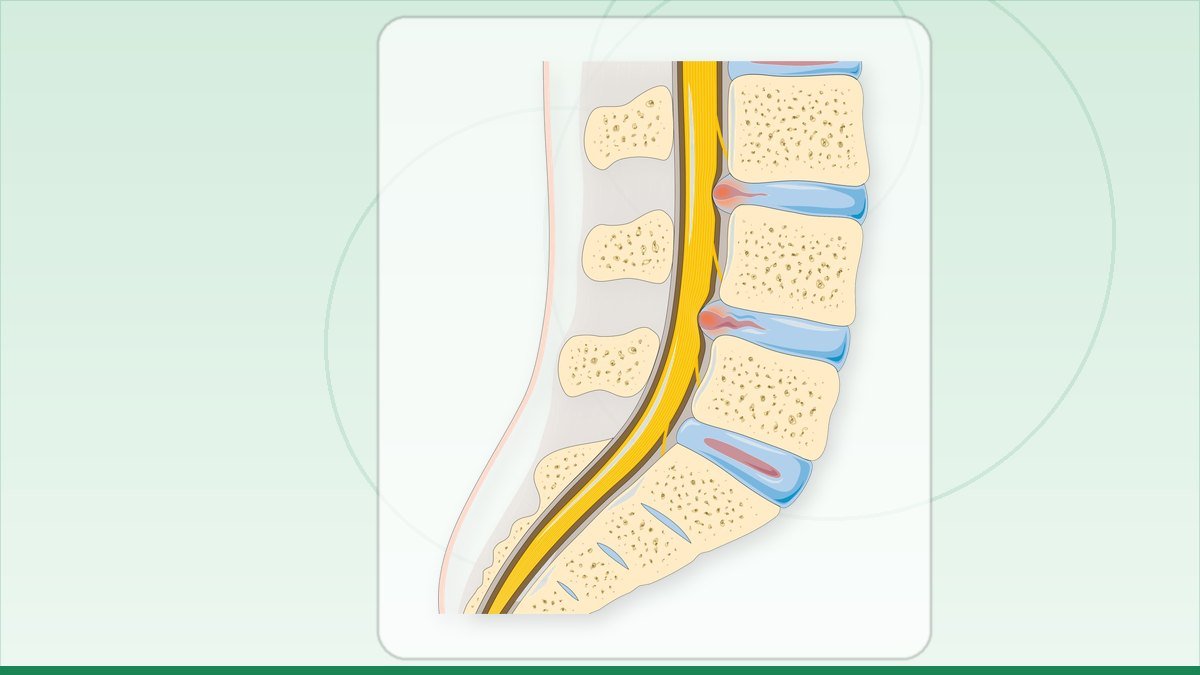
Bulge, protrusion, extrusion and prolapse are four stages of the same worn disc pushing outward: mild swelling, a rounder bulge, disc material breaking through the outer ring, and a free fragment pressing a nerve. Most settle with rest and physiotherapy. Only a prolapse causing constant leg pain, numbness or weakness that does not improve in six weeks usually needs surgery.
What is the difference between disc bulge, protrusion, extrusion and prolapse?
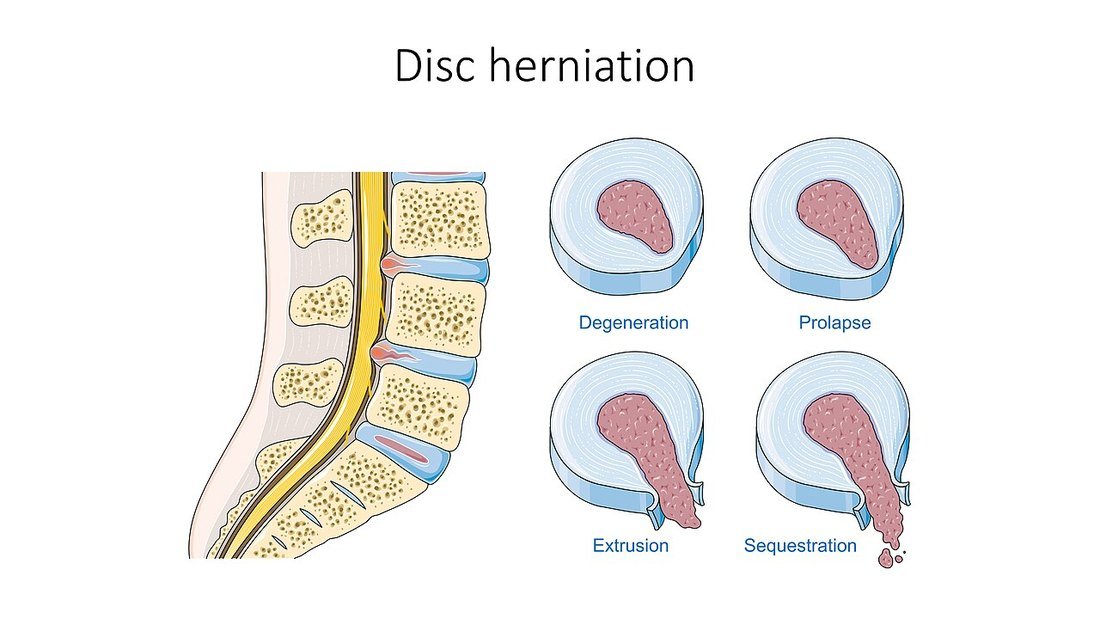
Radiologists and surgeons use four words for one process: a spinal disc losing its normal shape and pushing outward. Bulge is the mildest stage, where the disc's outer ring softens and swells evenly outward without breaking. Protrusion is a step further, where part of the disc pushes out more than the rest, but the outer ring is still intact.
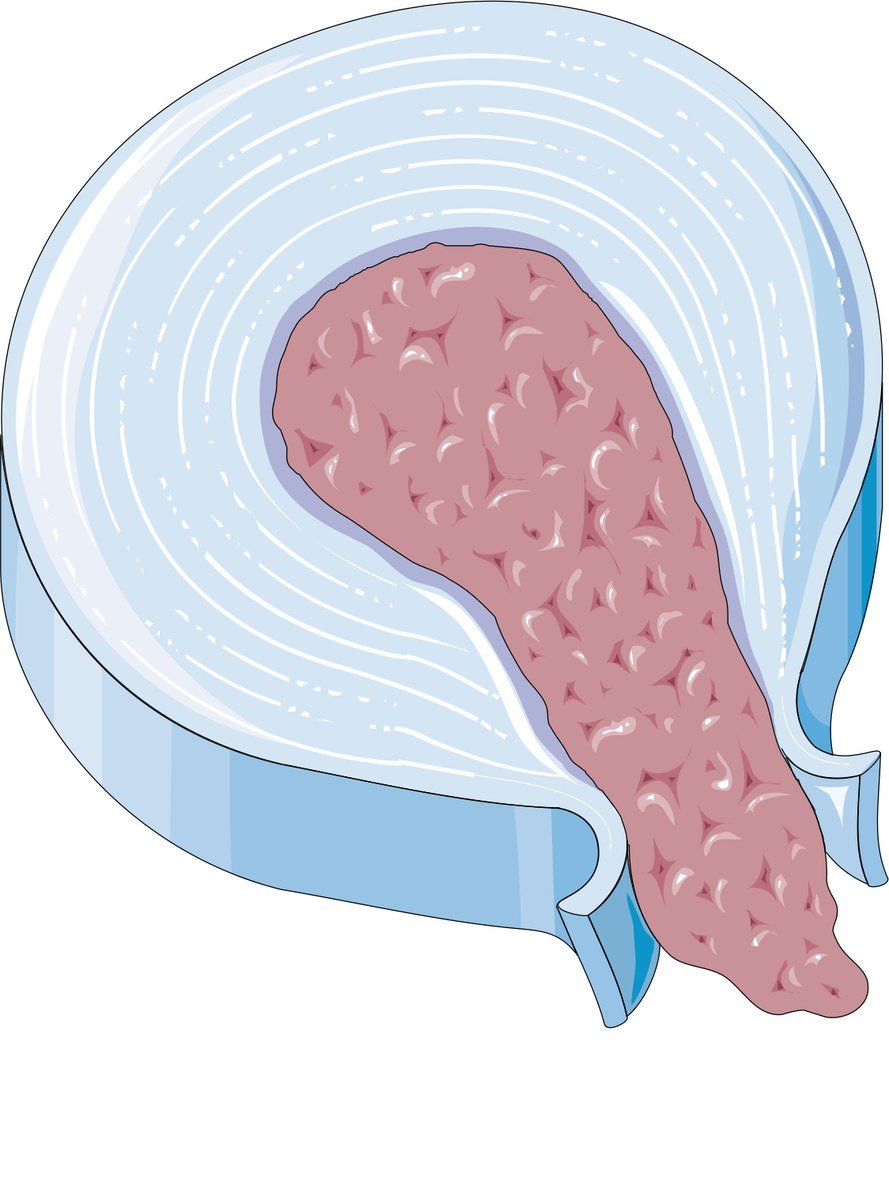
Extrusion means the inner disc material has broken through the outer ring and moved into the spinal canal, though it may still be attached to the disc. Prolapse (sometimes called sequestration on an MRI report) is when a piece of that material breaks free completely and sits loose near a nerve root.
In everyday Roman-Urdu, patients call all four stages "slip disc" or "kamar ki disc slip ho gayi hai." The MRI report will use the precise medical word, but what matters for treatment is not the label alone. It is whether the disc material is pressing a nerve, and how much pain, numbness or weakness that pressure is causing.
Is disc surgery safe, or will I be paralysed?
For the vast majority of patients, disc surgery does not cause paralysis. The fear is understandable, kamar ki surgery has a reputation in Pakistan for going wrong, but true paralysis from a routine discectomy is a rare complication, not the expected outcome.
The real risks of endoscopic discectomy or microdiscectomy are smaller and more common: some numbness or tingling that takes weeks to settle, a small chance of infection, a small chance the disc herniates again at the same level, and occasionally incomplete pain relief if nerve damage was already present before surgery.
There is one situation where surgery is genuinely urgent: cauda equina syndrome, where the nerves controlling bladder and bowel are compressed. That needs same-day assessment. Outside that emergency, disc surgery is planned, not rushed, and the surgeon should walk you through the MRI and the specific nerve being treated before recommending it.
Is there a permanent cure for slip disc? (Slip disc ka permanent ilaj)
No single treatment removes the risk permanently, and any clinic promising a guaranteed lifetime cure is overselling. What is true is that most people with a disc bulge or protrusion recover fully with rest and physiotherapy and never need surgery.
Surgery, when needed, removes the specific piece of disc pressing the nerve. It relieves the current pain and numbness. It does not rebuild the disc or reverse the wear that caused the problem, and the same disc, or a neighbouring one, can wear further over years, especially with poor posture, heavy lifting or excess weight.
The realistic goal is not a permanent fix in the sense of never having back pain again. It is getting the current nerve compression treated properly, then protecting the spine afterwards with weight control, core strengthening and sensible lifting habits so the problem is less likely to return.
What is endoscopic discectomy and how does it treat a prolapsed disc?
Endoscopic discectomy removes the extruded or prolapsed piece of disc through a single keyhole opening in the skin, usually less than a centimetre wide. A thin camera and instruments go through that opening, so the back muscles are pushed aside rather than cut, unlike open surgery.
The surgeon watches the disc and nerve on a screen throughout, removes only the fragment causing compression, and leaves the healthy part of the disc and surrounding bone alone. Because muscle damage is minimal, many patients are up and walking the same day, with a shorter hospital stay than open surgery.
Microdiscectomy as an alternative
Microdiscectomy uses a slightly larger incision and an operating microscope instead of an endoscope. It is an established, well-proven technique for the same problem. Both approaches aim to do one thing: take the pressure off the nerve. Which one suits a particular patient depends on the disc level, the exact MRI findings and the surgeon's assessment.
How is slip disc treated without surgery? (Slip disc ka ilaj kaise hota hai)
Most disc bulges and many protrusions are treated first without surgery. That means a short period of rest, not weeks in bed, followed by graded movement, physiotherapy exercises to support the spine, and medication for pain and nerve irritation.
- Rest for a few days if pain is severe, then gradual return to normal movement
- Physiotherapy focused on core and back muscle strengthening once acute pain settles
- Anti-inflammatory and nerve-pain medication as prescribed
- In some cases, a targeted epidural or nerve-root injection to calm inflammation around the nerve
Most people notice real improvement within a few weeks. If leg pain, numbness or weakness has not improved after roughly six weeks of proper conservative treatment, or is getting worse, that is when surgery is usually discussed.
What does disc prolapse treatment cost in Pakistan?
Costs vary widely depending on the stage of the disc problem and the treatment path, so there is no single figure worth quoting here. Conservative treatment, medicines, physiotherapy sessions and an MRI, costs far less than surgery, but the sessions add up over weeks.
If surgery is recommended, the total cost depends on the hospital, the technique used (endoscopic discectomy or microdiscectomy), the length of hospital stay, anesthesia charges and any implants. Prices differ between hospitals in Faisalabad, Lahore and elsewhere in Punjab.
Always ask the hospital and the surgeon's team for a written quote that separates the surgeon's fee, hospital charges, anesthesia and any implant cost. If you have Sehat Card or insurance, confirm directly with the hospital's billing office what is covered before the day of admission.
Should I try hakeem, massage or baba ramdev yoga first?
Gentle movement and supervised physiotherapy exercises genuinely help many mild disc bulges, and there is nothing wrong with trying conservative treatment first if pain is manageable and there is no leg weakness.
What is risky is forceful massage, bone-setting ("chatpat") or aggressive spinal twisting exercises when the MRI has not yet been done, or when numbness or weakness is already present in the leg. In an extruded or prolapsed disc, rough manipulation can worsen nerve compression rather than help it.
A reasonable approach: if pain is mild and there is no numbness or weakness, gentle activity and physiotherapy for a few weeks is fine. If there is leg weakness, numbness, or severe pain that is not improving, get an MRI and a proper opinion before trying manipulation-based treatments, so you know exactly what is being manipulated.
When is disc prolapse treatment urgent? Red flag symptoms
Most disc prolapse cases are not emergencies and can be assessed over days, not hours. A small number of cases need same-day attention.
- Loss of bladder or bowel control, or not feeling when the bladder is full
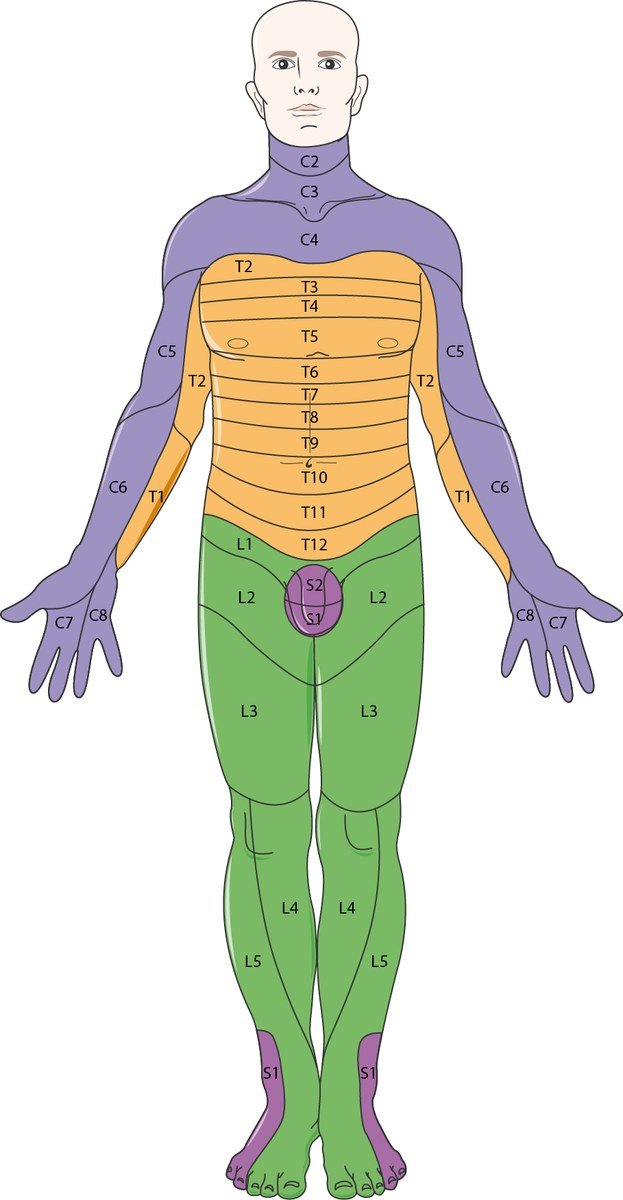
- Numbness in the saddle area (inner thighs, groin, area you sit on)
- Rapidly worsening leg weakness, or a foot that has started dragging
- Severe pain in both legs together with any of the above
These signs point to cauda equina syndrome, where the nerve bundle at the bottom of the spinal cord is under pressure. This needs an urgent MRI and, if confirmed, urgent surgery, usually within hours, to protect bladder, bowel and leg function. Do not wait for a scheduled appointment if these symptoms appear.
What should I do next?
Start with a proper diagnosis, not a guess. An MRI of the lumbar spine, read alongside a physical examination, tells you which of the four stages, bulge, protrusion, extrusion or prolapse, you actually have and whether it explains your symptoms.
Ask for a clear written opinion on whether conservative treatment is reasonable to try first, or whether the compression is severe enough that surgery is the sensible next step. A second opinion is reasonable and normal for any spine decision, especially before agreeing to an operation.
Dr. M. Abdur Rehman is a consultant neurosurgeon and spine surgeon at Mujahid Hospital, Faisalabad, treating disc bulges, protrusions, extrusions and prolapse with both conservative care and endoscopic spine surgery when surgery is genuinely needed. If you are searching for the best endoscopic spine surgeon in Faisalabad, bring your MRI to a consultation and ask direct questions about your specific stage before deciding on treatment.
Questions patients ask about this
Slip disc ka ilaj kaise hota hai?
Mild slip disc is treated with rest for a few days, physiotherapy, anti-inflammatory and nerve-pain medication, and gradual return to activity. If leg pain, numbness or weakness continues after about six weeks of proper conservative treatment, or is worsening, surgery such as endoscopic discectomy is discussed as the next step.
Is there a permanent cure for slip disc (slip disc ka permanent ilaj)?
There is no guaranteed lifetime cure. Most disc bulges heal well with conservative treatment and never return. Surgery removes the specific disc fragment pressing a nerve and relieves current symptoms, but it does not rebuild the disc, so protecting the spine afterward with weight control and core exercises still matters.
What does slip disc treatment cost in Pakistan?
Costs range widely: conservative treatment with medicines, physiotherapy and an MRI costs far less than surgery. Surgical cost depends on the hospital, technique used, hospital stay and anesthesia. Always ask the hospital and surgeon for a written, itemised quote before deciding, and confirm Sehat Card or insurance coverage directly with billing.
Can baba ramdev yoga or home exercises cure a slipped disc?
Gentle yoga and supervised physiotherapy can help mild disc bulges when there is no leg weakness or numbness. But forceful stretching, twisting or bone-setting on an unconfirmed prolapse can worsen nerve compression. Get an MRI first if pain is severe or spreading into the leg, then choose exercises with guidance.
What is a slipped disc, in simple terms? (Apa itu slip disc)
A slipped disc is the everyday name for a spinal disc that has bulged, protruded, extruded or prolapsed, pushing its inner material outward and sometimes pressing a nearby nerve. It causes back pain, and often pain, numbness or weakness running down a leg, depending on which nerve is affected.
Related articles
You have been told you have a disc problem. What now?
Told you have a disc problem? Learn what a disc problem treatment actually involves, when surgery is needed,…
Read this
Spinal TB in Pakistan: the medicine, the months, and the surgery
Spinal TB treatment in Pakistan usually means 6-12 months of medicine, not surgery. Learn the warning signs,…
Read this
Spinal infection: when fever and back pain together need a scan
Spinal infection symptoms: fever with worsening back pain, night pain and weight loss. Why this combination…
Read thisAll patient questions · Spine surgery in Faisalabad · Book an appointment
Ask about your own scan. Send your MRI or X-ray on WhatsApp and get a straight answer on whether surgery is needed at all, from a consultant neurosurgeon in Faisalabad.
Dr. M. Abdur Rehman is a consultant neurosurgeon in Faisalabad. Send your scan on WhatsApp and ask what it actually shows.
Published for the practice of Dr. M. Abdur Rehman, consultant neurosurgeon, Mujahid Hospital, Faisalabad. General information only, not a substitute for examination.