
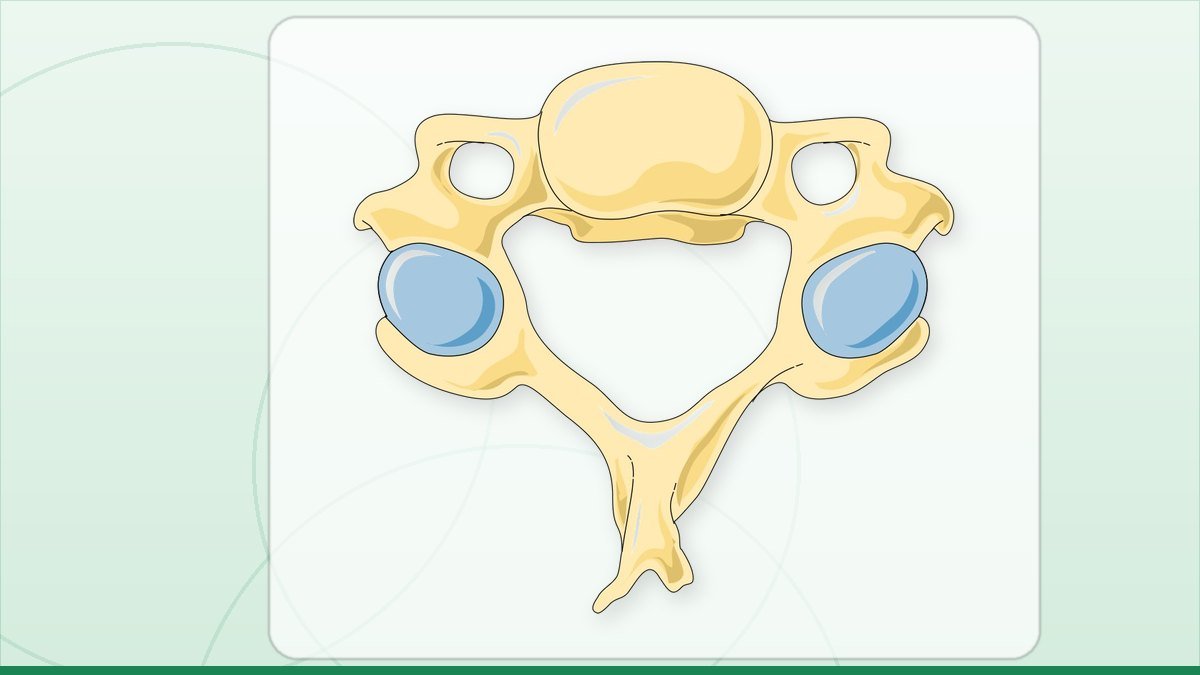
In cervical disc surgery, the surgeon removes the damaged part of the disc that is pressing on a nerve or the spinal cord, working through the front or back of the neck. What replaces it depends on the technique: nothing in a straightforward endoscopic discectomy, a spacer with fusion (ACDF), or an artificial disc that keeps the neck moving.
What exactly is removed, and what replaces it?
The surgeon removes only the part of the disc that has slipped out of place and is pressing on a nerve root or the spinal cord in your neck. This is usually a fragment of the soft inner material of the disc, not the whole disc.
What happens next depends on the operation. In a straightforward discectomy, nothing is put back. The small space left behind is well tolerated. If the whole disc has to come out because it is unstable or badly worn, the surgeon fills the gap with either a spacer and bone graft that fuses the two vertebrae together (ACDF), or an artificial disc designed to keep that level of the neck moving.
The choice between fusing the level and replacing the disc is made on your MRI findings, your age, and how many levels are affected, not on preference alone.
Is cervical disc surgery safe? Will I be paralysed?
For most patients, cervical disc surgery is safe, and permanent paralysis is a rare complication, not an expected outcome. The spinal cord and nerves sit close to the disc, so the risk is not zero, but modern imaging, microscopes and endoscopes let the surgeon work with a clear, magnified view of exactly what needs to move and what must not be touched.
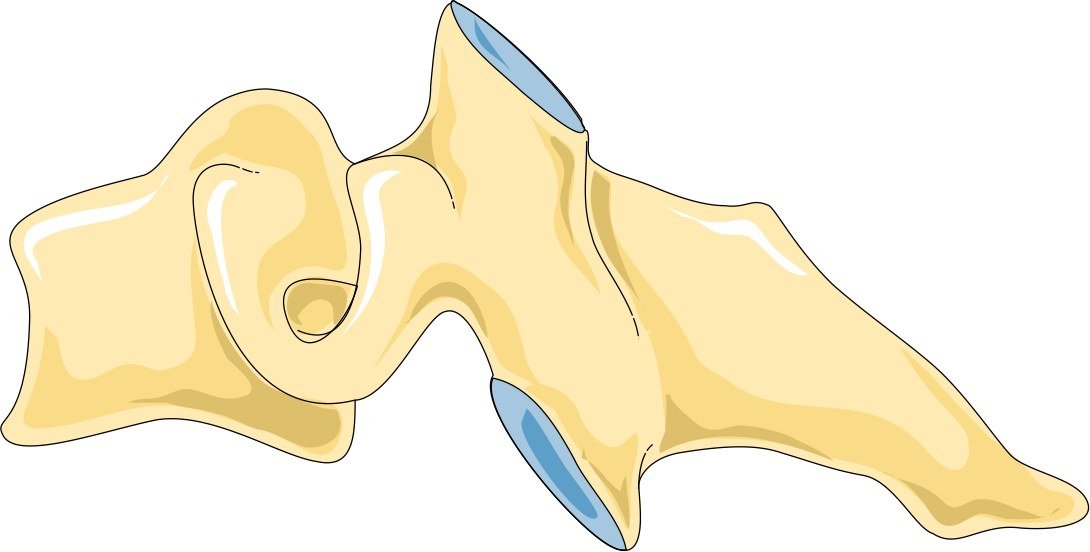
The more common problems after neck surgery are minor and temporary: a sore or hoarse throat for a few days after an anterior approach, some swallowing discomfort, or a wound infection. Nerve injury severe enough to cause new weakness is uncommon. Ask your surgeon to walk through your own MRI and explain, in plain language, what the specific risk is for your case, not a generic percentage.
Do I actually need surgery, or will rest and physiotherapy work?
Most gardan dard, and even pain running down the arm from a disc bulge, settles on its own within a few weeks with rest, physiotherapy, anti-inflammatory medication and activity modification. Surgery is not the first step for the majority of patients.
Surgery starts to be discussed when arm pain, numbness or weakness has not improved after six to twelve weeks of proper conservative treatment, or when the pain is severe enough that you cannot function. It becomes urgent, not just an option, if the spinal cord itself is being compressed: clumsy hands, dropping things, a change in your walking, or new bladder or bowel trouble. Those symptoms need assessment quickly, not a trial of hakeem or massage first.
If your symptoms are ordinary neck stiffness or pain without arm weakness or these warning signs, it is entirely reasonable to try conservative treatment first and keep surgery as a later option.
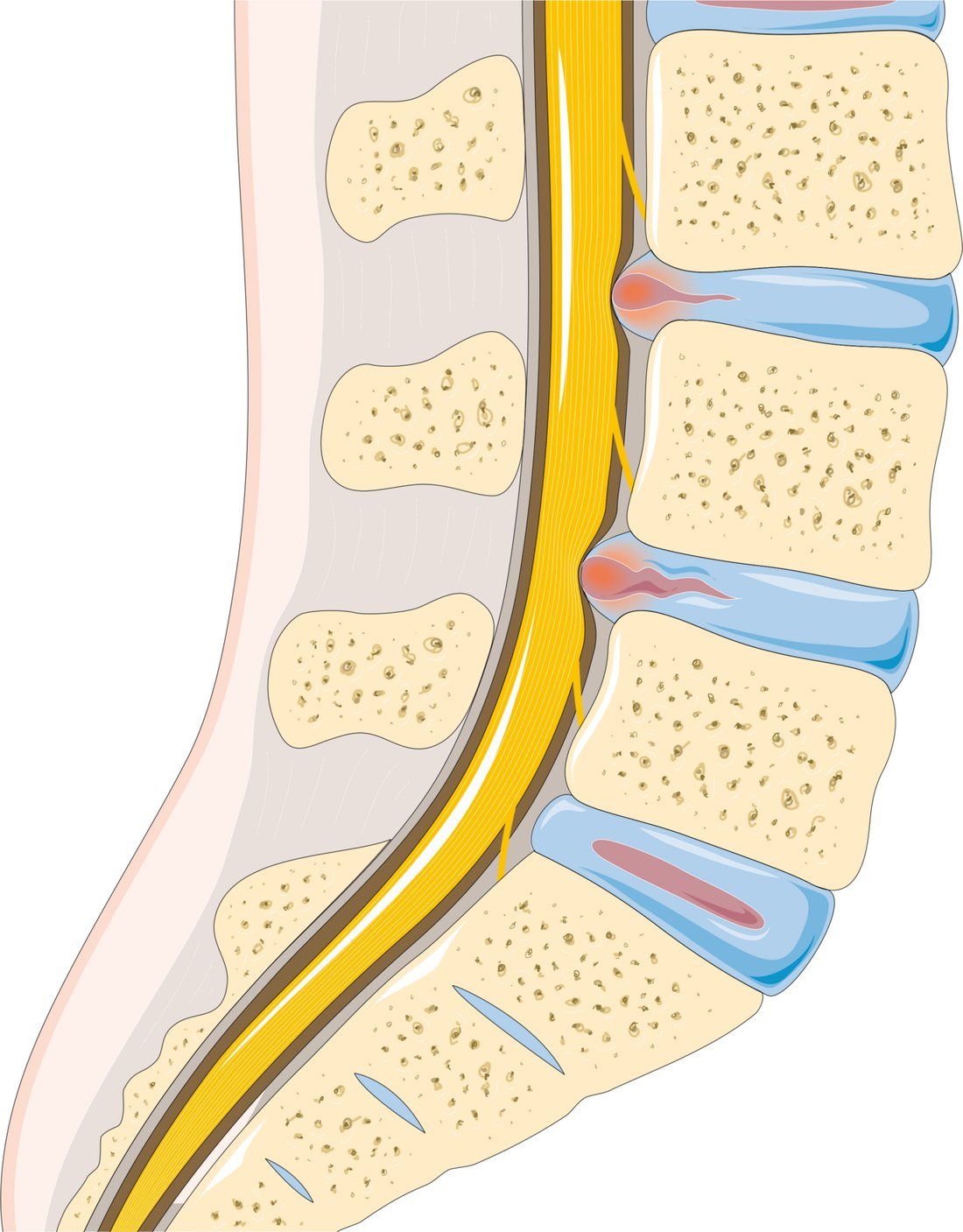
ACDF, disc replacement, or endoscopic discectomy: what's the difference?
All three deal with the same problem, a disc pressing on a nerve or the cord, but they reach it differently and leave different things behind.
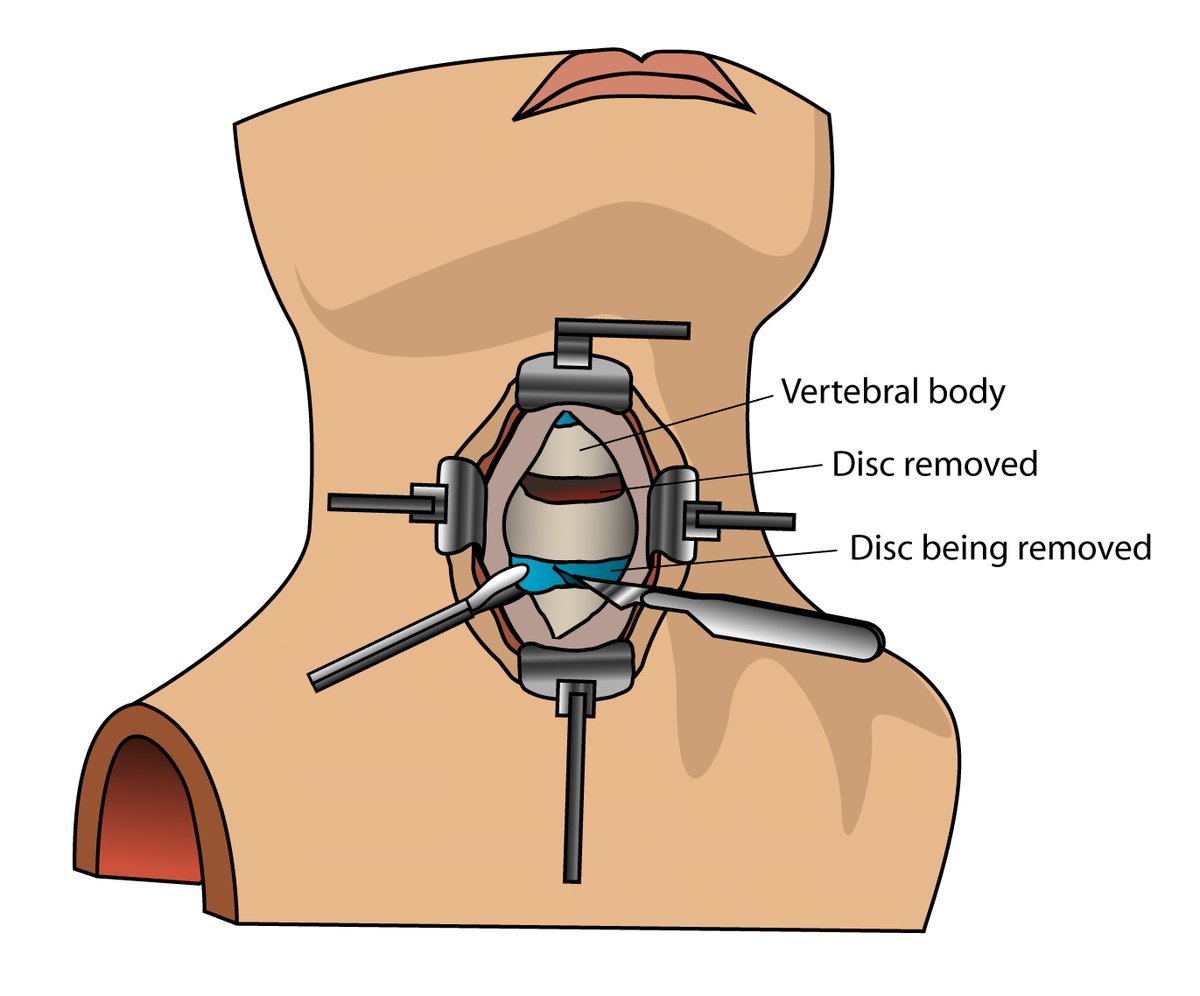
- ACDF (anterior cervical discectomy and fusion): the surgeon reaches the disc from the front of the neck, removes it, and fuses the two vertebrae with a spacer and usually a small plate. It is the most established option and works well when a level is unstable or badly degenerated, at the cost of losing motion at that level.
- Artificial disc replacement: also done from the front, but instead of fusing the level, an artificial disc is inserted to keep it moving. It suits younger patients with good bone quality and a problem limited to the disc itself, without significant arthritis in the small joints of the neck.
- Endoscopic cervical discectomy: done through a very small opening, usually from the back of the neck, using a camera and fine instruments to remove just the herniated fragment pressing on the nerve. No fusion, no plate, and the surrounding muscle is largely undisturbed. It suits a contained disc fragment causing nerve pain, not cases where the level itself is unstable.
Which of these fits you depends on the MRI, not on which one sounds newest.
Is endoscopic spine surgery safe, and what about 'laser spine surgery'?
Endoscopic spine surgery, including the cervical version described above, is safe when it is used for the problem it is designed for: a disc fragment pressing on a nerve, without instability at that level. Safety comes from matching the technique to the pathology, not from one technique being inherently safer than another.
"Laser spine surgery" is largely a marketing term. There is no operation where a laser alone removes a herniated disc. What some clinics call laser surgery is usually endoscopic or minimally invasive discectomy, where a laser or radiofrequency probe is used briefly to shrink tissue while the actual disc fragment is still removed with instruments. Where it is done for the right problem, it works the same as any other endoscopic discectomy. The word "laser" on its own does not make a procedure more or less effective.
If you searched for "laparoscopic surgery cost in Pakistan" while looking for spine surgery, note that laparoscopic surgery refers to keyhole operations on the abdomen, not the spine. The spine equivalent you are likely looking for is endoscopic spine surgery.
How much does cervical or spine surgery cost in Pakistan?
Cost depends on which operation you need, which hospital, whether an implant, cage or plate is used, how many nights you are admitted, and the anaesthesia and endoscope charges. Because of this, there is no single honest figure for "endoscopic spine surgery cost in Pakistan" or "spinal fusion surgery cost in Pakistan" that applies to every patient.
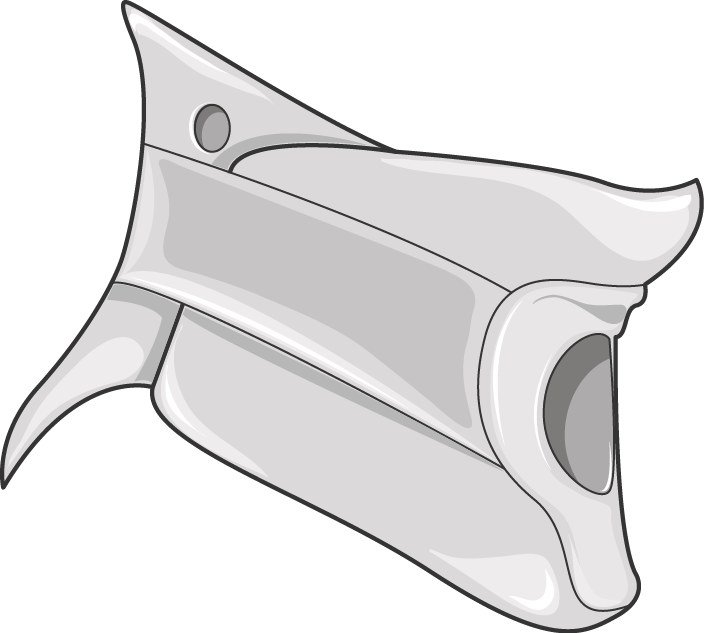
The safer approach is to ask the hospital and surgeon's office for a written, itemised quote before you commit: surgeon's fee, hospital stay, implant cost if any, and anaesthesia, all listed separately. Compare that quote across two or three centres in Punjab if you want, and be cautious of any "laser spine surgery cost" quoted as a flat, unusually low figure without an itemised breakdown.
Some families also look at spine surgery cost in Egypt or elsewhere abroad, hoping to save money. Travel, accommodation, language, and the difficulty of an in-person follow-up if something needs checking are real costs too, not just the surgeon's fee. For most patients, treatment closer to home with a clear written quote and easy follow-up works out simpler.
How long does recovery take, and when can I go back to work?
Recovery depends on which procedure you had. After an endoscopic discectomy, most patients walk the same day and go home within a day or two, with light desk work possible in one to two weeks and full activity easing back in over four to six weeks.
After ACDF or disc replacement, expect a short hospital stay, a soft collar for comfort in the first weeks, and a gradual return to normal movement over one to three months while the fusion heals or the artificial disc settles in. Heavy lifting and contact activity are restricted for longer after fusion than after an endoscopic procedure.
Your surgeon will give you a specific timeline based on your job and your operation, since a desk job and manual labour call for different advice.
How do I choose a spine surgeon in Faisalabad?
Before you commit to any procedure, make sure the surgeon has actually reviewed your MRI in person, not just the report, and has explained why a particular technique fits your case over the others.
A trustworthy consultation includes a plain-language discussion of whether you need surgery at all, what the realistic risks are for you specifically, and a written quote you can take home and think over with your family. Family involvement in the decision is normal here, and a good surgeon will answer their questions too, not just yours.
Dr. M. Abdur Rehman is a consultant neurosurgeon and spine surgeon practising at Mujahid Hospital, Faisalabad, with a focus on endoscopic spine surgery and microdiscectomy. If you are trying to work out whether your neck pain needs surgery, bring your MRI to a consultation and get a clear opinion before deciding, and use these questions when comparing the best endoscopic spine surgeon in Faisalabad for your case.
Cervical spine surgery in Faisalabad Read the full page on cervical spine surgery in faisalabad, including who it suits, what recovery looks like and how to arrange a review.
Questions patients ask about this
What is a "slip disc" in the neck?
It means part of a disc between the neck vertebrae has bulged or ruptured and is pressing on a nearby nerve or the spinal cord. It can cause neck pain, pain or numbness running into the arm, or, in more serious cases, changes in hand coordination or walking.
How do I know if I need surgery or just physiotherapy?
Try physiotherapy, medication and activity changes first if your pain is ordinary neck and arm pain without weakness. Surgery is usually considered when arm weakness, numbness or severe pain has not improved after six to twelve weeks, or if there are signs of spinal cord compression.
Is endoscopic spine surgery safe for the neck?
Yes, for the right problem. Endoscopic cervical discectomy removes a herniated fragment through a very small opening without fusion, and is safe when used for contained disc herniations causing nerve pain, not for levels that are unstable and need fusion instead.
Will I lose neck movement after ACDF fusion?
You lose movement only at the fused level itself; the rest of the neck compensates and most patients do not notice a major restriction in daily activities. Multiple fused levels or an artificial disc instead of fusion are ways your surgeon may address this concern.
Is laser spine surgery effective, or is it the same as endoscopic surgery?
"Laser spine surgery" is mostly a marketing term for minimally invasive or endoscopic discectomy, where a laser or radiofrequency tool may assist but instruments still remove the disc fragment. Done for the right problem, it works the same as standard endoscopic discectomy.
Related articles
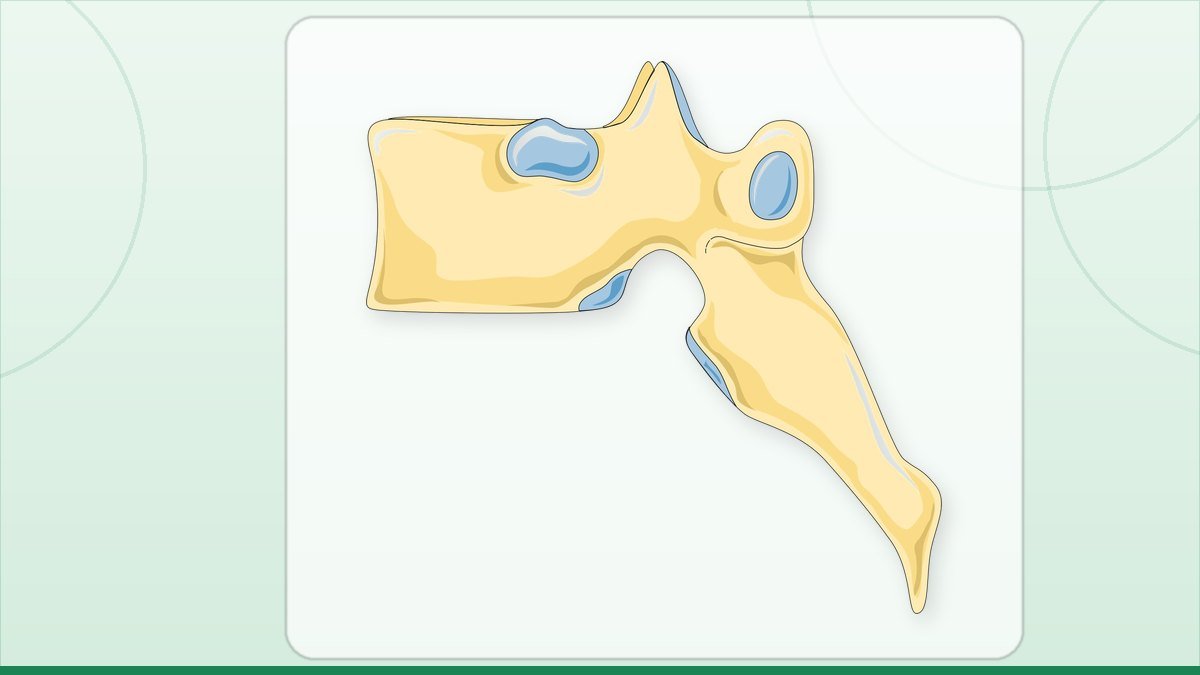
Thoracic spine: the mid-back problems that get missed
Thoracic spine pain in the mid-back is often missed. Learn the real causes, red flags, and when surgery is…
Read this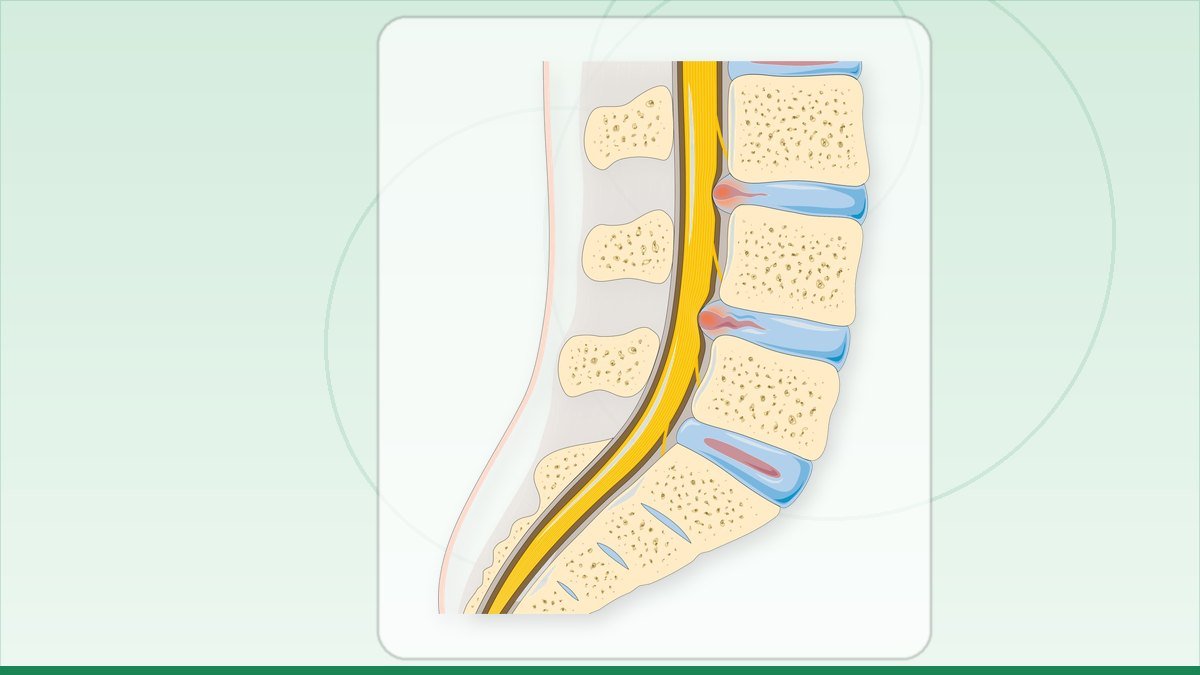
Disc prolapse, bulge, protrusion: the same disc at four stages
Disc prolapse treatment explained: bulge, protrusion, extrusion, when surgery is needed, is it safe, and what…
Read this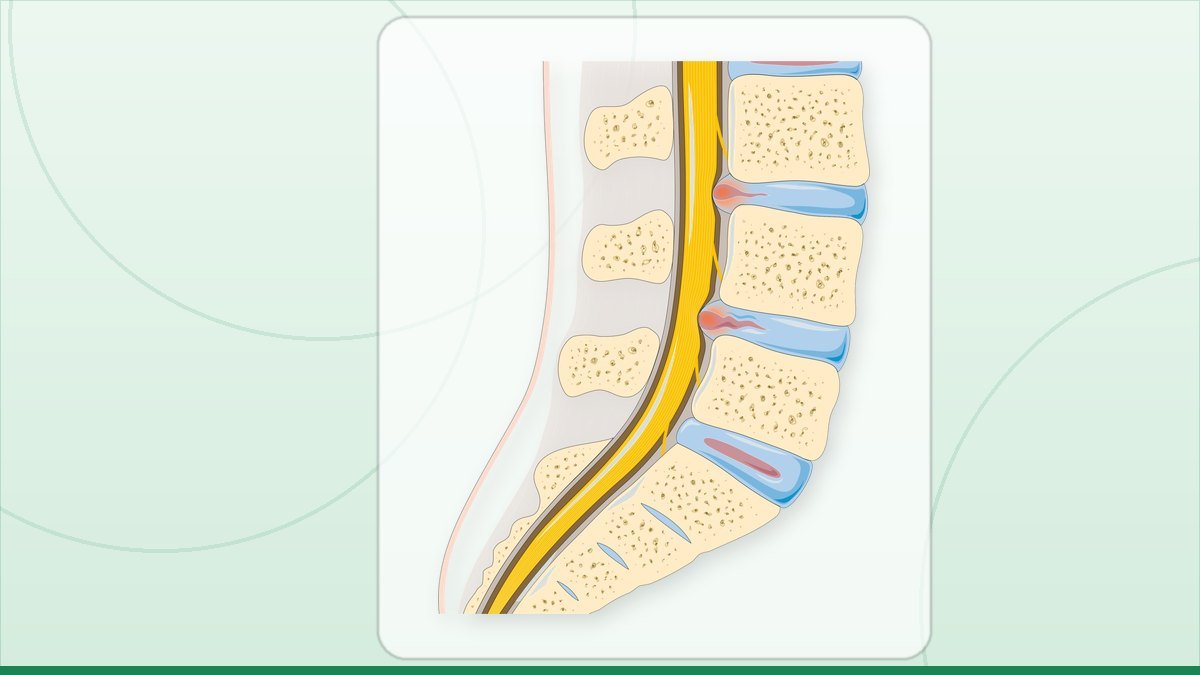
You have been told you have a disc problem. What now?
Told you have a disc problem? Learn what a disc problem treatment actually involves, when surgery is needed,…
Read thisAll patient questions · Spine surgery in Faisalabad · Book an appointment
Ask about your own scan. Send your MRI or X-ray on WhatsApp and get a straight answer on whether surgery is needed at all, from a consultant neurosurgeon in Faisalabad.
Dr. M. Abdur Rehman is a consultant neurosurgeon in Faisalabad. Send your scan on WhatsApp and ask what it actually shows.
Published for the practice of Dr. M. Abdur Rehman, consultant neurosurgeon, Mujahid Hospital, Faisalabad. General information only, not a substitute for examination.