
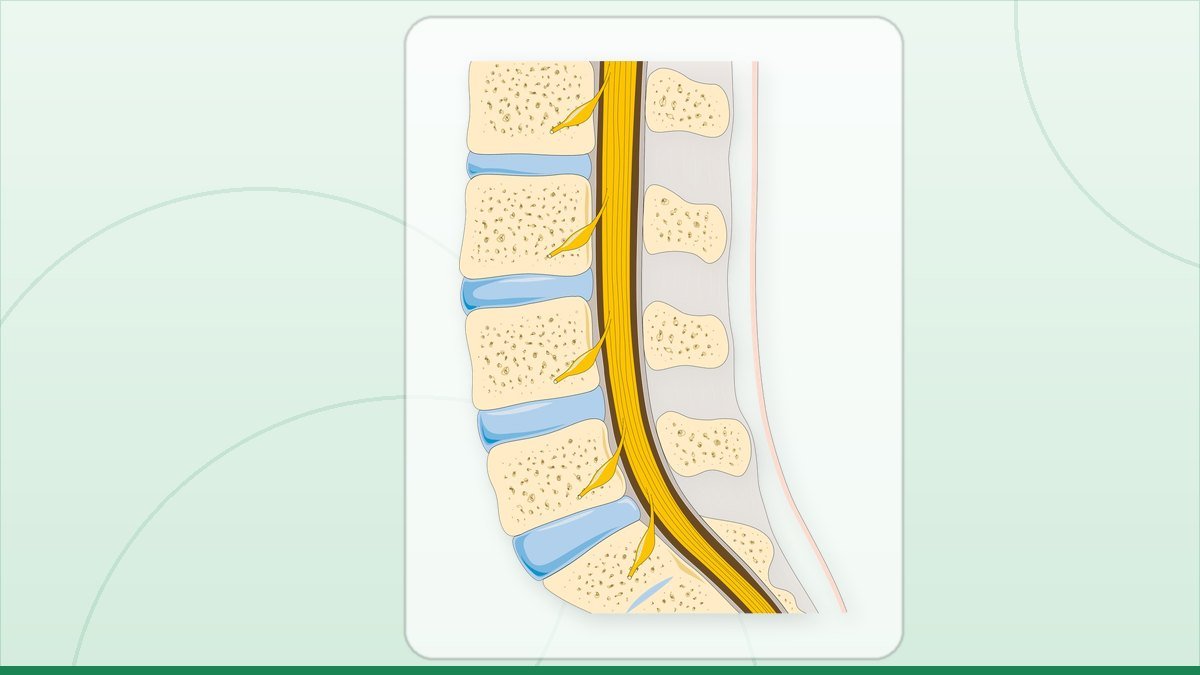
Cauda equina syndrome is a rare emergency where the nerve bundle at the bottom of the spine is squeezed, usually by a large slipped disc. Warning signs are trouble passing or controlling urine, numbness around the private parts and inner thighs, and weakness in both legs. Go to a hospital emergency the same hour, not tomorrow.
What is cauda equina syndrome, and how is it different from ordinary kamar dard?
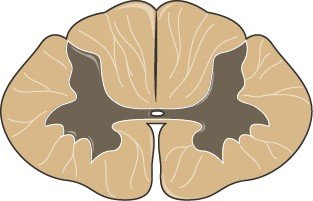
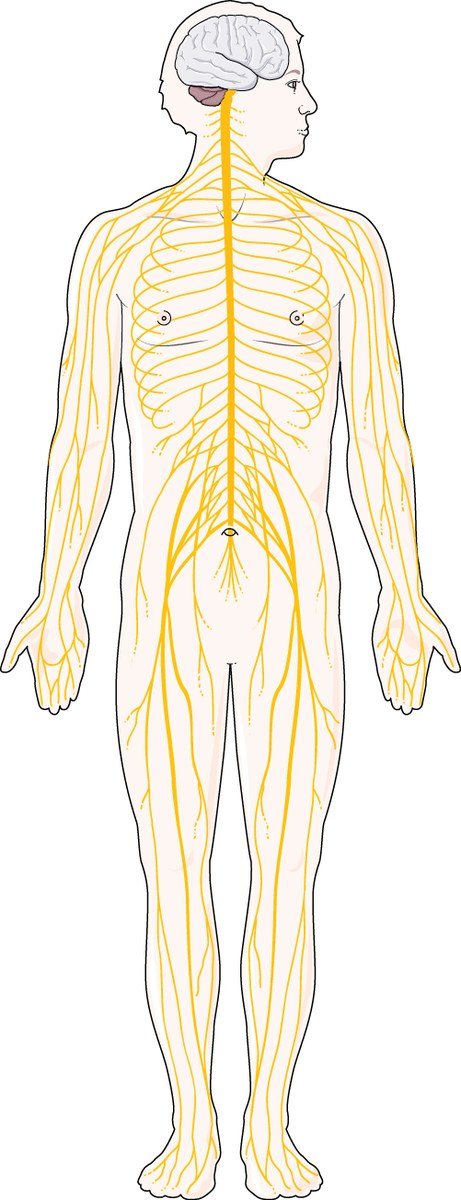
At the bottom of your spine the spinal cord ends and splits into a bundle of nerve roots that hangs down like a horse's tail. That bundle is the cauda equina. It runs your legs, your bladder, your bowel and your sexual function. Cauda equina syndrome happens when something presses hard on that whole bundle at once.
The usual cause is a large slip disc that has burst backwards into the middle of the canal instead of pushing to one side. Other causes are severe canal narrowing, a spinal infection or TB of the spine, a tumour, an injury, or a blood clot in the canal after a fall or in someone on blood thinners.
This is not the same illness as everyday kamar dard. Ordinary back pain, and even a painful taang mein dard from a normal slip disc, is not an emergency. It hurts badly but the nerves are still working. Cauda equina syndrome is different because the nerves stop doing their job. The signal is loss of function, not the amount of pain.
It is uncommon. Most people with severe back pain do not have it. But when it is present, waiting causes damage that surgery later cannot undo.
Will I be paralysed? Is the operation safe?
The bigger danger is not the operation. It is leaving the nerves squeezed. Because the cauda equina is a bundle of nerve roots and not the spinal cord itself, the classic picture of a person paralysed from the chest down is not what usually happens here. What is genuinely at risk is your bladder control, your bowel control, sexual function, and strength and sensation in your legs.
The operation to release the pressure is a well established neurosurgical procedure done every day around the world. Serious complications are uncommon. Risks that are discussed honestly before consent include infection, bleeding, a tear in the covering of the nerves, and the disc coming out again later at the same level. Your surgeon should name these to you in plain words, not just hand you a form.
Here is the part families ask about most. Surgery is done to stop further damage and to give the nerves the best chance to recover. It is not a guarantee that everything comes back. Nerves that have already been badly crushed take time, and some function may not return fully. That is exactly why the timing matters so much, and why nobody should be told to "try rest for a week and see".
Refusing surgery is also a decision with consequences. A frightened family who says "we will think about it and come on Monday" is choosing the outcome of untreated compression.
What are the warning signs I must not ignore?
Learn these. If you or the patient has one or more of them together with back or leg pain, go to a hospital emergency now.
- Bladder change. You cannot pass urine even though the bladder feels full. Or you have lost the feeling of needing to go. Or the stream is weak and you have to strain. Or urine leaks without you knowing.
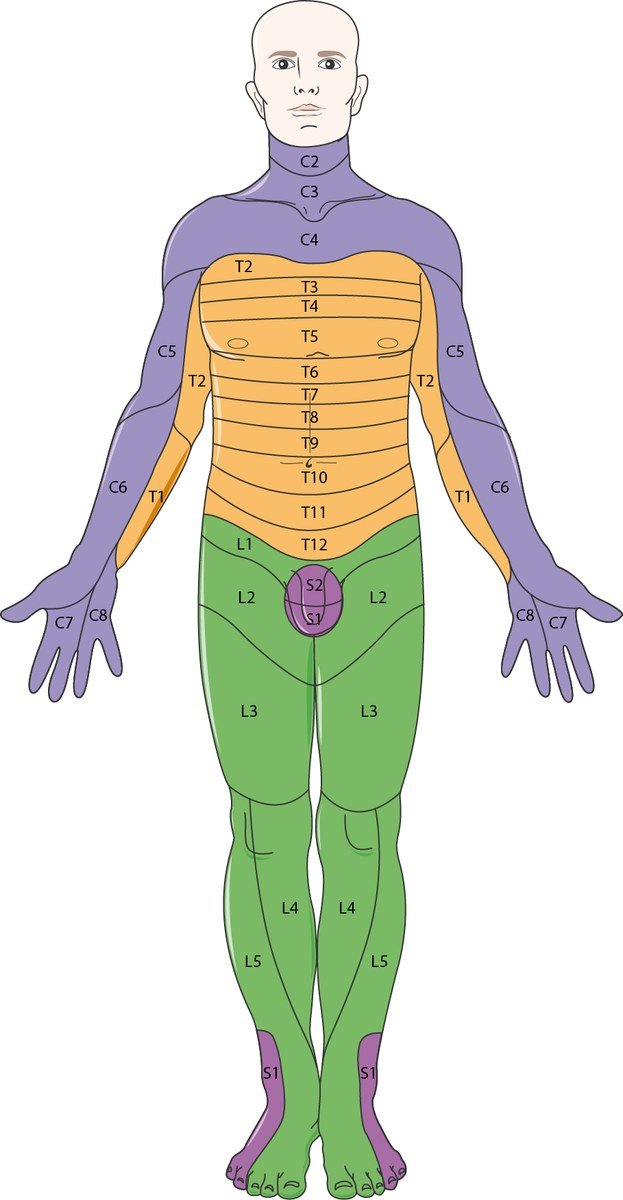
- Saddle numbness. Numbness or a strange dead feeling in the area that would touch a saddle: the private parts, between the legs, the buttocks, the inner thighs. Many people first notice it while cleaning after using the toilet, or when the water feels different during wudu.
- Bowel change. You cannot feel stool passing, or you cannot control it, or you have lost the ability to squeeze.
- Pain or weakness in both legs. Sciatica down both legs, or pain that jumps from one leg to the other, or feet and legs getting weaker over hours and days.
- Loss of sexual sensation that is new.
Add fever, night sweats, weight loss, or a history of TB in the family, and think about spinal infection or TB of the spine, which is not rare in Pakistan. That also needs urgent assessment.
One more warning. If any of these appear, do not go for malish, do not let anyone press or crack your back, do not take traction, and do not go to a hakeem for this. Pressing on a spine in this condition can make things worse. Physical therapy also has no role until an MRI has been seen.
Why do hours matter so much?
Because nerves under pressure do not wait for anyone's convenience. Once the blood supply to the squeezed nerve roots is choked, the damage moves from reversible to permanent. Neurosurgeons everywhere treat cauda equina syndrome as one of the few true spinal emergencies, in the same category as a head injury.
Doctors think of it in two stages. In the early stage the bladder still works but the feeling is changed, the stream is poor, the saddle area is going numb. In the later stage the bladder has stopped emptying altogether and urine simply overflows. Outcomes after decompression are generally better for people operated in the earlier stage than the later one. That gap between the two stages can be a matter of hours.
So the honest instruction is this. The moment bladder symptoms or saddle numbness appear, the clock has started. Not the day you finally get a free appointment. Not after Friday prayers. That evening.
What happens when you reach the hospital?
Expect a focused examination first. The doctor will test power in both legs, check reflexes, test sensation in the saddle area, and in most cases do a rectal examination to check tone. It is uncomfortable and it feels intrusive, especially for female patients. Ask for a female attendant to be present. It is done because it gives information nothing else gives.
They will also scan or catheterise your bladder to see how much urine is sitting in it. A bladder holding a large volume that you cannot feel is a serious finding.
The MRI
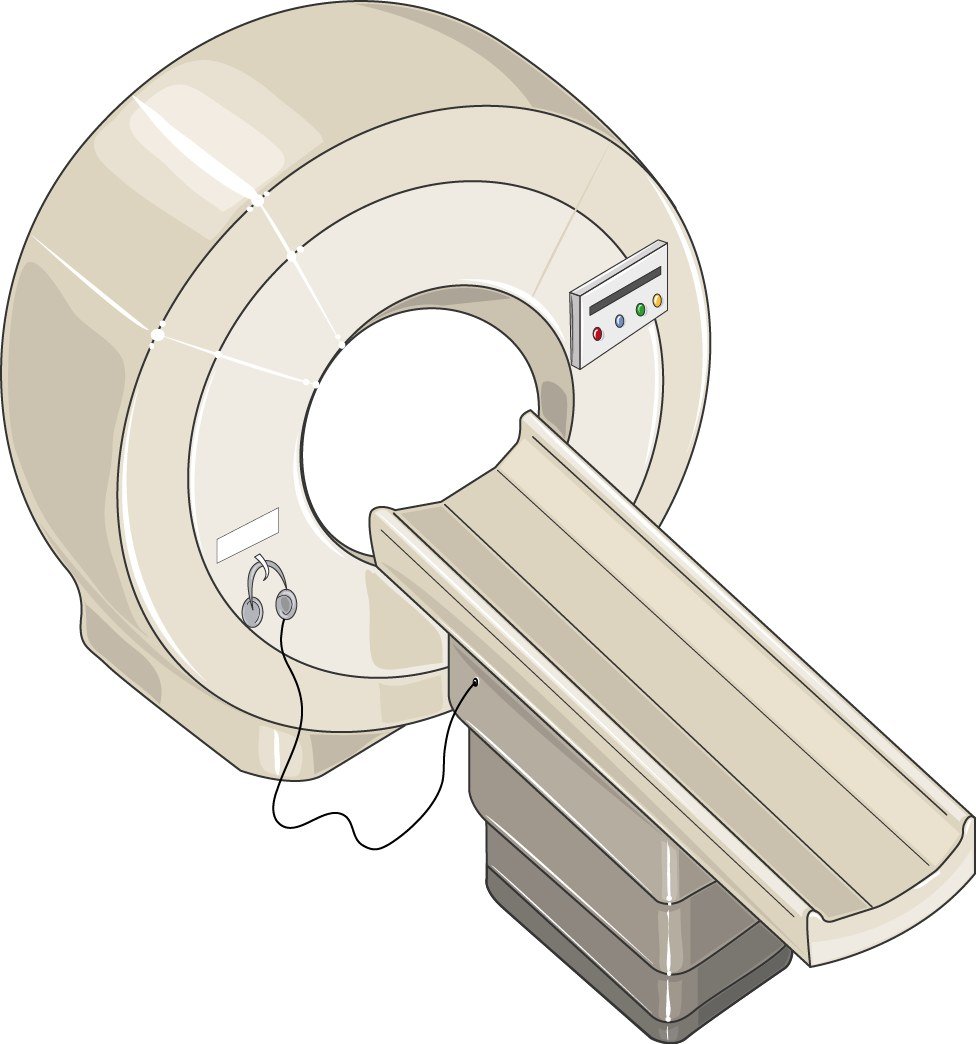
An urgent MRI of the whole lumbar spine is the test that confirms or rules out cauda equina syndrome. X-ray cannot show it. CT can help but is second best. If you have a pacemaker or certain metal implants and cannot have an MRI, the team will use an alternative such as a CT myelogram.
In Faisalabad and across Punjab, MRI availability at night is the real bottleneck. Ask directly on the phone before you travel: is your MRI working right now, and is a neurosurgeon on call tonight? If your nearest facility cannot do both, go to the nearest one that can rather than waiting for morning. Do not drive past a capable hospital to reach a famous one three hours further away.
Take your old MRI films and CDs, any previous discharge slips, and a list of medicines, especially blood thinners like warfarin or clopidogrel.
What does the surgery involve? Can it be done endoscopically?
The aim of the operation is simple to state: take the pressure off the nerve bundle. When the cause is a large central disc, the surgeon removes the fragment pressing on the nerves and makes enough room in the canal for them to sit freely again. This is usually done through a small opening in the back with the operating microscope, and the bone opening is made wide enough to see and protect the whole nerve bundle safely.
Patients ask whether this can be done with endoscopic spine surgery, since that is the approach used for many routine disc problems. The honest answer is that it depends on the case, and cauda equina syndrome is not the situation to choose a technique for its own sake. A very large central fragment squeezing nerves from all sides may need wider, more direct access to be cleared completely and safely. Some selected cases can be handled endoscopically by an experienced surgeon. The correct decision is made after looking at your MRI, not before.
What matters here is complete decompression, done soon, by someone comfortable operating on this problem. The size of the cut is the smallest question in the room today.
After the operation
Leg pain often eases quickly. Sensation and bladder function recover more slowly, sometimes over weeks or months, and recovery is not always complete. You may go home with a catheter for a while and a plan for bladder training. Physiotherapy, a urology review if the bladder is slow to recover, and honest follow-up are all part of the treatment, not extras.
What if it is not cauda equina syndrome?
Most of the time, it is not. That is good news and it deserves to be said clearly on this page.
The great majority of back pain and sciatica in Pakistan needs no surgery at all. A normal slip disc pressing on one nerve root causes severe taang mein dard, but the body reabsorbs the disc material over weeks to months in most people. Painkillers, staying gently active instead of lying flat for weeks, physiotherapy and time settle a large share of these cases. Surgery is considered when pain remains disabling after a fair trial of non-surgical treatment, or when there is real progressive weakness, and when the MRI matches the symptoms.
An MRI showing a bulging disc is not by itself a reason to operate. Many people walking around with no pain at all have bulges on their scan. If a surgeon recommends an operation, ask which finding on the MRI explains which symptom you actually have. A good answer is specific.
If you have been told you need urgent surgery and you feel rushed, and you have none of the red flags listed above, it is reasonable to ask for a second opinion. If you do have the red flags, do not spend the night getting second opinions. Get to a hospital.
What will it cost, and how do families in Faisalabad plan for it?
Costs in PKR vary a great deal between a government hospital, a trust hospital and a private setup, and they vary by city. Do not rely on a figure quoted over the phone by a receptionist or a number you saw on a Facebook page. Ask for a written quote and check that it lists each of these:
- Emergency MRI of the lumbar spine
- Surgeon and anaesthesia fees
- Operation theatre charges
- Room and expected days of hospital stay
- Any implants, if fusion is being suggested
- Post-operative physiotherapy and follow-up visits
- What is not included if the stay runs longer than expected
In an emergency, families in Faisalabad, Jhang, Chiniot, Toba Tek Singh and Sargodha often face the money question and the travel question at the same time. Two practical points. First, treatment should not be delayed while the family arranges funds; speak to the hospital about the situation on arrival rather than staying home. Second, most emergency care in Punjab for this condition is available within the province, so long overland travel to another city usually costs time you do not have.
The family decision is usually made by several people together. Bring the elder who will decide to the consultation, so the surgeon can explain directly instead of the information passing through three phone calls.
What to do next
If you are reading this because someone at home has bladder trouble, saddle numbness or weakening legs along with back pain: stop reading and take them to a hospital emergency now. Call ahead and ask whether the MRI is working and whether a neurosurgeon is on call.
If you are reading this calmly, with back pain or sciatica but none of the red flags, you are in the group that most often gets better without an operation. Get a proper assessment, treat the pain, stay active within your limits, and keep the warning signs from this page in your head so you would recognise them.
Many families search online for the best endoscopic spine surgeon in Faisalabad before they decide who to trust. That search is worth doing for planned surgery, where you can compare, ask questions and take your time. For cauda equina syndrome the priority is different: reach a hospital that can scan you tonight and operate if needed. Dr. M. Abdur Rehman is a consultant neurosurgeon at Mujahid Hospital, Faisalabad, and sees patients with back pain, sciatica and spinal emergencies. Bring your MRI films and any old reports to the consultation, and bring the family member who will be part of the decision.
Write down when the symptoms started. In this condition, that time is a piece of medical information.
Questions patients ask about this
Can cauda equina syndrome settle on its own with rest and painkillers?
No. Rest and painkillers treat pain, not pressure on nerves. Waiting allows reversible nerve damage to become permanent, particularly bladder and bowel control. There is no medicine, injection, malish or physiotherapy that takes a disc fragment off the nerve bundle. Urgent MRI and surgical decompression is the accepted treatment.
Is it cauda equina syndrome if only one leg is painful?
Not usually. Pain in one leg from a slip disc is common and is not an emergency by itself. Cauda equina syndrome typically involves both legs, plus bladder or bowel change and saddle numbness. If bladder symptoms or numbness between the legs appear, go to hospital regardless of how many legs hurt.
Can this be treated with endoscopic spine surgery?
Sometimes, in selected cases and by an experienced surgeon. But the goal in an emergency is complete decompression of the whole nerve bundle, and a large central disc may need wider access to clear safely. The technique is chosen after seeing your MRI. Do not delay treatment to arrange a particular method.
It is night time in Faisalabad and no MRI centre is open. What do I do?
Go to a hospital emergency anyway and let them examine you. Hospitals with emergency neurosurgical cover arrange scans at night. Call ahead and ask two questions: is your MRI working now, and is a neurosurgeon on call. Go to the nearest place that answers yes to both.
Will my bladder go back to normal after the operation?
Often it improves, but recovery is slower than leg pain and it is not guaranteed. Bladder nerves recover over weeks to months, and some people are left with lasting problems, especially when surgery was delayed. You may go home with a catheter and a bladder training plan, with urology follow-up if needed.
Related articles
Facet joint pain: the back pain that hates standing
Facet joint pain gets worse when you stand and better when you sit. What it means, which treatments help, and…
Read this
Sacroiliac joint pain or sciatica? Telling them apart
Sacroiliac joint pain or sciatica? How to tell them apart, which tests confirm it, and when surgery is really…
Read this
Piriformis syndrome or a disc? Same leg pain, different cause
Piriformis syndrome or a slipped disc? Both cause leg pain. Here is how to tell them apart, when surgery is…
Read thisAll patient questions · Spine surgery in Faisalabad · Book an appointment
Ask about your own scan. Send your MRI or X-ray on WhatsApp and get a straight answer on whether surgery is needed at all, from a consultant neurosurgeon in Faisalabad.
Dr. M. Abdur Rehman is a consultant neurosurgeon in Faisalabad. Send your scan on WhatsApp and ask what it actually shows.
Published for the practice of Dr. M. Abdur Rehman, consultant neurosurgeon, Mujahid Hospital, Faisalabad. General information only, not a substitute for examination.