

Most back pain settles with rest, physiotherapy, and time, usually within six to eight weeks. See a spine surgeon if you have leg pain worse than back pain, numbness, weakness in the foot or leg, or loss of bladder or bowel control. These signs point to a pinched nerve and need urgent assessment, not just massage or rest.
What kind of back pain gets better on its own?
Most back pain, what people call kamar dard, comes from a strained muscle, tight ligament, or a joint that has been overworked. It is not caused by a disc pressing on a nerve, and it does not need surgery. It usually eases within a few days and is mostly better within six to eight weeks with rest from heavy activity, gentle movement, heat, and a proper course of physiotherapy.
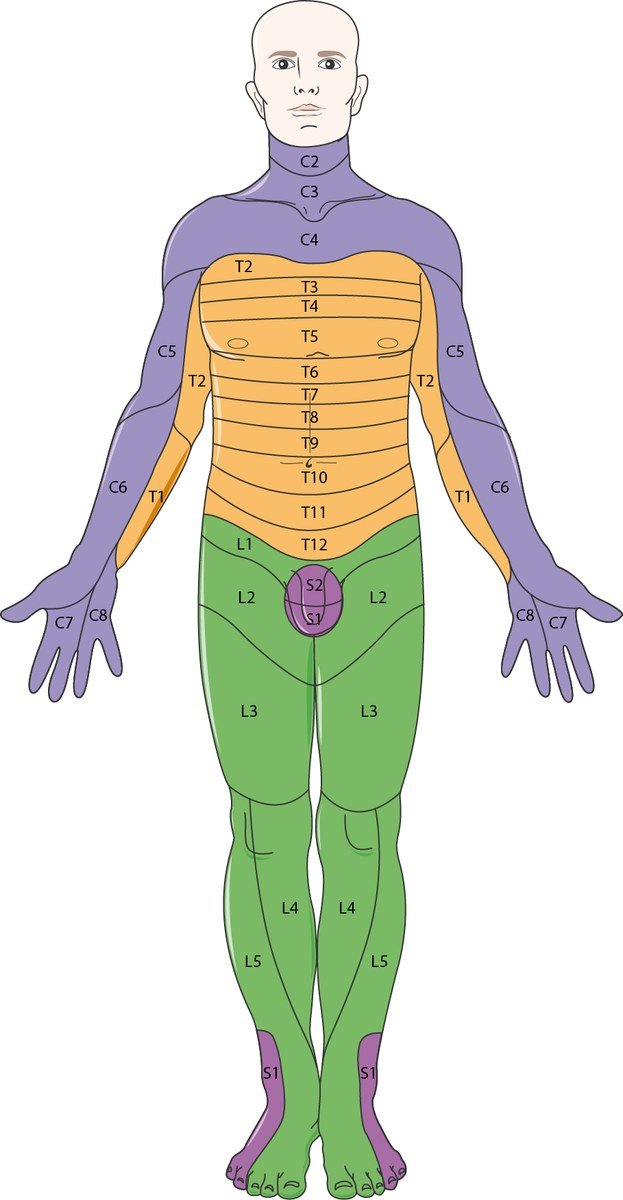
Signs that you are dealing with this ordinary type of back pain: the pain stays in the back and does not travel down the leg, it changes with position, better lying down, worse after long sitting, and you have no numbness or weakness. In this group, a physiotherapist, not a surgeon, is the right first stop.
Trying a hakeem, a masseur, or a few weeks of rest before seeing a doctor is common in Pakistan and is not unreasonable for this kind of pain. The concern is when people continue this for months while ignoring the warning signs described below.
When to see a spine surgeon
See a spine surgeon when the pain is no longer just in your back. Leg pain that runs down the back or side of the leg, sciatica, or taang mein dard, especially if it is worse than the back pain itself, usually means a disc or bone is pressing on a nerve root.
- Leg pain worse than back pain, especially below the knee
- Numbness or pins and needles in the leg or foot
- Weakness, such as the foot slapping when you walk, or difficulty standing on your toes or heel
- No real improvement after six to eight weeks of proper physiotherapy and medication
- Pain that stops you sleeping, working, or walking normal distances
- New difficulty controlling urine or bowel motions, or numbness around the groin, which needs same-day emergency care, not a routine appointment
If you recognise two or more of the first five signs, book a consultation with a spine surgeon rather than repeating another round of massage or bed rest.
Is spine surgery safe? Will I be paralysed?
This is the fear behind almost every family's hesitation, and it deserves a straight answer. For the common lumbar procedures used for a slipped disc, microdiscectomy and endoscopic discectomy, the surgeon works on the disc material pressing on a nerve root, not on the spinal cord itself, which ends higher up in the back. Paralysis from these procedures is a recognised but rare risk, not a routine outcome.
Like any operation, there are real risks to discuss beforehand: infection, bleeding, nerve irritation, or the disc pressing again later. A good surgeon will go through these with you and your family in plain language before the day of surgery, not glossed over and not exaggerated.
Surgery is only offered when the expected benefit, relief of nerve pain and function, outweighs these risks for your specific MRI findings and symptoms. If a surgeon cannot explain why surgery helps your particular problem, ask for a second opinion before agreeing.
What tests do I need before seeing a surgeon?
An MRI of the lumbar spine is the main test, since it shows the disc, the nerve, and how much room the nerve has. Most surgeons will ask for one done within the last few months, not years old, because a disc's position and size can change over time.
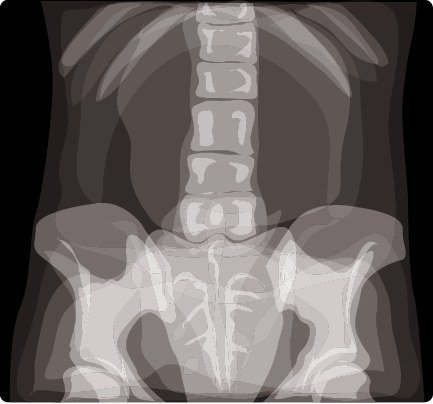
X-rays are sometimes added to check alignment or bone spurs, and a CT scan is occasionally needed if a patient cannot have an MRI, for example with certain metal implants. Blood tests are only relevant if infection or another cause is suspected.
One important point: an MRI showing a disc bulge does not automatically mean you need surgery. Many people with no back pain at all have bulges on MRI. The scan is read together with your symptoms and physical examination, not on its own.
Is laser spine surgery effective?
"Laser spine surgery" is used loosely in advertising and does not describe one single fixed procedure. In most cases it refers to a minimally invasive discectomy, often endoscopic, where a laser probe is one of several tools that can be used inside the endoscope to shrink or clear disc material, alongside mechanical instruments.
Whether it works depends far more on correct patient selection, an experienced surgeon, and accurate diagnosis than on the word "laser" itself. A patient whose problem is not actually a compressed nerve will not improve, regardless of the tool used. Ask any clinic advertising laser spine surgery to explain exactly what procedure they mean and why it suits your MRI findings, rather than taking the word "laser" as a guarantee of a better result.
On cost, there is no separate fixed price for "laser" versus other minimally invasive techniques in Pakistan. Pricing depends on the hospital, the exact procedure, implants if any are needed, and length of stay, so always ask for this in writing before deciding.
What is endoscopic spine surgery and how is it different from open surgery?
Endoscopic spine surgery removes the piece of disc pressing on a nerve through a small tube, often under a centimetre wide, guided by a camera and monitored on a screen. The surgeon works through this narrow opening with specialised instruments, so the skin incision and the disturbance to the surrounding muscle are less than with an open operation.
Microdiscectomy, done through a slightly larger incision with a microscope, is the other well-established option for the same problem and remains a reliable, widely used procedure. Both aim to relieve pressure on the same nerve. Which one suits a particular patient depends on the exact location and type of the disc problem on MRI, not on which sounds more modern.
In general, patients having endoscopic surgery can expect a shorter hospital stay and an earlier return to light activity than with open surgery, though healing time still depends on the individual and the type of work they return to.
How much does spine surgery cost in Pakistan?
This is answered in full on what spine surgery costs in Pakistan, so it is not repeated here.
What should I do next?
If your pain is in the back only and less than six weeks old, start with a physiotherapist and give conservative treatment a proper chance. If you have leg pain worse than back pain, numbness, weakness, or pain that has not responded to six to eight weeks of physiotherapy, it is time to see a spine surgeon and get an MRI.
Bring your MRI, any previous X-rays or reports, and a list of what you have already tried to the consultation. Involve the family member who will be helping with decisions and aftercare, since this is usually a shared decision, not one made in a rush.
For patients in Faisalabad weighing this decision, Dr. M. Abdur Rehman, consultant neurosurgeon and best endoscopic spine surgeon in Faisalabad, offers consultations to review your MRI and symptoms and give a clear opinion on whether physiotherapy, microdiscectomy, or endoscopic surgery is the right next step for you.
Questions patients ask about this
Is endoscopic spine surgery safe?
Endoscopic spine surgery is a well-established, minimally invasive way to relieve pressure on a compressed nerve. Like any operation, it carries risks such as infection, bleeding, or the problem recurring, and a rare risk of nerve injury. It is not risk-free, but for the right patient the risk is generally low and outweighed by the expected relief.
Is laser spine surgery effective?
Laser spine surgery is not one fixed procedure, it usually describes minimally invasive techniques where a laser probe may be one of several tools used. Results depend far more on correct diagnosis, patient selection, and surgeon experience than on the word laser. Ask exactly which procedure a clinic means before deciding based on that term alone.
How much does endoscopic spine surgery cost in Pakistan?
There is no fixed price, cost depends on the hospital, surgeon's fee, whether an implant is needed, and length of stay. It can vary significantly between cities and hospitals. Always ask the hospital and surgeon's office for a written quote that breaks down each charge before you agree to proceed with surgery.
Can physiotherapy fix a slip disc without surgery?
Yes, in most cases. Many slipped (herniated) discs shrink and settle over weeks to months with physiotherapy, activity modification, and time, without ever needing surgery. Surgery becomes the better option mainly when there is significant leg weakness, unbearable pain that has not responded to proper physiotherapy, or bladder and bowel symptoms.
My MRI shows a disc bulge but I have no leg pain, do I need surgery?
Not usually. Disc bulges are common on MRI, including in people with no pain at all, and are not a reason for surgery on their own. Surgery is considered when the bulge is clearly pressing on a nerve and matches your symptoms, particularly leg pain, numbness, or weakness, confirmed by examination alongside the scan.
Related articles
Diabetes and blood pressure before spine surgery
Diabetic or on BP tablets and facing an operation? What control is really needed for diabetes before spine…
Read this
Back pain in women: pregnancy, osteoporosis and what gets dismissed
Back pain in women: why pregnancy, osteoporosis and hormones change the picture, what gets dismissed, and…
Read this
Spine surgery after 60: is age really the problem?
Is spine surgery for elderly patients safe, or does age alone rule it out? What really decides fitness for…
Read thisAll patient questions · Spine surgery in Faisalabad · Book an appointment
Ask about your own scan. Send your MRI or X-ray on WhatsApp and get a straight answer on whether surgery is needed at all, from a consultant neurosurgeon in Faisalabad.
Dr. M. Abdur Rehman is a consultant neurosurgeon in Faisalabad. Send your scan on WhatsApp and ask what it actually shows.
Published for the practice of Dr. M. Abdur Rehman, consultant neurosurgeon, Mujahid Hospital, Faisalabad. General information only, not a substitute for examination.