
Most Pakistani health insurance and employer panel policies do cover spine surgery, but only when it is medically necessary, documented on MRI, and approved before admission. Cover is usually capped, often excludes pre-existing conditions for the first months, and rarely pays for implants in full. Ask the hospital for written pre-authorisation.
Does health insurance in Pakistan cover spine surgery?
Yes, most group health policies and hospital panel arrangements in Pakistan will pay for spine surgery when it is medically necessary. What they will not do is pay automatically. The insurer decides, before admission, whether your case meets their definition of necessary, and how much of the bill falls inside your limits.
Cover in Pakistan usually comes from one of four places. An employer group policy with a company such as State Life, EFU, Jubilee or Adamjee. A company panel that lets you use a named hospital directly. Social security cover through PESSI if you are a registered factory or mill worker in Punjab. Or a government scheme card, where eligibility rules and the list of covered procedures have been revised more than once, so it must be checked at the hospital desk rather than assumed.
Individual health policies bought privately are less common here, and they tend to have tighter caps and longer waiting periods on spine and joint conditions than group plans. If you are buying cover now because your back is already hurting, understand clearly that it will almost certainly not pay for this episode.
The practical point is this: cover is a question about your policy document, not about your MRI. Two patients with identical scans can have completely different answers.
Is spine surgery safe, or will I be paralysed?
Serious nerve injury from routine lumbar disc surgery is rare. Permanent paralysis from an operation for a slipped disc in the lower back is rarer still, and most patients are walking the same day or the next morning.
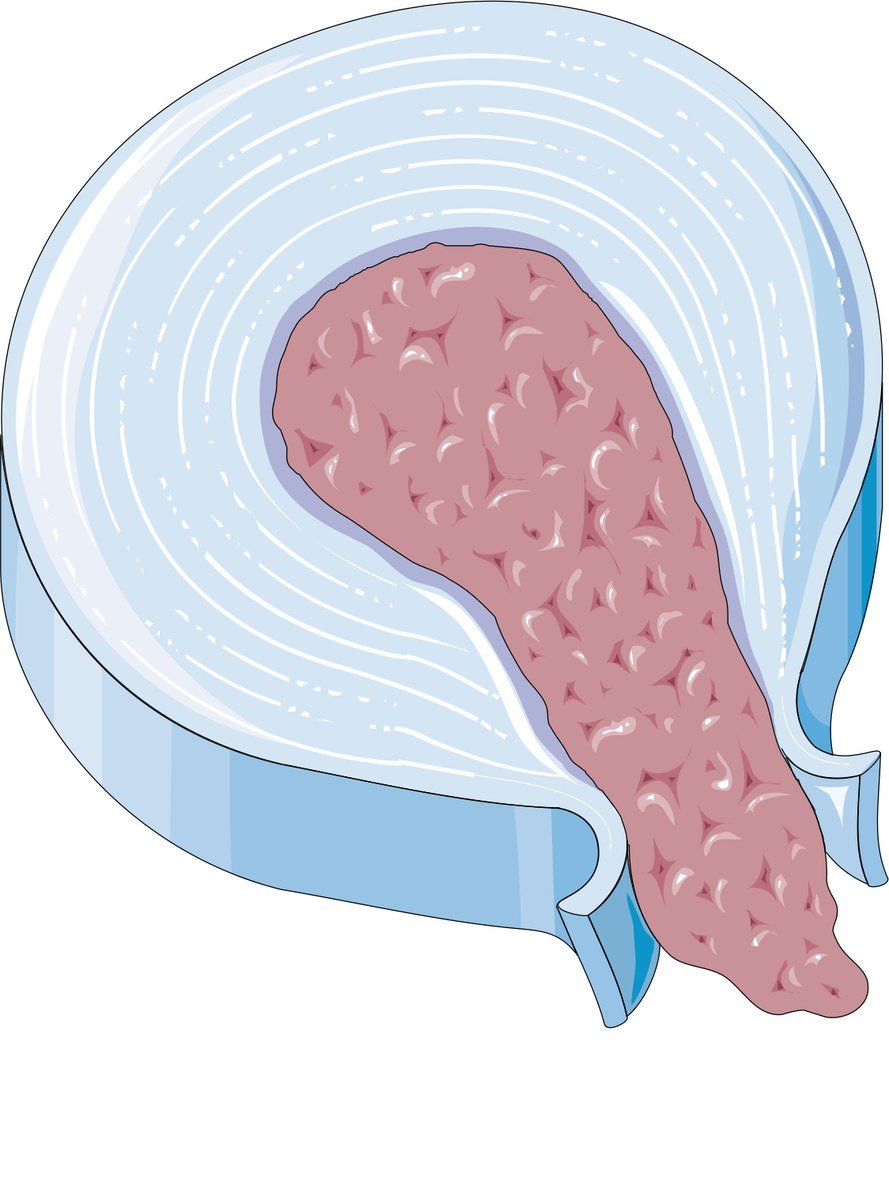
This fear is the single biggest reason families in Punjab delay treatment, try hakeem, massage and cupping first, and arrive months later with a foot that has already gone weak. It is worth saying plainly what the real risks are, because vague reassurance helps nobody. Every spine operation carries some risk of infection, bleeding, a tear in the covering of the nerves, incomplete relief of pain, or the disc pressing again in future. In the lower back, the spinal cord itself ends well above the usual level of a disc operation, which is one reason paralysis is not the common outcome people imagine.
The greater danger is usually the opposite of surgery. A disc that is pressing hard on a nerve and already causing weakness in the foot, numbness in the private area, or loss of control over urine is an emergency. Waiting in that situation is what causes lasting damage, not the operation.
There is an insurance angle here too. If a complication or a repeat operation is needed, it draws on the same annual limit. That is a reason to ask about your total remaining cover, not just the cost of one admission.
What should I check in my policy before I agree to surgery?
Read the schedule of benefits, not the brochure. Six clauses decide almost every spine claim in Pakistan.
- Annual limit. The total the policy will pay in one year, across all admissions. Spine surgery can use most of it in one go.
- Room rent limit. Many policies link every other charge to your room category. Take a room above your entitlement and the surgeon's fee, operation theatre and medicines can all be scaled down proportionally.
- Waiting period. Typically a short general waiting period from the day the policy starts, plus a much longer one for pre-existing conditions.
- Pre-existing condition definition. If you have been treated for kamar dard before, or an old MRI exists, the insurer may class the disc as pre-existing.
- Implants and prosthesis. Screws, rods and cages used in fusion are often capped separately or excluded outright. This is the clause that surprises families most.
- Co-payment. The share you pay yourself, often a fixed percentage of the bill.
Ask your HR department or the insurer's helpline for the full policy wording in writing. A verbal yes from a panel desk is not cover.

How does pre-authorisation actually work?
Pre-authorisation is the insurer agreeing, in writing and before admission, to pay a stated amount for a stated procedure. Without it you will usually be asked to pay the hospital yourself and claim later, if at all.
The sequence is straightforward. The consultant writes a clinical note explaining the diagnosis, what conservative treatment has already failed, and what operation is planned. The hospital's panel or insurance desk attaches your MRI report, your CNIC and policy details, and sends the request to the insurer or the third party administrator. The insurer replies with an approval letter naming the procedure and the approved amount, or asks for more information, or declines.
Give this five to seven working days for a planned operation. In an emergency, where there is sudden weakness or loss of bladder control, the hospital can seek approval after admission, but the surgery should not wait for paperwork.
Two mistakes cost people money. Changing the planned procedure on the day, for example from a discectomy to a fusion, without a fresh approval. And upgrading the room after admission. Tell the panel desk about any change before it happens.
What does spine surgery cost in Pakistan if I pay myself?
There is no single price, and any website that gives you one exact figure is guessing. Cost depends on the procedure, the hospital, the room category, and above all on whether metal implants are used.
Broadly, in private hospitals in Punjab, a single-level endoscopic discectomy or a microdiscectomy sits in the lower part of the range, because the stay is short and no hardware is implanted. Spinal fusion sits at the top, sometimes several times higher, because screws, rods and cages are expensive and the operation is longer. Multi-level surgery, revision surgery and any stay in intensive care push the figure up further. Government and teaching hospitals charge considerably less but usually have a waiting list.
When people search for endoscopic spine surgery cost in Pakistan or spinal fusion surgery cost in Pakistan, they are trying to budget. The only reliable way to do that is to ask the hospital for a written, itemised quote in PKR before you commit. It should separate surgeon's fee, anaesthesia, theatre charges, implants, room, medicines and follow-up. Ask what is not included, and ask what happens to the price if the surgeon finds a second level needs treating.
Bring that written quote to your insurer. Approvals are given against numbers, not estimates.
Is laser spine surgery effective, and will insurance pay for it?
Laser is not a separate operation. It is one tool that can be used inside a procedure, and the evidence that it gives better results than standard endoscopic or microscopic surgery is weak. Many insurers in Pakistan and abroad treat treatments marketed as laser spine surgery as unproven and decline them on that basis.
This matters because the phrase is used heavily in advertising. A patient searching laser spine surgery cost, or asking is laser spine surgery effective, is often being shown a name rather than a technique. What is well established is endoscopic spine surgery: a small incision, a camera passed down to the disc, the fragment pressing on the nerve removed under direct vision, muscles left largely intact, and usually a same-day or next-day discharge. That is a recognised procedure with a recognised name, and it is far easier to get approved.
If a hospital offers you laser treatment, ask three questions. What is the procedure called in standard medical terms. What exactly does the laser do in my case. Will you put that name on the pre-authorisation request. Vague answers are a reason to seek another opinion.
Do I even need surgery? Cover is the wrong first question
Most back pain in Pakistan is not surgical, and a great deal of the surgery people fear they need, they do not. Ordinary kamar dard, muscular strain and even many disc bulges on MRI settle over weeks with movement, physiotherapy, weight control and simple medication.

An MRI showing a disc bulge is not by itself a reason to operate. Bulges are found on scans of people with no pain at all. Surgery is considered when the scan matches the symptoms, when there is genuine taang mein dard following a nerve path down the leg, and when a fair trial of non-surgical treatment has failed.
There are exceptions where waiting is wrong: progressive weakness in the leg or foot, numbness around the private parts and inner thighs, or difficulty passing or controlling urine. Those need to be seen the same day.
The honest sequence is to establish whether an operation is needed, then decide which operation, then sort out cover. Families here often do it backwards, sometimes after months of hakeem treatment, massage and pind chirhna, and end up paying for treatment that was never indicated.
What if my claim is refused?
A refusal is not always final. Most declines fall into a handful of categories, and several of them can be answered with better paperwork.
- Called pre-existing. If your symptoms genuinely began after the policy started, ask your doctor for a dated note and any earlier consultation records that support that.
- Not medically necessary. This usually means the file did not show what conservative treatment was tried. A fuller clinical summary and physiotherapy records often resolve it.
- Procedure excluded. Common with treatments described as laser or experimental. Sometimes the same operation, correctly named, is covered.
- Sub-limit exceeded. Implants and room rent are the usual culprits. Here the answer is arithmetic, not appeal.
Ask for the reason for refusal in writing, quoting the policy clause. Send a written appeal through your employer's HR if it is a group policy, as they have leverage that an individual does not. Keep every bill, discharge summary and report. If the matter is not resolved, the Insurance Ombudsman of Pakistan accepts complaints against insurers.
What to do next
Take three practical steps, in this order.
First, get a proper clinical opinion on whether you need surgery at all. Bring your MRI films and report, not just the CD, and bring a family member who will be part of the decision. Second, if surgery is advised, ask for a written itemised quote in PKR and the exact medical name of the procedure. Third, take both to your insurer or panel desk and ask for pre-authorisation in writing before any date is fixed.
Dr. M. Abdur Rehman is a consultant neurosurgeon and spine surgeon at Mujahid Hospital, Faisalabad, seeing patients from across Punjab for endoscopic spine surgery and microdiscectomy. If you are searching for the best endoscopic spine surgeon in Faisalabad, judge on the same things you would judge any surgeon on: whether they explain why surgery is needed, whether they are willing to tell you that it is not, and whether their office gives you the paperwork your insurer will ask for.
If you have new weakness in a leg or foot, numbness in the saddle area, or trouble controlling urine, do not wait for an insurance approval. Go to a hospital the same day.
Questions patients ask about this
Does the government health card cover spine surgery?
It depends on current eligibility rules and whether the hospital is empanelled, and both have changed more than once. Some spinal procedures appear on the covered list and others do not. Take your CNIC and MRI to the card desk at an empanelled hospital and ask them to confirm your entitlement in writing.
My policy started three months ago. Will it pay for my slip disc operation?
Possibly not. Most Pakistani health policies have a general waiting period of around a month and a much longer one for pre-existing conditions, often one to four years. If your back pain or leg pain began before the policy started, the insurer may classify it as pre-existing and decline. Check the wording.
Is endoscopic spine surgery covered if I go home the same day?
Sometimes, but check first. Older policies only pay when you are admitted for at least twenty four hours, which can catch out short-stay endoscopic procedures. Newer policies include a day-care procedure list. Ask your insurer specifically whether the planned procedure qualifies as day care under your plan, in writing.
What documents does the insurer need for a spine surgery claim?
Usually your policy or panel card details, CNIC, the consultant's clinical note explaining why surgery is needed, the MRI report, records of conservative treatment already tried, and an itemised hospital estimate in PKR. After surgery, add the discharge summary, operation notes and original bills. Keep photocopies of everything you submit.
Will insurance pay for laser spine surgery?
Often not. Many insurers classify treatments marketed as laser spine surgery as unproven and exclude them. Standard endoscopic spine surgery and microdiscectomy are recognised procedures and are far more likely to be approved. Ask your surgeon for the exact medical name of the operation and submit that name for pre-authorisation.
Related articles
Getting a second opinion on spine surgery, without offending anyone
Thinking about a spine surgery second opinion in Pakistan? What to take, what to ask, and how to do it…
Read this
Travelling to Faisalabad for spine treatment
Travelling to Faisalabad for spine treatment: what to bring, is one visit enough, when surgery is not needed,…
Read this
What to bring to your first spine appointment
Going to a spine doctor in Faisalabad? Bring MRI films, not just the report, plus your medicine list and old…
Read thisAll patient questions · Spine surgery in Faisalabad · Book an appointment
Ask about your own scan. Send your MRI or X-ray on WhatsApp and get a straight answer on whether surgery is needed at all, from a consultant neurosurgeon in Faisalabad.
Dr. M. Abdur Rehman is a consultant neurosurgeon in Faisalabad. Send your scan on WhatsApp and ask what it actually shows.
Published for the practice of Dr. M. Abdur Rehman, consultant neurosurgeon, Mujahid Hospital, Faisalabad. General information only, not a substitute for examination.