
WhatsApp +92 370 7607107Call
Mujahid Hospital, Madina Town, Susan Road, Faisalabad: 4:00 PM to 7:00 PM
IDC, 563-B, Satiana Road, Faisalabad: 8:00 PM to 9:00 PM
 Spine Conditions
Most spinal deformities do not need surgery. Mild scoliosis or kyphosis is watched with regular X-rays, physiotherapy and sometimes a brace. Surgery is considered when the curve is large, getting worse, pressing on nerves, or affecting breathing. A consultant neurosurgeon reviews your X-rays and tells you honestly which group you are in.
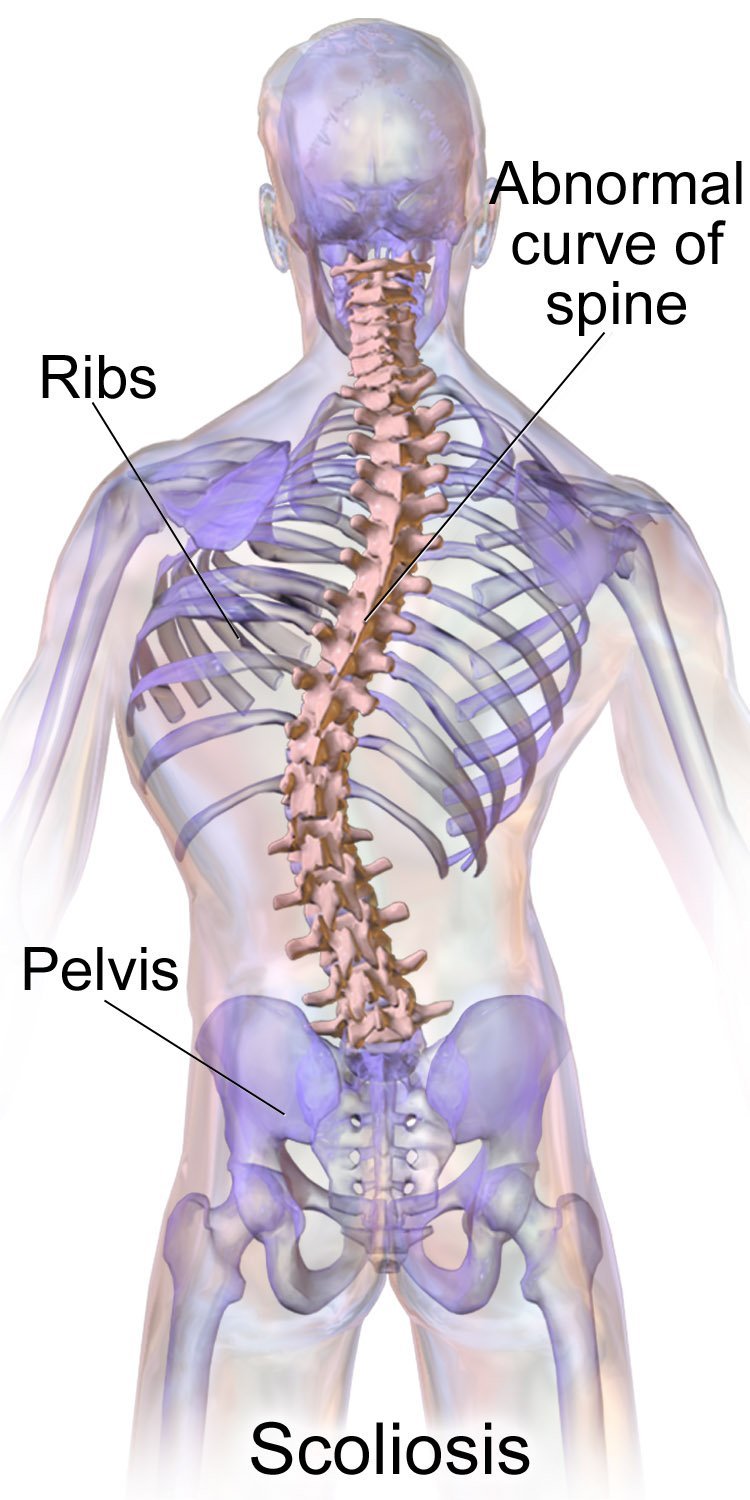
Spinal deformities refer to abnormal curves or misalignments of the spine, affecting its shape and structure. Common spinal deformities include scoliosis (sideways curvature), kyphosis (excessive forward curvature), and lordosis (exaggerated inward curvature). These conditions can occur at any age, leading to uneven posture, pain, and limitations in mobility. Severe deformities may impact lung and heart function, making early detection and treatment essential.
Spinal deformities can be congenital (present at birth) or develop over time due to genetic factors, neuromuscular conditions, or trauma. Other causes include poor posture, degenerative disc disease, osteoporosis, or age-related changes. In some cases, the exact cause remains unknown, as seen in idiopathic scoliosis.

Symptoms vary based on the type and severity of the deformity and may include uneven shoulders or hips, a visible hump on the back, and chronic back pain. Other symptoms include restricted range of motion, difficulty standing upright, and muscle weakness. Severe deformities can cause breathing difficulties, fatigue, and nerve compression.
Treatment depends on the type and severity of the deformity and includes physical therapy, bracing, and pain management techniques. For more advanced cases, surgical options such as spinal fusion, vertebral body tethering, or osteotomy may be recommended to correct the alignment. Regular monitoring and early intervention are crucial to managing the progression of spinal deformities.
Still deciding, and that is completely normal for a question this serious. Message us on WhatsApp with your MRI or X-ray, no obligation, and get a real answer about your specific case instead of a general one.
Send your MRI on WhatsAppParalysis is the fear almost every family raises. It is a real risk but an uncommon one. Correction surgery is done with nerve monitoring, so spinal cord signals are watched throughout the operation. Ask the surgeon to explain the specific risk for your curve, in writing, before you agree. Many patients never need surgery at all.
It depends on how much growing is left and how big the curve is now. Curves often progress during the growth spurt and settle once growth finishes. That is why doctors repeat X-rays every few months rather than operating early. Bracing can hold a moderate curve during growth. Bring her old X-rays to every visit so the change can be measured.
Malish, hakeem treatment and cupping will not straighten a curved spine. No oil or exercise changes the shape of the bone once the curve is set. They can loosen tight muscles and ease kamar dard for a while, which is why they feel helpful. The harm is delay, because a growing child's curve can worsen a lot in those months.
Cost depends on how many levels are fused, the implants used, and how many days you stay. Ask for a written quote in PKR that lists surgeon fee, implants, operation theatre, hospital stay and follow-up X-rays separately. Get it before the family sells anything or borrows. A figure given only on the phone is not a quote.
You do not need to travel to Lahore or Islamabad for an assessment. Bring standing full spine X-rays and any MRI to the clinic in Faisalabad, which most families in Punjab can reach in a day. Come sooner if the shoulders look uneven, a hump has appeared, there is taang mein dard, weakness, or breathlessness.
Ask about your own scan. Send your MRI or X-ray on WhatsApp and get a straight answer on whether surgery is needed at all.
Dr. M. Abdur Rehman is a consultant neurosurgeon in Faisalabad. Send your scan on WhatsApp and ask what it actually shows.